 Human Skills
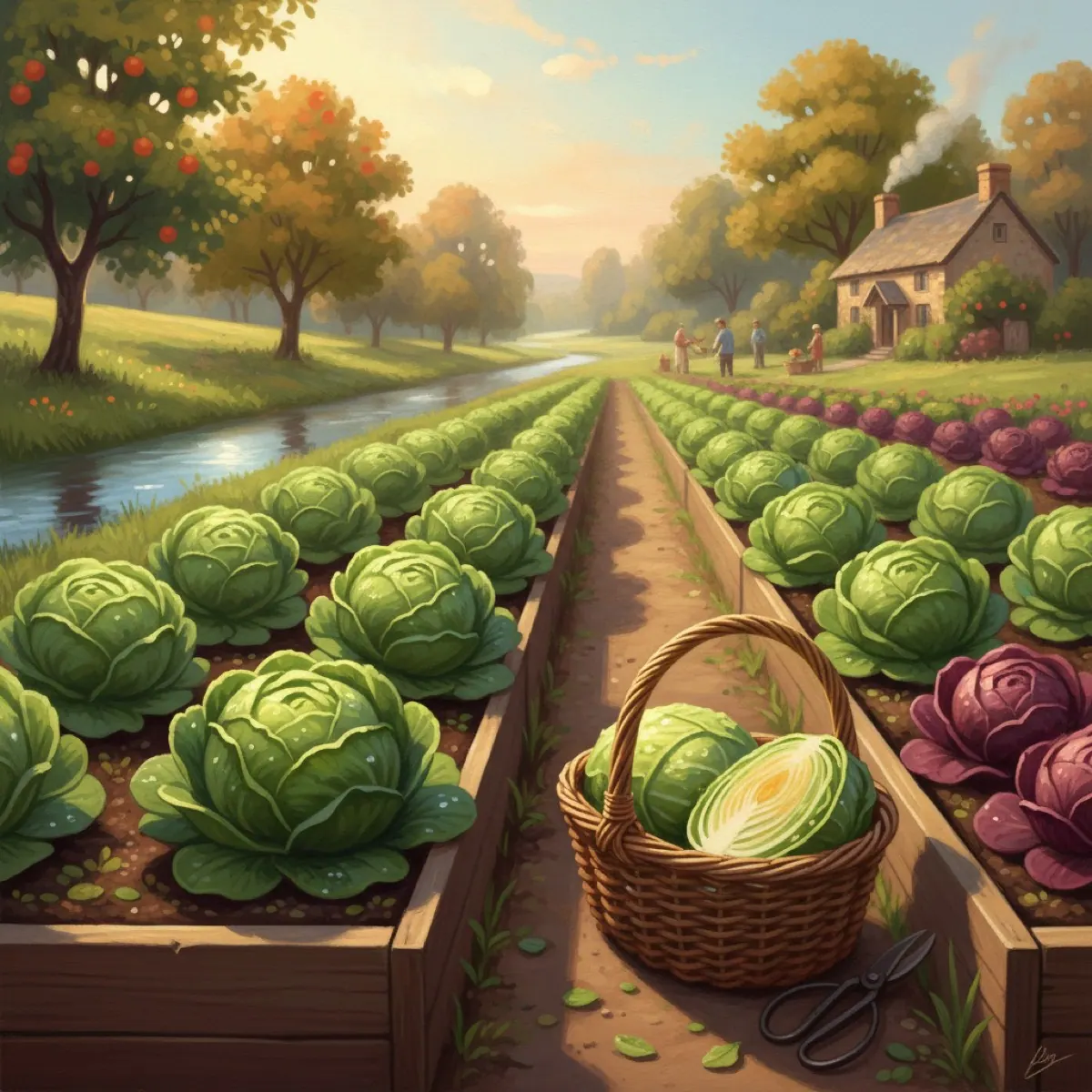
Cabbage
A dense head of cabbage stores for months and turns into sauerkraut, which is the cheapest preserved vegetable you can make.
- Sow in modules 1.5 cm deep and raise the seedlings under cover away from the main bed.
- Firm the planting bed thoroughly by treading, and lime it if a test shows below pH 6.5.
- Transplant at four or five true leaves, setting them deep so the lowest leaves touch the soil.
- Space 35 to 50 cm apart depending on type, and water in with a full can each.
- Fit a collar around each stem and cover the bed with fine insect mesh at once.
- Water thoroughly once a week rather than a little every day.
- Feed with a nitrogen-rich feed at four weeks and again at eight weeks after planting.
- Cut the head as soon as it feels rock solid to a squeeze, and do not leave it hoping it grows more.
Soil
Firm, rich, well-drained soil at pH 6.5 to 7.5. Compost dug in the autumn before, and lime if the soil tests acid.
Sun
Full sun, six hours minimum, to get a solid heart rather than a loose leafy plant.
Water
Steady: about 20 litres per square metre per week, and a thorough soak every ten days during heart formation. Sudden water after drought splits the heads.
Spacing
35 cm apart for small summer heads, 50 cm for winter storage types, rows 50 cm
Depth
1.5 cm for seed, transplant to the lowest leaves
Care
['Firm the soil around the stems again after wind or heavy rain.', 'Check under the mesh weekly for caterpillars, since one butterfly getting in undoes the whole system.', 'Remove yellowing outer leaves, which harbour slugs and mildew.', 'Earth up the stems of winter cabbage by 10 cm in autumn for stability.', 'Do not grow brassicas on the same ground more than one year in four.']
Harvesting
Squeeze the head. When it does not give, cut it with a sharp knife just above the lowest leaves. On summer and autumn types, cut a shallow cross into the remaining stump and you often get four small secondary heads a few weeks later. Winter types can stand in the ground until needed.
Storing
A firm winter cabbage keeps three to five months at 0 to 4 C in a cool shed, stored on a shelf not touching each other, with the outer leaves left on. Check monthly and remove any that soften. The classic long-term method is sauerkraut: shred, salt at 2 percent of the cabbage weight, pack under its own brine, and ferment at 18 to 20 C. Keep everything submerged under the brine throughout and discard any batch that smells putrid rather than sour.
Grow it next to
Good with beetroot, onions, potatoes, dill, celery and aromatic herbs. Nasturtium nearby draws caterpillars away. Keep away from strawberries, tomatoes and climbing beans.
Problems
[{'cause': 'A heavy rain or watering after a dry spell, or leaving a mature head too long', 'fix': 'Harvest promptly once firm. If rain is coming, twist the plant a quarter turn to break some roots, which slows water uptake.', 'symptom': 'Heads split open from the top'}, {'cause': 'Loose soil, too much nitrogen late on, spacing too wide, or too much shade', 'fix': 'Tread the bed firm before planting, stop nitrogen once hearting starts, and grow in full sun.', 'symptom': 'Plant grows big and leafy but never forms a heart'}, {'cause': 'Clubroot', 'fix': 'Lime to pH 7, improve drainage, raise plants in big pots first, use resistant varieties, and rotate onto clean ground.', 'symptom': 'Swollen distorted roots and plants wilting in sunshine'}, {'cause': 'Cabbage white butterflies', 'fix': 'Fine mesh from planting out, held clear of the leaves on hoops so butterflies cannot lay through it.', 'symptom': 'Shredded leaves with green caterpillars and yellow eggs underneath'}, {'cause': 'Stored too warm or too damp, or damaged when cut', 'fix': 'Store at 0 to 4 C with airflow, leave outer wrapper leaves on, and check the store monthly.', 'symptom': 'Grey mushy rot in the centre of stored heads'}]
Saving your own seed
Biennial and must be overwintered, and the head usually has to be cut with a cross so the flower stem can escape. It crosses with kale, broccoli, cauliflower and sprouts, so isolate by a kilometre or cage. Not a beginner seed-saving crop.
Containers
A poor container crop for the space it takes. If you must, use one plant in a 40 litre pot and choose a small summer variety. Kale or loose-leaf greens give you far more food from the same pot.
🛒 Gear for this skill
As an Amazon Associate I earn from qualifying purchases. It costs you nothing extra and keeps this site free.