 Human Skills
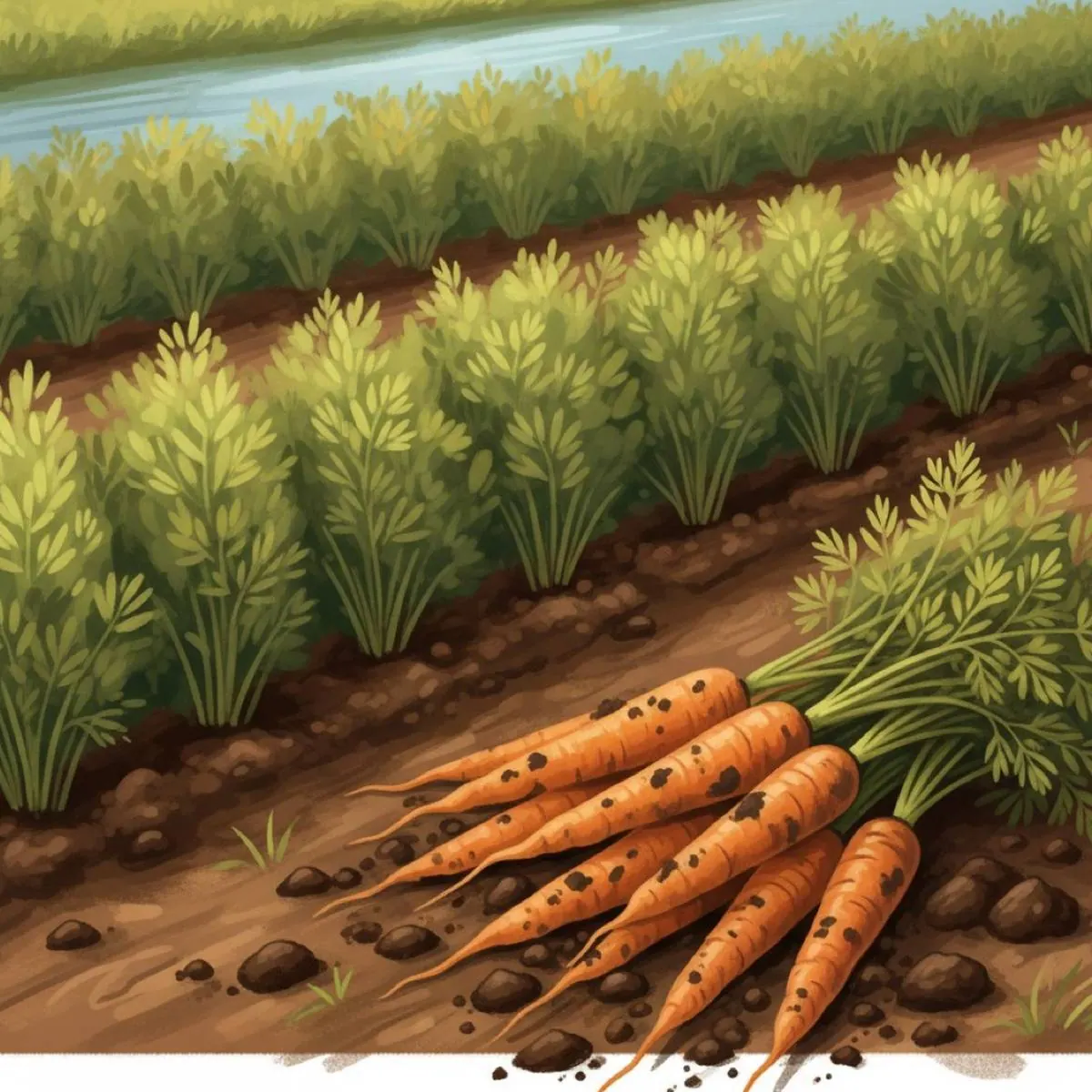
Carrot
A home-grown carrot pulled and eaten the same hour tastes nothing like a shop one, and it needs no feeding at all.
- Rake the bed to a fine crumb and pick out every stone larger than a pea.
- Draw a shallow drill 1 to 2 cm deep and water the bottom of the drill before sowing.
- Sow thinly, aiming for a seed every 2 cm, then cover and firm gently with the back of the rake.
- Label the row. Carrots take up to three weeks to appear and are easy to hoe off by mistake.
- Thin to 5 cm apart when the seedlings have two true leaves, on a still damp evening.
- Remove the thinnings from the plot entirely, because the bruised leaf smell attracts carrot fly.
- Pull as you need them from finger size onwards rather than harvesting the whole row at once.
Soil
Deep, stone-free, light soil. Never use fresh manure or rich compost, which makes forked hairy roots. A sandy loam is ideal.
Sun
Full sun to light shade. They tolerate a little shade better than most root crops.
Water
Keep the top 5 cm damp until germination, which takes 14 to 21 days. After that about 15 litres per square metre per week. Sudden watering after drought splits the roots.
Spacing
Thin to 5 cm apart, rows 25 to 30 cm apart
Depth
1 to 2 cm deep, barely covered
Care
['No feeding needed. Extra nitrogen gives you huge tops and thin forked roots.', 'Weed by hand between the rows for the first six weeks, since carrot seedlings lose badly to weeds.', 'Cover the row with fine insect mesh from sowing, or build a 60 cm barrier, to stop carrot fly.', 'Mulch lightly between rows in summer to keep moisture even and prevent splitting.', 'Pull soil over any shoulders that push out of the ground, or they turn green and bitter.']
Harvesting
Water the row an hour before pulling so the roots slide out instead of snapping. Hold the leaves low down and twist as you pull. Start thinning out every other root at finger thickness and eat those, giving the rest room to size up.
Storing
Twist the tops off straight away or they draw moisture out of the root. They keep three to four weeks in a perforated bag in the fridge, or four to five months layered in damp sand in a box at 0 to 5 C. In mild winters you can simply leave them in the ground under 15 cm of straw and lift as needed.
Grow it next to
Classic with onions, leeks and spring onions, whose smell confuses carrot fly. Also good with lettuce, radish and chives. Keep away from dill and parsnip, which share pests.
Problems
[{'cause': 'Carrot fly larvae, whose adults find the crop by smell at low level', 'fix': 'Cover with fine mesh from the day you sow. Thin in the evening, never leave thinnings lying about, and sow after early June to miss the first generation.', 'symptom': 'Rusty brown tunnels just under the skin and stunted reddish foliage'}, {'cause': 'Stony ground, fresh manure, or transplanting', 'fix': 'Never transplant carrots. Sieve the bed or grow in a deep container, and only use compost that is at least a year old.', 'symptom': 'Forked, hairy or twisted roots'}, {'cause': 'A heavy watering or downpour after the soil went dry', 'fix': 'Water little and often rather than a flood once a week, and mulch to even out the moisture.', 'symptom': 'Roots split lengthways'}, {'cause': 'Seed dried out, sown too deep, or old seed', 'fix': 'Sow no deeper than 2 cm, water the drill before sowing, and keep the surface damp with a board or fleece until seedlings appear. Carrot seed loses viability after two years.', 'symptom': 'Almost nothing germinates'}, {'cause': 'Sunlight on the top of the root', 'fix': 'Draw soil over the crowns during the last month of growth. The green part is bitter, so trim it off.', 'symptom': 'Green shoulders on otherwise good roots'}]
Saving your own seed
Carrots are biennial, so you must overwinter the root and let it flower in the second year. They cross readily with other carrot varieties and with wild carrot, so isolate by at least 500 m and save from at least twenty plants to keep vigour.
Containers
Very good in pots if you pick the right type. Use a container at least 30 cm deep for maincrop, or 20 cm for round and stump-rooted varieties, filled with sieved compost mixed half and half with sharp sand.
🛒 Gear for this skill
As an Amazon Associate I earn from qualifying purchases. It costs you nothing extra and keeps this site free.