 Human Skills
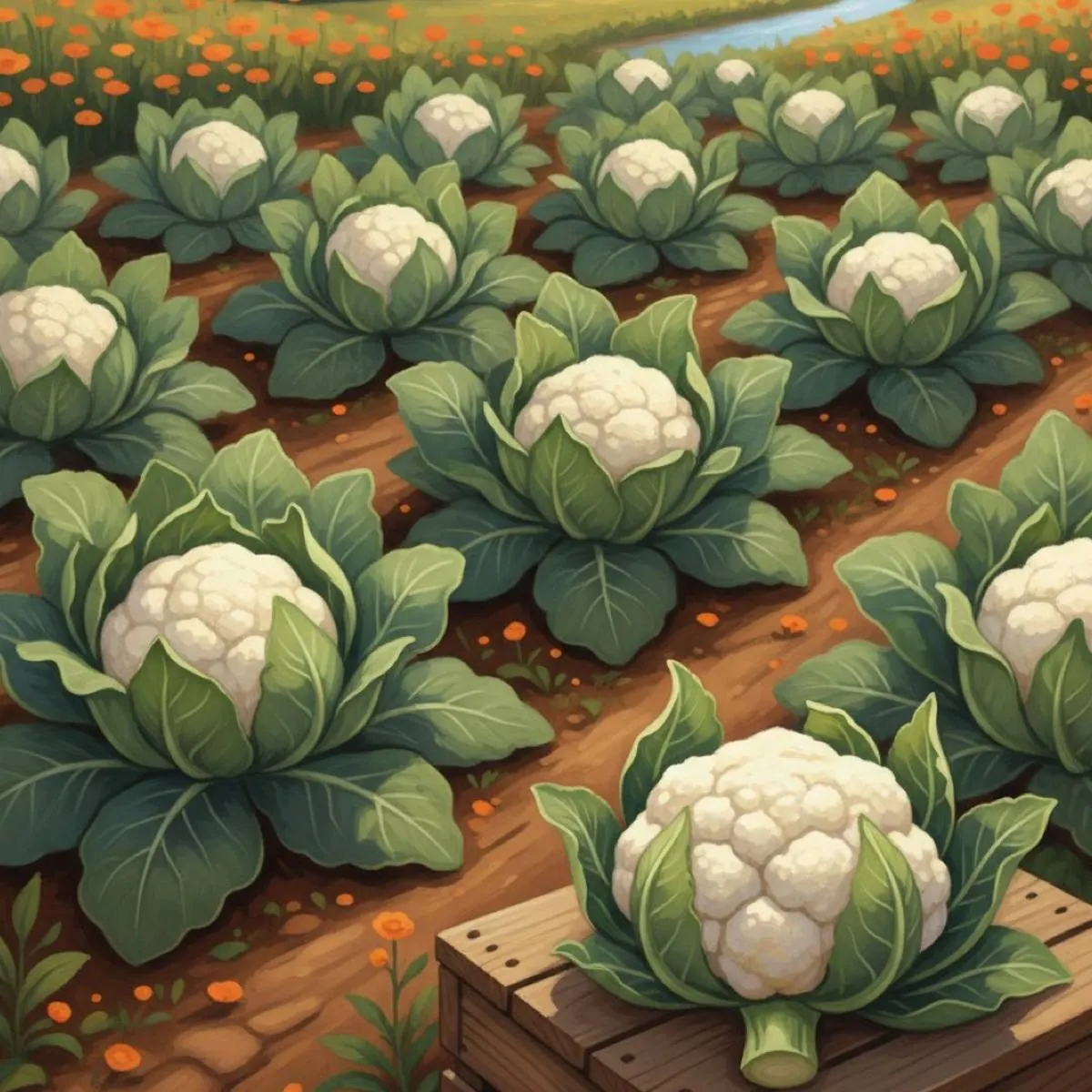
Cauliflower
The fussiest brassica, but a perfect home-grown head is worth learning the rules for.
- Sow in modules, one seed per cell, and never let them dry out or check.
- Plant out at 4 to 5 true leaves, before the roots circle the module.
- Firm the soil very hard around each plant and water in generously.
- Space 60 cm apart, they need more room than you expect.
- Water 25 mm weekly and feed high nitrogen every 2 weeks until the curd starts.
- When the curd shows at 5 cm, snap two outer leaves over it to keep it white.
- Cut the whole head with a collar of leaves once it reaches full size but before the curd loosens.
Soil
Deep, firm, very rich limed soil, pH 6.5 to 7.5.
Sun
Full sun.
Water
25 to 30 mm a week, never interrupted. This is the whole game with cauliflower.
Spacing
60 cm apart, rows 60 cm
Depth
Sow 1.5 cm deep, plant out to the first true leaves
Care
['Any check in growth means no head. Consistency beats everything else.', 'Net against cabbage whites and pigeons from planting to harvest.', 'Mulch 5 cm to hold moisture between waterings.', 'Boron and molybdenum matter here, so a seaweed feed monthly is worth the trouble.']
Harvesting
Cut when the curd is full but still tight, usually 7 to 10 days after it first shows. Check every other day in warm weather, the window is short. Cut low with a ring of leaves for protection.
Storing
2 weeks in the fridge with leaves on. Blanch florets 3 minutes and freeze for 8 months. Whole heads hang upside down in a cool shed for a fortnight.
Grow it next to
Beetroot, celery, dill and onions. Keep away from strawberries and tomatoes.
Problems
[{'cause': 'Ricing, caused by heat or being left too long', 'fix': 'Cut earlier and grow so heads mature in cool weather, autumn in hot zones.', 'symptom': 'Curd goes fuzzy and grainy'}, {'cause': 'Boron deficiency', 'fix': 'Feed seaweed extract monthly and lime to correct pH. Do not add raw borax by guesswork.', 'symptom': 'Curd turns brown in the middle'}, {'cause': 'Growth check at transplant, or too much nitrogen late on', 'fix': 'Plant out small and stop nitrogen once the curd starts.', 'symptom': 'No curd, just a big leafy plant'}, {'cause': 'Mealy cabbage aphid', 'fix': 'Hose them off, squash colonies, and remove badly infested leaves.', 'symptom': 'Grey-green mealy insects packed on leaf undersides'}, {'cause': 'Exposed to direct light', 'fix': 'Snap two outer leaves over the curd as soon as it shows, or grow a self-blanching variety.', 'symptom': 'Curd yellows in the sun'}]
Saving your own seed
Hard. Most are biennial and cross with all other brassica oleracea. Isolate by 1 km or cage and hand-pollinate. Not a beginner seed-saving crop.
Containers
Not worth it. One plant needs a 45 cm pot and perfect watering for months to give a single head. Grow broccoli or chard there instead.
🛒 Gear for this skill
As an Amazon Associate I earn from qualifying purchases. It costs you nothing extra and keeps this site free.