 Human Skills
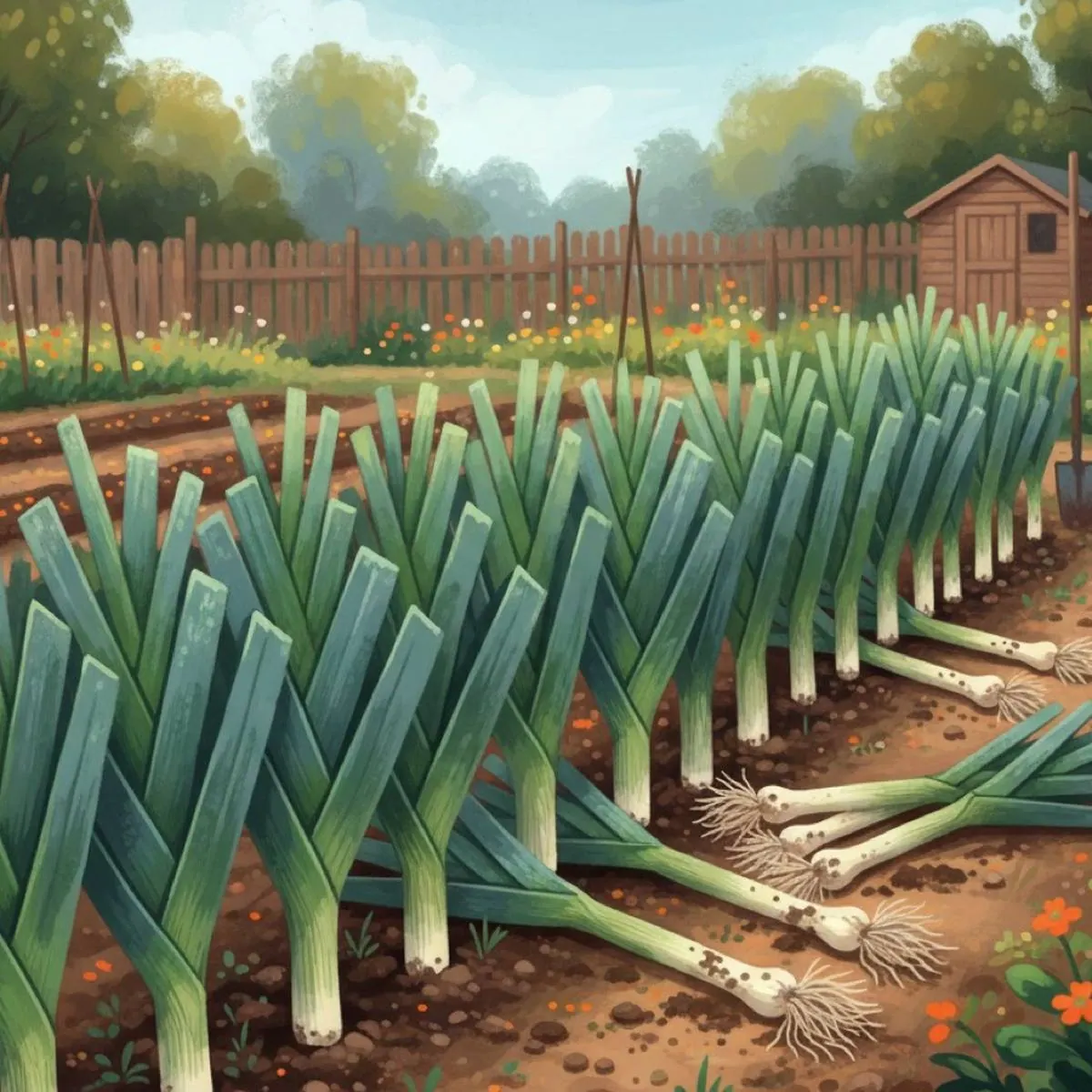
Leek
The one vegetable that stands in the ground through winter and is still perfect in February.
- Sow thinly in a tray or seedbed in late winter, 1 cm deep, and keep at 15 to 18 C.
- Grow the seedlings on until they are pencil-thick and about 20 cm tall, roughly 10 to 12 weeks.
- Trim the roots to 2 cm and the tops to 15 cm the day you transplant, it helps them take.
- Make a 15 cm deep hole with a dibber, drop one seedling in, and fill the hole with water only, not soil.
- Space holes 15 cm apart in rows 30 cm apart.
- Earth up 5 cm around the stems twice during autumn to lengthen the white shank.
- Harvest from autumn onwards, lifting as needed rather than all at once.
Soil
Deep, rich, well-dug soil with plenty of compost, pH 6.0 to 7.0.
Sun
Full sun, though it tolerates half a day of shade without complaint.
Water
15 to 20 mm a week. It never wants to dry out completely but will not sit in a puddle.
Spacing
15 cm apart, rows 30 cm
Depth
Sow 1 cm deep, transplant into a 15 cm deep hole
Care
['Keep the row weed-free, leeks have shallow roots and lose badly to competition.', 'Feed a balanced liquid feed monthly from midsummer until early autumn.', 'Do not let soil wash into the leaf joints while earthing up, grit there is impossible to rinse out.', 'Mulch 5 cm deep in late autumn in cold zones so you can still lift them in frozen weather.']
Harvesting
Loosen with a fork rather than pulling, the stems snap. Lift from the size you want upward, any time from baby leek to full width. They hold in the ground for months without going over.
Storing
Best left in the soil and lifted fresh. Once lifted they keep 2 weeks in the fridge. Sliced and blanched 2 minutes, they freeze for 6 months.
Grow it next to
Carrots, the two confuse each other's root flies. Also fine with beetroot. Avoid beans and peas.
Problems
[{'cause': 'Leek rust, common in mild damp autumns', 'fix': 'Remove the worst leaves, widen spacing for airflow, and do not feed extra nitrogen. Mild cases still crop fine.', 'symptom': 'Orange dusty pustules on the leaves'}, {'cause': 'Allium leaf miner or leek moth', 'fix': 'Cover the row with insect mesh from planting until October.', 'symptom': 'White papery streaks and tiny grubs in the leaves'}, {'cause': 'Overwintered seedlings checked by cold, or an old variety sown too early', 'fix': 'Sow at the right time and pick a winter variety. Eat bolters young, the core goes woody.', 'symptom': 'Leeks bolt and send up a hard flower stem'}, {'cause': 'Planted too shallow and never earthed up', 'fix': 'Use a 15 cm dibber hole and earth up twice in autumn.', 'symptom': 'Short green stems with almost no white'}, {'cause': 'Bacterial soft rot in waterlogged ground', 'fix': 'Lift and bin affected plants, and grow on a raised bed next time.', 'symptom': 'Slimy rotten base with a foul smell'}]
Saving your own seed
Biennial. Leave two or three plants to flower in their second summer, let the drumstick head dry on the plant, and shake out the black seed. Leeks cross with other leeks only.
Containers
Possible in a pot 30 cm deep, but you cannot earth up properly so the white shank stays short. Grow them for baby leeks and accept it.
🛒 Gear for this skill
As an Amazon Associate I earn from qualifying purchases. It costs you nothing extra and keeps this site free.