 Human Skills
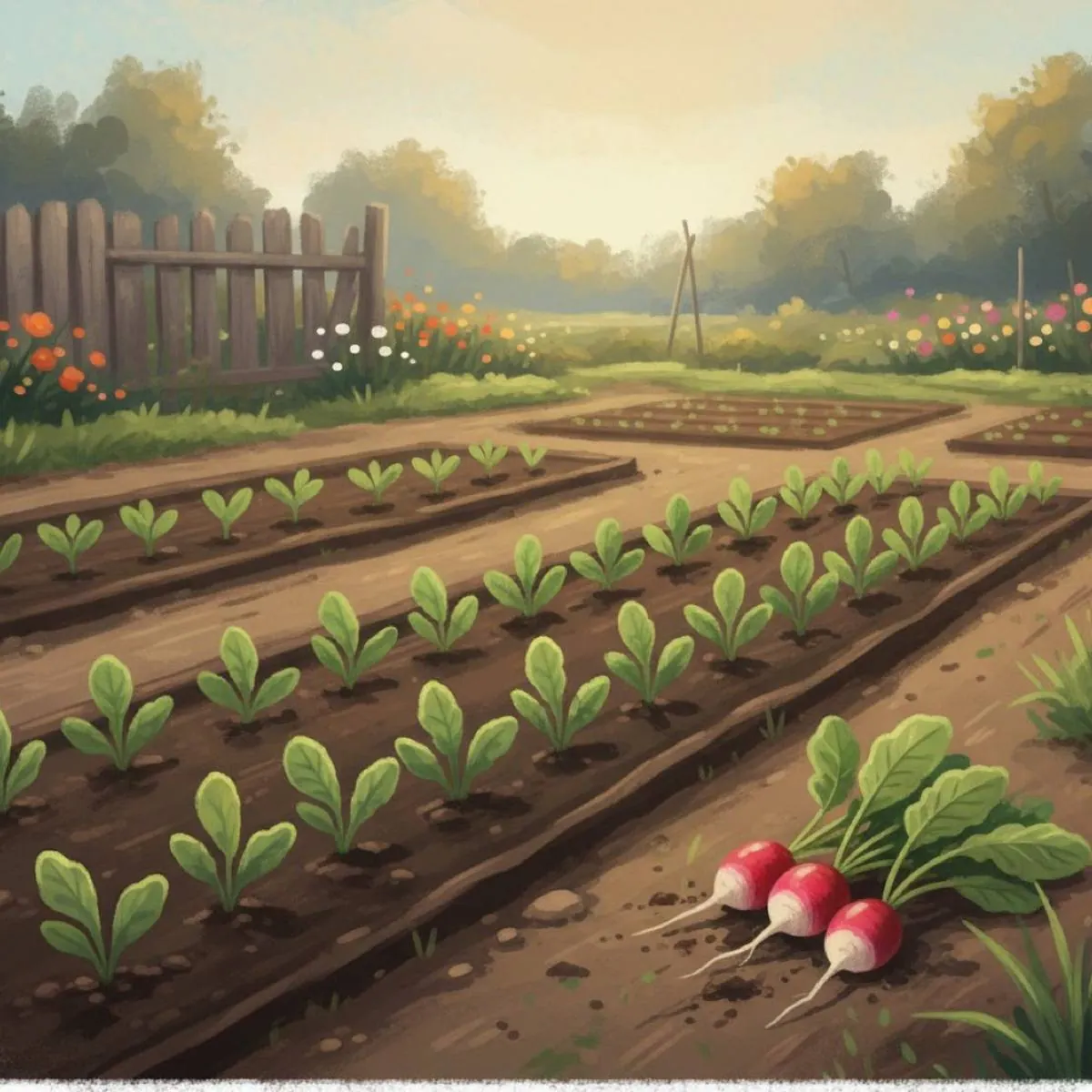
Radish
Ready in under a month, which makes it the fastest way to prove to yourself that you can grow food.
- Sow a very short row every ten days rather than a long one, because radish goes over quickly.
- Sow 1 to 1.5 cm deep, seeds 2.5 cm apart, rows 15 cm apart.
- Water the drill before sowing and keep the surface damp until seedlings show, usually in five days.
- Thin to 2.5 to 5 cm if you sowed thickly, or the roots will not swell.
- Use fleece or mesh over the row against flea beetle, especially in spring.
- Start pulling from about 20 days, checking size by scraping the soil away from a shoulder.
- Clear the whole row within a week of maturity and sow something else.
Soil
Light, fertile, stone-free soil at pH 6 to 7. No fresh manure.
Sun
Full sun in cool months, light shade in summer. Radish bolts fast in heat.
Water
Never let them dry out. Around 10 to 15 litres per square metre per week. Dry radish is hot, woody and hollow.
Spacing
2.5 to 5 cm apart, rows 15 cm apart
Depth
1 to 1.5 cm deep
Care
['Water little and often. This is the single thing that decides whether they are crisp or hot and woody.', 'No feeding at all. Radish grows too fast to need it.', 'Thin ruthlessly. Crowded radish makes leaves and a thread of a root.', 'Sow in the shade of taller plants during hot months.', 'Check daily near maturity, because a radish goes from perfect to split in about three days.']
Harvesting
Pull by the leaves as soon as the root reaches 2 to 3 cm across for summer types. Do not leave them hoping for bigger, since they only get hotter and split. Winter radish and mooli can stay in the ground into the cold and be lifted as needed.
Storing
Twist off the tops and they keep about two weeks in a sealed box in the fridge. The leaves are edible and good in soup, but wilt within a day. Winter types store in damp sand for two to three months. Surplus summer radish pickles well.
Grow it next to
Excellent with carrots, since radish marks the row and is out before the carrots need the space. Also good with lettuce, peas, cucumber and spinach. Keep away from hyssop and from other brassicas in the same bed, to avoid concentrating flea beetle.
Problems
[{'cause': 'Flea beetle, which thrives in warm dry spring weather', 'fix': 'Cover the row with fine mesh from sowing and keep the soil damp, since the beetles prefer dry dusty conditions. Established plants usually crop anyway.', 'symptom': 'Leaves peppered with dozens of tiny round holes'}, {'cause': 'Sown too thickly, too much shade, or over-rich soil', 'fix': 'Thin to 2.5 cm minimum, move to a sunnier spot, and do not add manure or nitrogen.', 'symptom': 'Big leafy tops and almost no root'}, {'cause': 'Grown too slowly, dry soil, or left in too long', 'fix': 'Water consistently and harvest on time, at three to four weeks.', 'symptom': 'Roots are fiercely hot and pithy inside'}, {'cause': 'A soaking after a dry period, or overmaturity', 'fix': 'Keep soil evenly damp and harvest promptly. Split roots are still edible if used at once.', 'symptom': 'Split roots after rain'}]
Saving your own seed
Very easy but crosses freely with other radishes, including wild radish, within 500 m. Leave a few plants to flower and form seed pods, let the pods dry brown on the plant, then shell. Seed keeps five years.
Containers
Ideal for containers and window boxes. Any pot 15 cm deep will do, and they are a good filler sown between slower crops in the same tub.
🛒 Gear for this skill
As an Amazon Associate I earn from qualifying purchases. It costs you nothing extra and keeps this site free.