 Human Skills
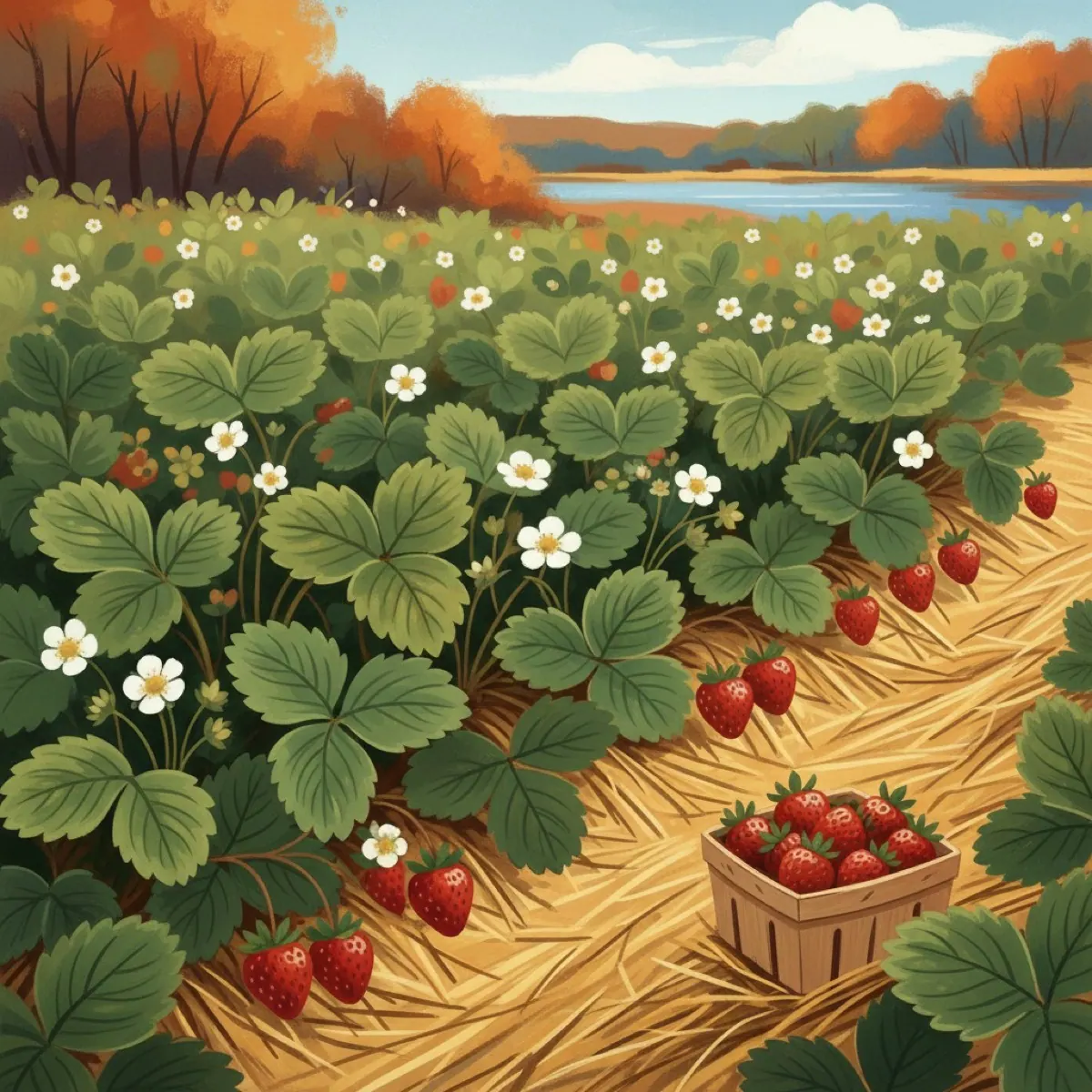
Strawberry
Plant once and pick for three or four years, from a bed, a pot or a hanging basket.
- Buy certified virus-free runners or plants, not fruit-shop seed.
- Plant with the crown exactly at soil level, buried crowns rot and raised ones dry out.
- Space 35 cm apart and water in well.
- Remove the first year's flowers on spring-planted stock so the plant builds roots.
- Mulch with straw once fruit sets, to keep berries clean and off the soil.
- Net the bed before the fruit colours, birds find it the same day you do.
- Pick every other day through the season, in the morning.
- Cut the foliage back to 8 cm after the last fruit and feed the bed.
Soil
Rich, free-draining, slightly acidic soil at pH 5.5 to 6.5, with plenty of compost.
Sun
Full sun for flavour, though it copes with 5 hours.
Water
25 mm a week while fruiting, at the base. Wet fruit moulds.
Spacing
35 cm apart, rows 75 cm
Depth
Crown level with the soil surface, roots spread downward
Care
['Feed high potash every 2 weeks from first flower until the last fruit.', 'Cut off runners unless you want new plants, they cost the parent its crop.', 'Peg 4 or 5 runners into small pots each summer to replace the bed on a rolling basis.', 'Replace the whole bed every 3 to 4 years, yields fall and virus builds up.', 'In Portugal plant in autumn so the roots establish through the mild wet winter and fruit arrives in spring before the heat.']
Harvesting
Pick when the whole berry is red, including the shoulders, with the green calyx attached. Pinch the stem rather than pulling the fruit. Pick in the morning while cool for the best keeping.
Storing
2 to 3 days in the fridge unwashed in a single layer. Freeze whole on a tray then bag, for 10 months. Jam is the classic glut answer and needs added acid such as lemon juice to set.
Grow it next to
Borage, lettuce, spinach, onions and thyme. Keep well away from brassicas and from potatoes.
Problems
[{'cause': 'Botrytis in damp crowded conditions', 'fix': 'Straw-mulch under the fruit, space plants, pick every 2 days and bin any mouldy berry immediately.', 'symptom': 'Grey fluffy mould on ripening fruit'}, {'cause': 'Slugs, birds or mice', 'fix': 'Net the bed, mulch with straw, and set slug traps around the edge.', 'symptom': 'Berries hollowed or nibbled'}, {'cause': 'Too much nitrogen, or an old bed', 'fix': 'Switch to high potash, cut runners, and replant a new bed from healthy runners every 3 years.', 'symptom': 'Masses of leaf and runners, little fruit'}, {'cause': 'Poor pollination or dry soil at fruit set', 'fix': 'Water evenly and plant flowers nearby for bees. Do not net so tightly that insects cannot reach.', 'symptom': 'Small distorted fruit'}, {'cause': 'Virus spread by aphids in an old bed', 'fix': 'Pull and burn affected plants and start a new bed elsewhere with certified stock.', 'symptom': 'Leaves mottled and plant stunted year on year'}]
Saving your own seed
Rarely grown from seed, and named varieties do not come true. Propagate by pegging runners into pots in summer and cutting them free once rooted, after about 6 weeks. Alpine strawberries do come true from seed.
Containers
One of the best pot and basket crops. 3 plants in a 30 cm pot, or one per basket. Refresh the compost every 2 years and feed high potash while fruiting.
🛒 Gear for this skill
As an Amazon Associate I earn from qualifying purchases. It costs you nothing extra and keeps this site free.