 Human Skills
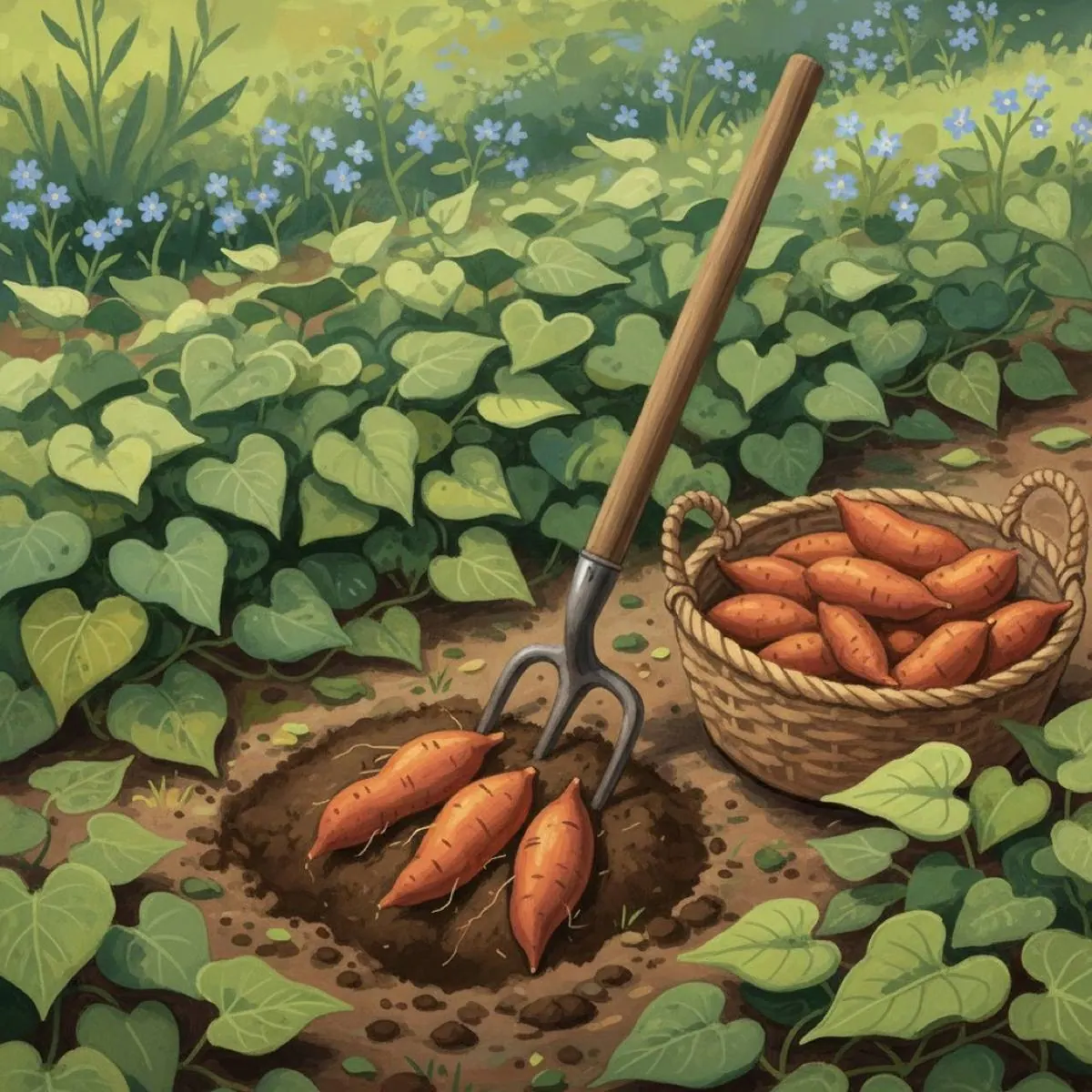
Sweet potato
A heat-loving tuber that produces a heavy crop from cuttings, with edible leaves as a bonus.
- In March, half-bury a supermarket sweet potato in damp compost indoors at 24 C to sprout slips.
- When shoots reach 20 cm, twist them off and root them in a jar of water for 7 to 10 days.
- Wait until soil is 18 C and all frost risk has passed before planting out.
- Plant slips 30 to 40 cm apart into ridges 20 cm high so the roots have loose soil to swell into.
- Water in well and keep damp for the first fortnight until the slips stand up on their own.
- Let the vines cover the ground as living mulch, lifting them monthly so they do not root at every node.
- Lift with a fork on a dry day in autumn, before soil drops below 12 C or frost blackens the vines.
- Cure the tubers at 28 C and high humidity for 7 days, then store cool and dark.
Soil
Loose sandy loam, pH 5.5 to 6.5. Heavy clay gives forked, stringy roots.
Sun
Full sun, at least 8 hours. It stops bulking below 18 C.
Water
20 to 25 mm a week while vines run. Stop watering 3 weeks before lifting so the skins cure.
Spacing
30 to 40 cm apart, rows 90 cm
Depth
Bury the slip so 3 to 4 leaf nodes sit under the soil, about 10 cm
Care
['Feed low nitrogen. Too much and you get a metre of beautiful vine and no tuber.', 'Weed hard for the first 6 weeks, after that the canopy does it for you.', 'Pick a few young leaves through summer, they cook like spinach and the plant does not mind.', 'Do not earth up like potatoes, just keep the ridge intact.']
Harvesting
Lift when the leaves yellow or after 100 days. Dig 30 cm away from the crown and work inwards so you do not spear the tubers. Handle them like eggs, the skin bruises when fresh.
Storing
Cure first, then store at 13 to 16 C in paper or crates. Never in the fridge, cold turns them hard and off-flavoured. Cured tubers keep 6 to 10 months.
Grow it next to
Bush beans and dill nearby. Keep it away from squash, the two vine systems smother each other.
Problems
[{'cause': 'Too much nitrogen, or soil never reached 18 C', 'fix': 'Use compost only, no manure or feed. Plant later, through black plastic mulch to warm the ridge.', 'symptom': 'Masses of vine, thin pencil roots'}, {'cause': 'Compacted or stony soil', 'fix': 'Build 20 cm ridges of loosened soil and sand next season.', 'symptom': 'Tubers forked and stubby'}, {'cause': 'Wireworm or sweet potato weevil', 'fix': 'Lift on time rather than leaving them in the ground, and do not replant the same bed for 3 years.', 'symptom': 'Holes chewed through the tubers'}, {'cause': 'Skipped the curing step or stored damaged roots', 'fix': 'Cure 7 days warm and humid, and set aside any tuber you nicked with the fork to eat first.', 'symptom': 'Tubers rot within weeks of storing'}]
Saving your own seed
Not grown from seed in practice. Keep one healthy tuber in storage each year and sprout it for next season's slips.
Containers
Works in a 40 litre pot or grow bag at least 40 cm deep, one plant per pot. Expect 3 or 4 medium tubers, not a full crop.
🛒 Gear for this skill
As an Amazon Associate I earn from qualifying purchases. It costs you nothing extra and keeps this site free.