Human Skills
Saving Your Own Seed
Never buy tomato, bean or lettuce seed again
6 minAdvancedUpdated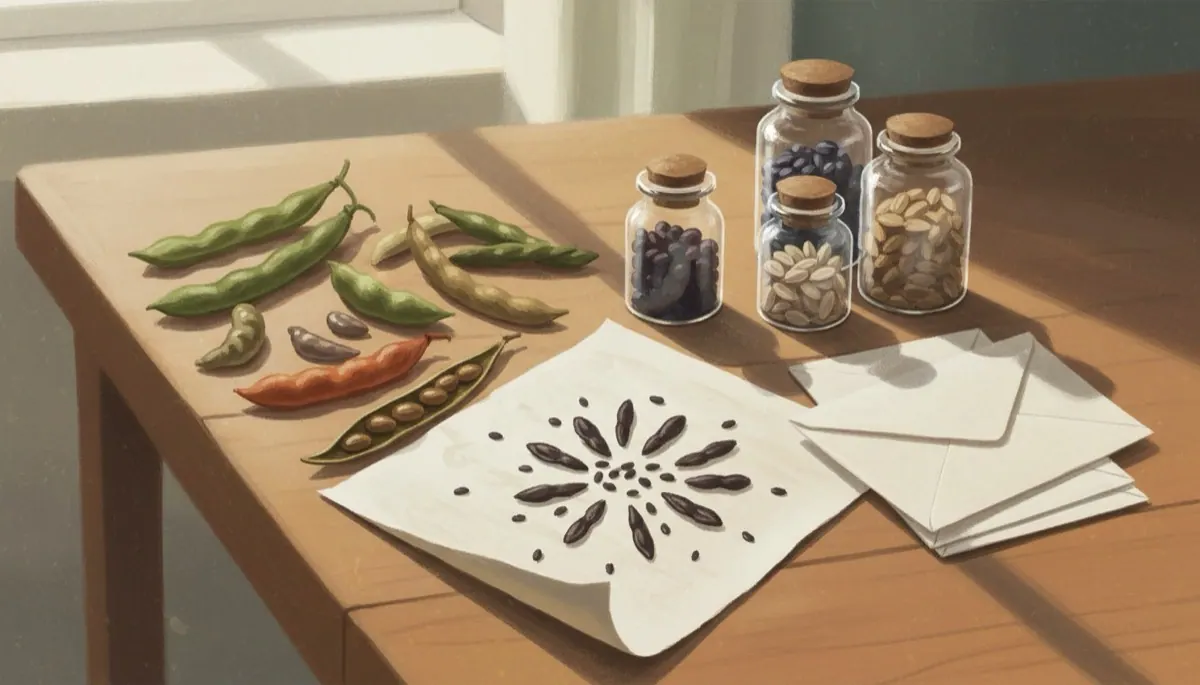
- Choose the easy crops for a first year of seed saving
- Ferment, dry and clean seed from wet and dry crops
- Avoid crossing so next year's plants match this year's
Why and what to save
Seed saved from your own plants is free, and over a few years it adapts to your soil and climate. Start with crops that are self-pollinating and rarely cross: tomatoes, beans, peas, lettuce and peppers. These are the beginner five. Save only from open-pollinated or heirloom varieties, never from F1 hybrids, which do not come true. Choose your best plants, not your leftovers: the earliest, healthiest and most productive, with the flavour you like. Mark them with a ribbon early in the season so you do not eat them. Saving from at least 5 plants keeps the variety vigorous.
Dry seed: beans, peas, lettuce
Leave bean and pea pods on the plant until they are brown, dry and rattle, usually 4 to 6 weeks after you would have eaten them. If wet autumn weather arrives, pull the whole plant and hang it under cover. Shell the seeds and spread them on a tray for another 2 weeks indoors. A dry bean shatters when hit with a hammer; a soft one dents. Lettuce bolts into a tall flower spike; when fluffy white seed heads appear, shake them into a paper bag every few days. Winnow the chaff by pouring seed between two bowls in a light breeze. Coriander, dill, rocket and brassicas are handled the same way.
Wet seed: tomatoes, cucumbers, squash
Tomato seeds sit in a gel that stops them sprouting inside the fruit. Fermenting removes it and kills seed-borne disease. Squeeze seeds and pulp from a fully ripe tomato into a jar, add a splash of water, cover with a cloth and leave at room temperature for 2 to 3 days until a mould skin forms and the good seeds sink. Pour off the mould and floaters, rinse the seeds in a sieve under the tap, and spread them on a ceramic plate or coffee filter to dry for a week, not paper towel, which they stick to. Cucumber seed is fermented the same way. Squash and melon seeds are simply rinsed and dried.
Keeping varieties pure
Crops that cross easily need isolation. Squash, pumpkins, courgettes, cucumbers, melons, sweetcorn, brassicas, beetroot and onions are pollinated by insects or wind and will cross with any relative within hundreds of metres. Grow one variety of each family per year, or bag the flowers and hand pollinate: tape a female squash flower shut the evening before it opens, next morning dab pollen from a male flower inside, and tape it shut again. Peppers cross more than tomatoes, so keep varieties 10 m apart or grow one. Biennials such as carrots, onions and cabbage only flower in their second year, so leave a few plants over winter.
Drying, labelling and storing
Seed must be fully dry before storage or it moulds. Dry it at room temperature away from direct sun for 1 to 2 weeks; never in an oven or above 35 degrees C. A well-dried seed snaps rather than bends. Store in paper envelopes inside an airtight jar with a sachet of silica gel, in a cool dark cupboard or the fridge. Label with crop, variety, year and where the parent grew. Write notes on what made the plant special. Test germination each spring with 10 seeds on damp paper. Share extras through a local seed swap; it is the oldest and best way to find varieties adapted to your area.
Check yourself
These are self-pollinating and rarely cross, so seed comes true without isolation.
The gel inhibits sprouting and can carry disease. A short fermentation breaks it down and floats off bad seed.
Squash is insect-pollinated over long distances, so controlling the pollen by hand is the reliable method.
A seed that bends still holds moisture and will mould in a sealed jar.
Try it for real: Save seed from two crops
- Mark your best tomato plant and best bean plant with a ribbon
- Ferment, rinse and plate-dry seed from one ripe tomato
- Leave a row of bean pods to dry brown on the plant, then shell and dry indoors for 2 weeks
- Label envelopes with variety and year and store them in an airtight jar
- Give a few seeds to a neighbour or a seed swap
🛒 Gear for this skill
As an Amazon Associate I earn from qualifying purchases. It costs you nothing extra and keeps this site free.
Next lesson: Crop Rotation and Planning a Year of Food →
Written and checked by the Human Skills team against the sources below. How we check our content
- Seed Savers Exchange, Seed Saving Guide
- FAO Seed Handbook for Farmers
- RHS Collecting and Storing Seed