 Human Skills
Basic First Aid Principles
Stay safe, check, call, then help until professionals arrive
6 minIntermediateUpdated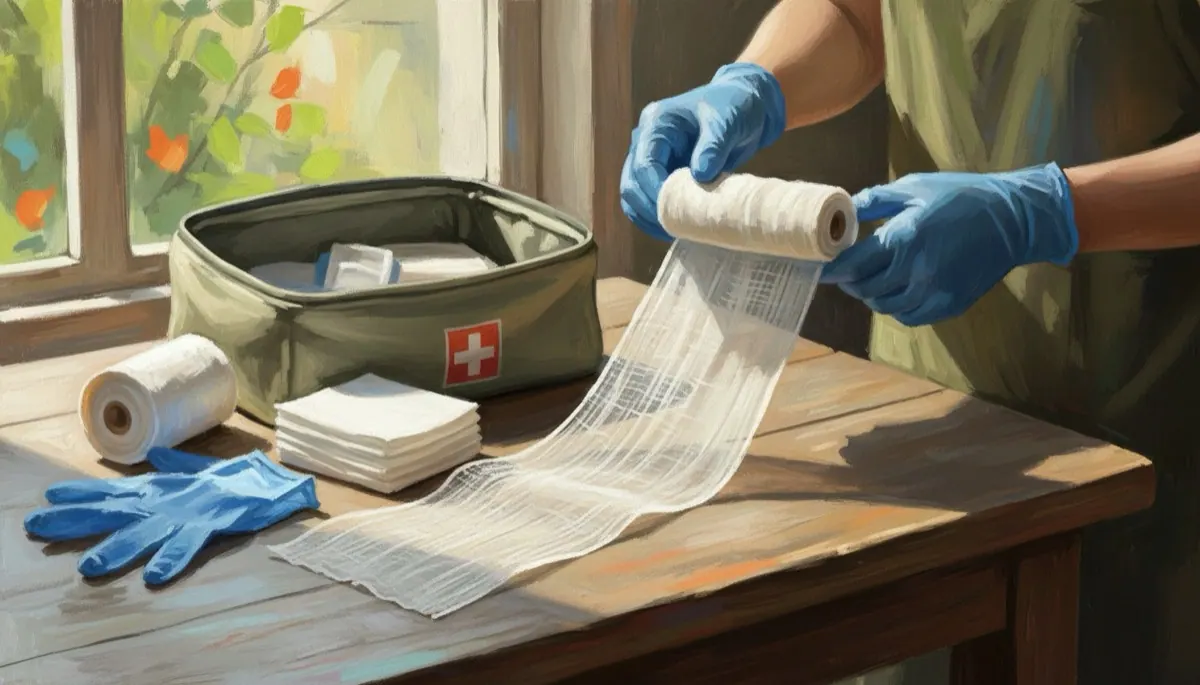
- Follow the safety, response, call, care sequence
- Control serious bleeding and treat minor wounds and burns
- Recognise when to call emergency services without delay
Safety first, then check
Before helping anyone, make sure you are not about to become a second casualty. Look for traffic, fire, electricity, falling rock, deep water or an aggressive person, and remove the danger or move the casualty only if it is safe. Then check the person: tap their shoulders and ask loudly if they are okay. If they respond, find out what happened and what hurts. If they do not respond, tilt their head back gently to open the airway and look, listen and feel for normal breathing for up to 10 seconds. Anyone unresponsive needs emergency services now; anyone unresponsive and not breathing normally needs CPR.
Calling for help
Call your local emergency number, which is 112 across the European Union and works from any phone with a SIM, even without credit or signal from your own network. Put the phone on speaker so your hands stay free. The operator will ask where you are, what happened, how many people are hurt and whether they are breathing. Give your exact location: an address, a road junction, or coordinates from your phone's map app. Stay on the line and follow instructions; operators can coach you through CPR. If others are present, point at a specific person and tell them to call, then send someone to guide the ambulance in.
Unresponsive casualties
If a person is unresponsive but breathing normally, roll them onto their side into the recovery position, with the head tilted back and the mouth pointing down, so the airway stays clear and they cannot choke on vomit. Keep checking their breathing until help arrives. If they are not breathing normally, start chest compressions: heel of your hand in the centre of the chest, other hand on top, arms straight, press 5 to 6 centimetres deep at 100 to 120 per minute, roughly the beat of a fast pop song. If trained, give 2 rescue breaths after every 30 compressions; if not, compressions alone still help. Use a public defibrillator if one is nearby; it talks you through it.
Bleeding, wounds and burns
For heavy bleeding, press hard directly on the wound with a clean dressing or cloth and keep pressing; do not lift it to look. If blood soaks through, add more on top. Raise the injured part if it does not cause more pain. Bleeding that spurts, does not slow after 10 minutes of firm pressure, or comes from a deep or gaping wound needs emergency services. For small cuts and grazes, rinse under clean running water, pat dry and cover with a plaster. For burns, cool under cool running water for at least 20 minutes, remove jewellery, and cover loosely with cling film. Burns larger than the person's palm, on the face, hands or joints, or any burn in a child need medical care.
Sprains, breaks and shock
For a sprain, remember rest, ice wrapped in cloth for 20 minutes at a time, gentle compression with a bandage, and elevation. If a limb is deformed, cannot bear weight or hurts intensely over the bone, treat it as broken: keep it still, pad it in the position found, and get medical help. Shock from blood loss or serious injury shows as pale, cold, clammy skin, a fast pulse, rapid breathing and confusion. Lie the person down, raise their legs unless injured, keep them warm and call emergency services. Everything here is general education. A recognised first aid course with hands-on practice is the real skill.
Check yourself
A helper who becomes a casualty helps no one. Check for traffic, fire, electricity and other hazards first.
112 works in every EU country from any phone, with or without credit or a SIM card.
The recovery position keeps the airway open. Compressions are only for someone not breathing normally.
Cooling for at least 20 minutes limits the depth of the burn. Use cool, not icy, water and cover loosely afterwards.
Try it for real: Practise the basics on a willing volunteer
- Practise the shoulder tap, airway tilt and the recovery position on a friend or family member
- Practise compression rhythm on a firm cushion at 100 to 120 per minute, never on a person
- Locate the nearest public defibrillator to your home and workplace
- Look up and book a certified first aid course near you
🛒 Gear for this skill
As an Amazon Associate I earn from qualifying purchases. It costs you nothing extra and keeps this site free.
Next lesson: What to Do When the Power Fails →
Written and checked by the Human Skills team against the sources below. How we check our content
- Red Cross First Aid
- European Resuscitation Council Guidelines
- St John Ambulance
Related lessons
Building an Emergency Kit
Everything your household needs for 72 hours in one place

What to Do When the Power Fails
The first hour, the first night and keeping food and people safe
What to Do When Communications Fail
Reach the people who matter when phones, data and internet are down
Household Emergency Plan and Risk Assessment
Work out what could actually happen where you live and prepare for that