 Human Skills
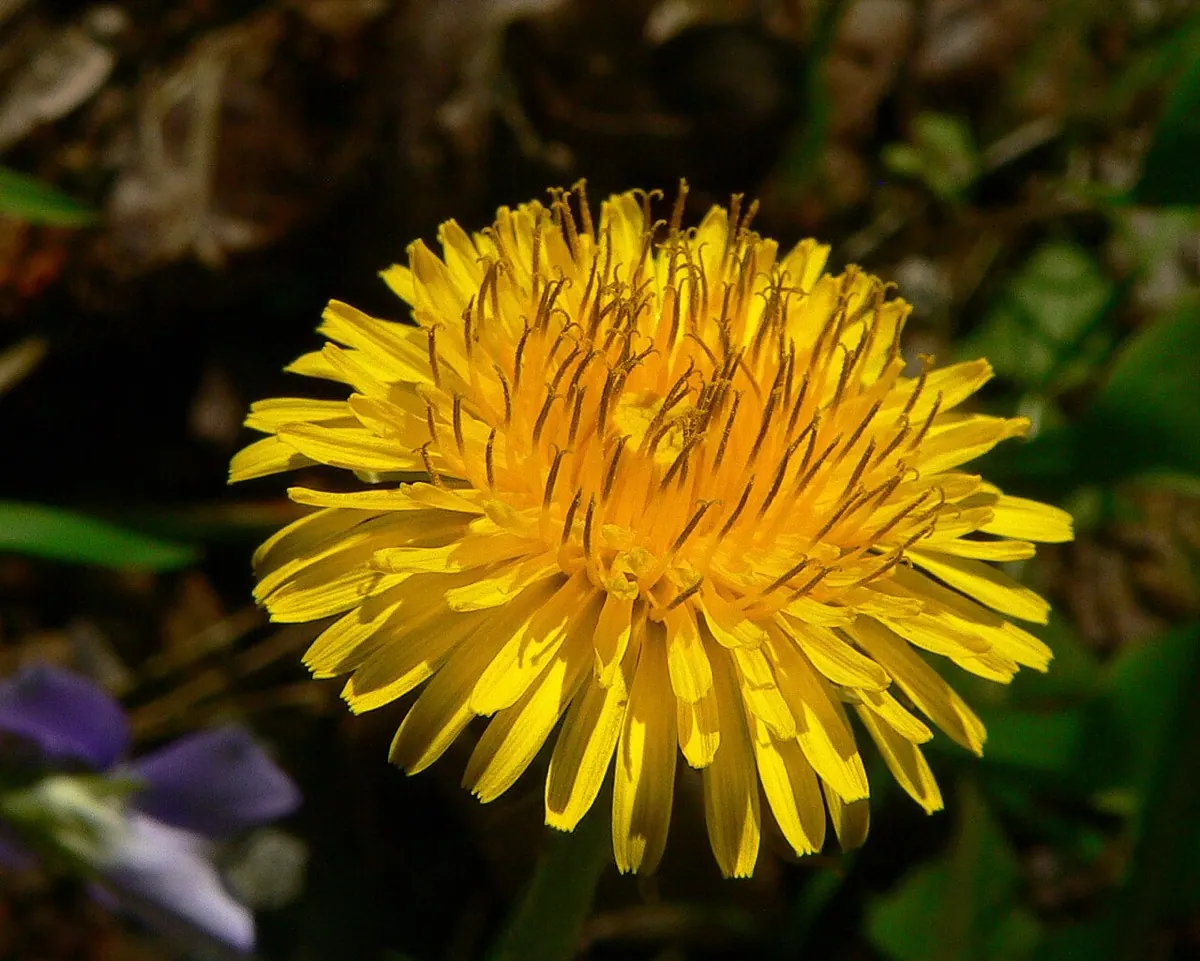
Photo: Greg Hume, CC BY-SA 3.0, Wikimedia Commons

Dandelion
Taraxacum officinale agg.
EdibleEvery part is edible, it grows almost everywhere, and one feature settles it: a single flower head on a hollow leafless stalk that bleeds white milk.
Confused with
Danger: Harmless. All of these are edible or at worst bitter and dull, so this is a low-stakes confusion.
How to tell: Cat's-ear and hawkbit have hairy leaves and branched or solid flower stalks that can carry more than one head. True dandelion always has one head on one hollow leafless stalk full of white latex.
Danger: Contains pyrrolizidine alkaloids that damage the liver cumulatively. Not an instant poison, but genuinely harmful and never food.
How to tell: Ragwort leaves are ragged and blunt-lobed with a dull grey-green look and no white latex, and the plant grows a tall branched leafy stem carrying many flower heads. Dandelion never has a leafy stem.
Leaves
All from the base in a rosette, no leaves up the stem. Long and narrow, deeply cut into backward-pointing triangular lobes like a row of teeth aimed at the root. The central rib is often pale or pinkish. Hairless or nearly so.
Flowers
A single head 2-5 cm across of many bright yellow strap-shaped florets, no separate disc in the middle. The outer row of green bracts bends sharply back and down. The seed head is the familiar white clock.
Stem
There is no true leafy stem. Each flower sits alone on a smooth, hollow, unbranched stalk that snaps easily and immediately leaks thick white latex. One head per stalk, always.
Smell or taste
Almost no smell when crushed, just a faint bitter greenness and the milky sap. Once identified it is confirmed safe, and the leaf tastes bitter like chicory, sharper as the season goes on.
Habitat
Lawns, pasture, verges, waste ground, cracks in pavement, orchard floors, from sea level to mountain. Everywhere in Portugal, best in the cooler damp months.
Edible parts
Young leaves, unopened flower buds, open flower petals, and the root.
Preparation
Pick leaves from the rosette before the plant flowers, when they are least bitter. For salad take the smallest inner leaves. Older leaves are better boiled: 3 to 5 minutes in plenty of water, drained, which removes much of the bitterness. A blanched rosette, covered for two weeks with an upturned pot so it grows pale, is far milder. Flower petals pull cleanly from the green base and go into fritters or a syrup. For the syrup, steep 200 g of petals in 1 litre of water overnight, strain hard, add 700 g of sugar and the juice of a lemon and reduce for about an hour to a honey consistency. Keep the green bracts out, since they are the bitter part. Roots are dug in autumn, when they are fattest. Scrub, split lengthways, dry for 2 to 3 days, then roast at 150 C for 30 to 45 minutes until brittle and dark brown, grind and brew 1 heaped teaspoon per cup as a coffee substitute.
Traditional use
Traditionally used across Europe as a bitter spring tonic to support appetite and digestion, and the root was folk-used for the liver and as a mild diuretic. The French name pissenlit records the diuretic reputation honestly.
Harvest rule
Dandelion is one of the few wild plants you can dig freely, since it is abundant and self-seeds relentlessly, but take roots only from ground you own or have permission on, because digging leaves a hole and counts as uprooting. Leave the earliest flowers, which are important early bee food. Foraging law varies by country: uprooting a plant without the landowner permission is an offence in several European countries. In Portugal check ICNF rules inside protected areas, and always ask on private or enclosed land.
Dente-de-leao, taraxaco (PT), diente de leon (ES), pissenlit (FR)