 Human Skills
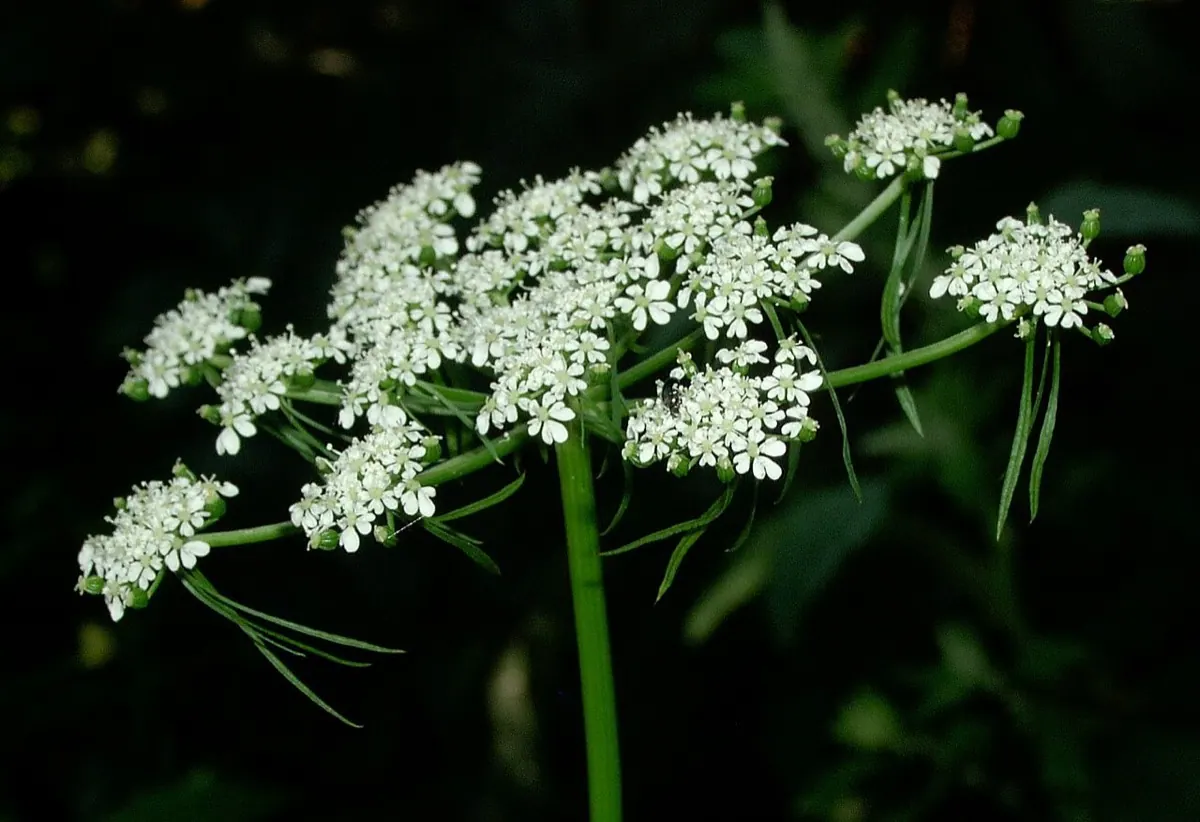
Photo: Krzysztof Ziarnek, CC BY-SA 3.0, Wikimedia Commons

Fool's Parsley
Aethusa cynapium
PoisonousA garden weed that grows among real parsley and causes burning, vomiting and collapse.
Confused with
Danger: Burning of the mouth and throat, severe vomiting and diarrhoea, dizziness, and in serious cases paralysis and seizures. Deaths are rare but have happened, especially in children.
How to tell: Turn the flower head over. Fool's parsley hangs three to five long narrow bracts beneath each little umbel like a drooping beard. Parsley has none. Before flowering, crush a leaf: parsley smells clean and green, fool's parsley smells sharp and foul.
Danger: Same burning gut poisoning, easily mistaken for a bad stomach bug so treatment is delayed.
How to tell: Chervil leaves are softly hairy and smell of aniseed. Fool's parsley is hairless and smells foul. Hairiness plus smell together is the check to make.
Leaves
Dark green, glossy, triangular in outline, divided two or three times into narrow pointed segments, hairless. Alternate. They look very like flat-leaf parsley but are shinier and more finely cut, and the underside has a slight greyish sheen.
Flowers
Small white umbels 2 to 6 cm across. The giveaway is under each small umbel: three to five long narrow green bracts hang downward like a little beard on the outer side only. No other white umbellifer of this size does that.
Stem
Hollow, hairless, finely ridged, green and sometimes faintly purple at the base but without hemlock's bold blotches.
Smell or taste
Crushed leaves smell unpleasant, sharp and slightly of garlic or rotting foliage, quite unlike the clean smell of parsley. Do not taste it to check.
Habitat
Cultivated ground, vegetable gardens, allotments, arable fields, disturbed soil and compost heaps. It is a weed of the very beds where parsley is grown, which is the whole danger.
Preparation
No preparation makes it safe. Cooking reduces nothing reliably. The safe rule is simpler than any test: do not gather parsley-like leaves from the wild or from a weedy bed. Grow your parsley in a clean, weeded container you control.
Traditional use
Occasionally listed in old herbals as a sedative for children's digestive complaints. That use caused poisonings and has been abandoned. Do not repeat it.
Harvest rule
Remove, never harvest. Gloves on, pull before it sets seed, bag it rather than composting it beside salad beds. Do not burn it with garden waste you will stand over. Keep children and poultry off the bed until it is cleared.
Salsa-dos-tolos, cicuta-menor (PT); lesser hemlock (EN)