 Human Skills
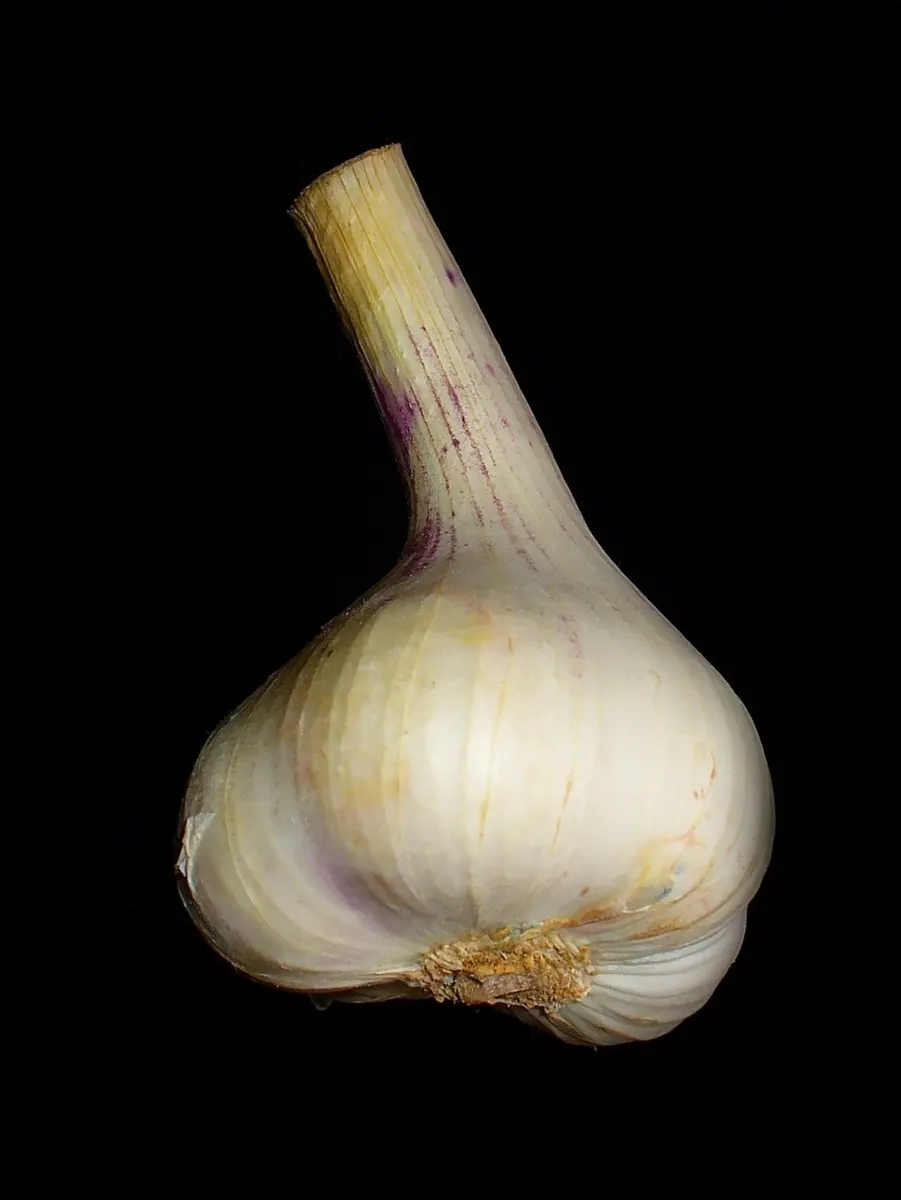
Photo: H. Zell, CC BY-SA 3.0, Wikimedia Commons

Garlic
Allium sativum
EdibleThe kitchen bulb that is also the most thoroughly documented folk remedy in Europe, and the plant behind one of the continent's deadliest foraging mistakes.
Confused with
Danger: Deadly, and this mistake kills people in Europe most years. Colchicine causes burning in the mouth, then vomiting and diarrhoea hours later, then multi-organ failure. There is no antidote and small amounts are fatal.
How to tell: Crush the leaf and smell your fingers. Any allium reeks of garlic or onion; autumn crocus does not smell at all. Autumn crocus leaves are also thicker, glossier, more upright, come up in a tight bunch from one point in spring while its lilac flowers appear separately in autumn on bare ground, and they are hairless and untapered. Smell every single leaf you pick, not just the first one, because the plants grow intermingled.
Danger: Deadly. It contains cardiac glycosides that disorder the heartbeat. Poisonings happen every spring from leaves picked with wild garlic.
How to tell: No garlic smell when crushed. Its leaves come in pairs from a single reddish sheath at ground level, are broad, glossy and strongly parallel-veined, and it carries hanging white bells. Smell is the test.
Danger: Severe. Chewing it causes immediate intense burning and swelling of the mouth, tongue and throat, which can obstruct breathing, and its red berries have poisoned children.
How to tell: Arrow-shaped leaves with two backward-pointing lobes and a net of veins, no garlic smell. Allium leaves are strap-like with parallel veins and reek when crushed.
Leaves
Four to twelve flat, keeled, strap-like leaves, 15 to 60 cm long and 1 to 3 cm wide, grey-green, folded along the midrib into a shallow V, arranged alternately and wrapping around each other into a false stem at the base.
Flowers
Where produced, a rounded head 3 to 5 cm at the top of the scape, wrapped before opening in a long-beaked papery sheath, containing small greenish-white to pink flowers mixed with, or replaced by, small hard bulbils. Garlic is usually grown from cloves rather than seed.
Stem
Solid, round and stiff, emerging from the centre of the leaves in hardneck varieties as a scape that coils dramatically before straightening. Softneck varieties produce no true flower stem.
Smell or taste
Every part of the plant, crushed, smells unmistakably of garlic. That smell is the single reliable test and it works in either direction: if it does not smell of garlic or onion, it is not any kind of allium, and you must not eat it. The bulb is a confirmed food.
Habitat
Cultivated in gardens and fields everywhere in Portugal and Europe. Not a wild plant here; the wild relatives, wild garlic and ramsons, are separate entries.
Edible parts
Bulb, green leaves and the flower scapes, all as food.
Preparation
Lift bulbs when the lower third of the leaves has yellowed, on a dry day, and do not wash them. Cure them whole with their leaves on, spread out or hung in bunches in a shaded, dry, very airy place for two to four weeks until the necks are tight and the skins are papery. Then trim, and store in a cool, dry, dark, airy place, ideally around 10 to 15 degrees Celsius, where softneck varieties keep for six to ten months. Do not store garlic in the fridge, which makes it sprout, and never store it in a sealed container. Traditional preparations are simply food: raw crushed clove in oil or on bread, whole cloves slow-roasted, or cloves steeped in honey for a few weeks. One firm warning about the old trick of garlic in oil: raw garlic stored in oil at room temperature is a classic cause of botulism, because the spores that live on the bulb thrive in an airless, low-acid, oily environment. Garlic in oil must be made fresh and used the same day, or kept in the fridge for no more than three or four days, or acidified properly to a tested recipe. Do not keep jars of garlic in oil on the shelf.
Traditional use
Alho is both food and folk remedy across the whole Mediterranean. Raw garlic has traditionally been eaten at the first sign of a winter cold, taken in honey for a rough throat, and eaten regularly for general good health and, in folk belief, for the blood and the heart. It was rubbed on stings, hung against the evil eye, and fed to livestock. Roman soldiers, Egyptian pyramid builders and Portuguese fishermen all ate it for strength. That is a long and genuine tradition, recorded here as history. Garlic does not treat infections, does not replace treatment for high blood pressure or cholesterol, and eating more of it will not fix a serious illness.
Harvest rule
Garlic is a cultivated crop, so grow it: plant cloves in autumn in Portugal and lift them in early summer, saving your best bulbs to replant. Never dig up wild alliums by the bulb, which destroys the colony; take a few leaves instead. Ramsons and several wild alliums are locally protected in parts of Europe and collecting them is restricted or banned inside national parks and protected areas, so check local rules, which vary by country, and get the landowner's permission on private land.
Alho (PT); ajo (ES)