 Human Skills
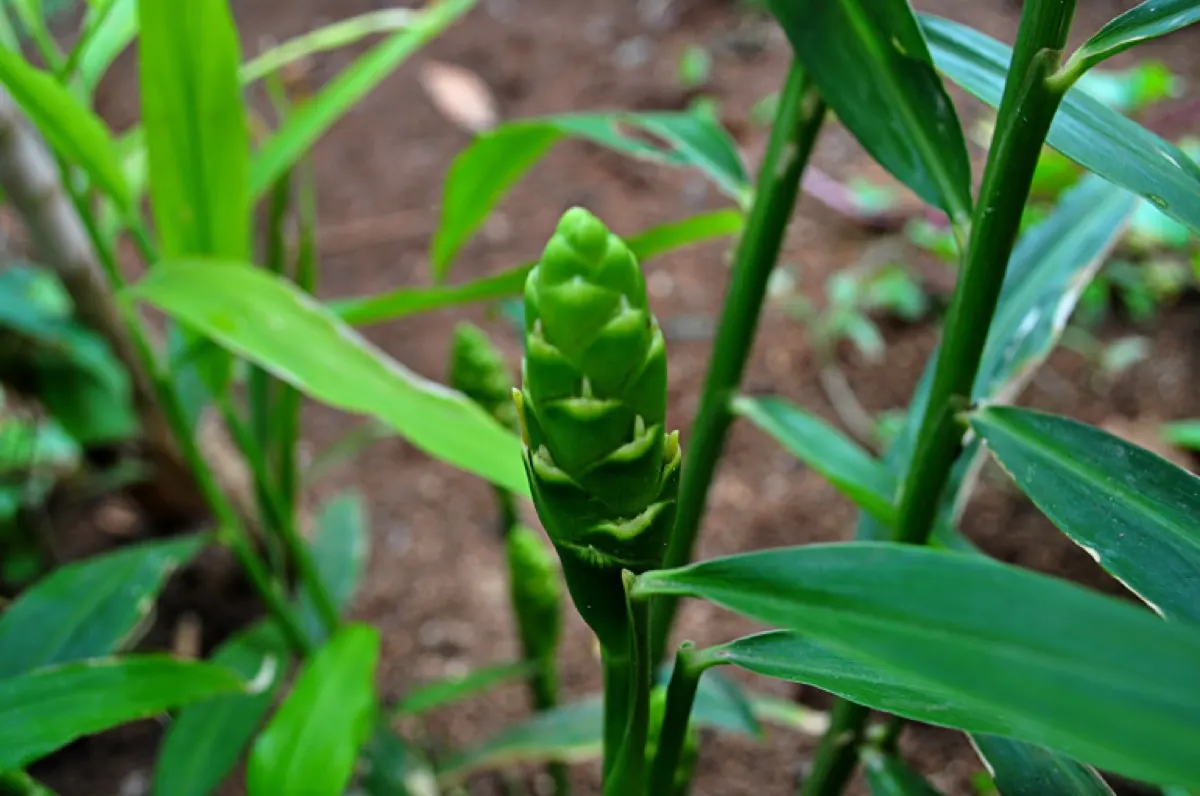
Photo: Venkatx5, CC BY-SA 3.0, Wikimedia Commons

Ginger
Zingiber officinale
EdibleA knobbly tropical rhizome, not a European wild plant at all, but part of the household remedy cupboard across the continent for centuries.
Confused with
Danger: Not dangerous. All are edible relatives, but they are different spices with different uses.
How to tell: Turmeric rhizome is smaller and stains everything vivid orange inside. Galangal is paler, harder, pinkish and smells piney and sharp rather than warm and lemony. Ginger is buff outside, pale yellow inside, and smells of ginger.
Danger: Not food. Some are irritant, and Hedychium is an aggressive invasive in Madeira and the Azores.
How to tell: Ornamental gingers are grown for large showy flowers and their rhizomes lack the sharp warm ginger smell. If the rhizome does not smell of ginger, it is not ginger.
Leaves
Alternate in two opposite ranks up the shoot, narrow and lance-shaped, 15 to 30 cm long and 2 to 3 cm wide, bright green, hairless, with parallel veins and a sheathing base that wraps the stem.
Flowers
Rarely produced in cultivation. When they appear, they come on a separate short stalk as a dense cone-shaped spike of green scales edged yellow, with small purple and cream flowers emerging between them.
Stem
What looks like a stem is a false stem made of rolled leaf sheaths, reed-like and soft. The real stem is the rhizome underground: pale buff-brown, knobbly, branching into flattened finger-like sections, and pale yellow, fibrous and juicy inside.
Smell or taste
A cut or scraped rhizome gives an immediate warm, sharp, lemony-peppery smell that nothing else in a kitchen resembles. Ginger is a confirmed food and tastes hot and pungent, but as everywhere else, identify by the plant and not by taste.
Habitat
Not wild in Europe. Grown in warm, humid tropical conditions across Asia, Africa and the Americas, and grown in Portugal only in pots, greenhouses or very sheltered frost-free gardens in the Algarve and Madeira. It reaches most European kitchens from a shop.
Edible parts
Rhizome, as a spice and food.
Preparation
Fresh rhizome keeps for two to three weeks loose in the fridge, and for months frozen whole, which also makes it easy to grate. To dry, peel and slice thinly across the fibres, spread on mesh and dry in a warm airy place or a dehydrator at low heat for one to two days until the slices snap. Grind to powder and store in a sealed dark jar for up to a year. Infusion is the usual household form for fresh ginger: two or three thin slices of peeled fresh root in a cup of hot water, covered for five to ten minutes, then strained, traditionally with lemon and honey. Dried root is woody, and to get anything out of it you want a decoction rather than an infusion: half a teaspoon of dried chopped root covered with cold water, brought to a simmer and held covered for ten to fifteen minutes, then strained. Ginger is also traditionally candied in syrup, pickled in vinegar, or steeped in honey.
Traditional use
Ginger arrived in Europe along the spice routes and has been in the household cupboard ever since. Across Portugal and the rest of Europe it has traditionally been taken as a hot infusion for travel sickness and a queasy stomach, chewed or sipped on rough sea crossings, drunk with lemon and honey through a winter cold, and used warm for cold hands and stiff joints. It is one of the few traditional remedies that also earns its keep purely as a kitchen ingredient. Recorded custom, not a treatment. Nausea that keeps going, or comes with severe pain, needs a doctor.
Harvest rule
There is nothing to forage: ginger is not wild in Europe. Grow your own by planting a plump shop-bought rhizome with visible buds in a large pot of rich compost, keeping it warm, humid and shaded, and lift it after eight to ten months when the leaves yellow. If you buy it, buying from growers who are paid properly matters more than any sustainability rule about picking. Ornamental gingers that have escaped in Madeira and the Azores are invasive and should not be spread.
Gengibre (PT); jengibre (ES)