 Human Skills
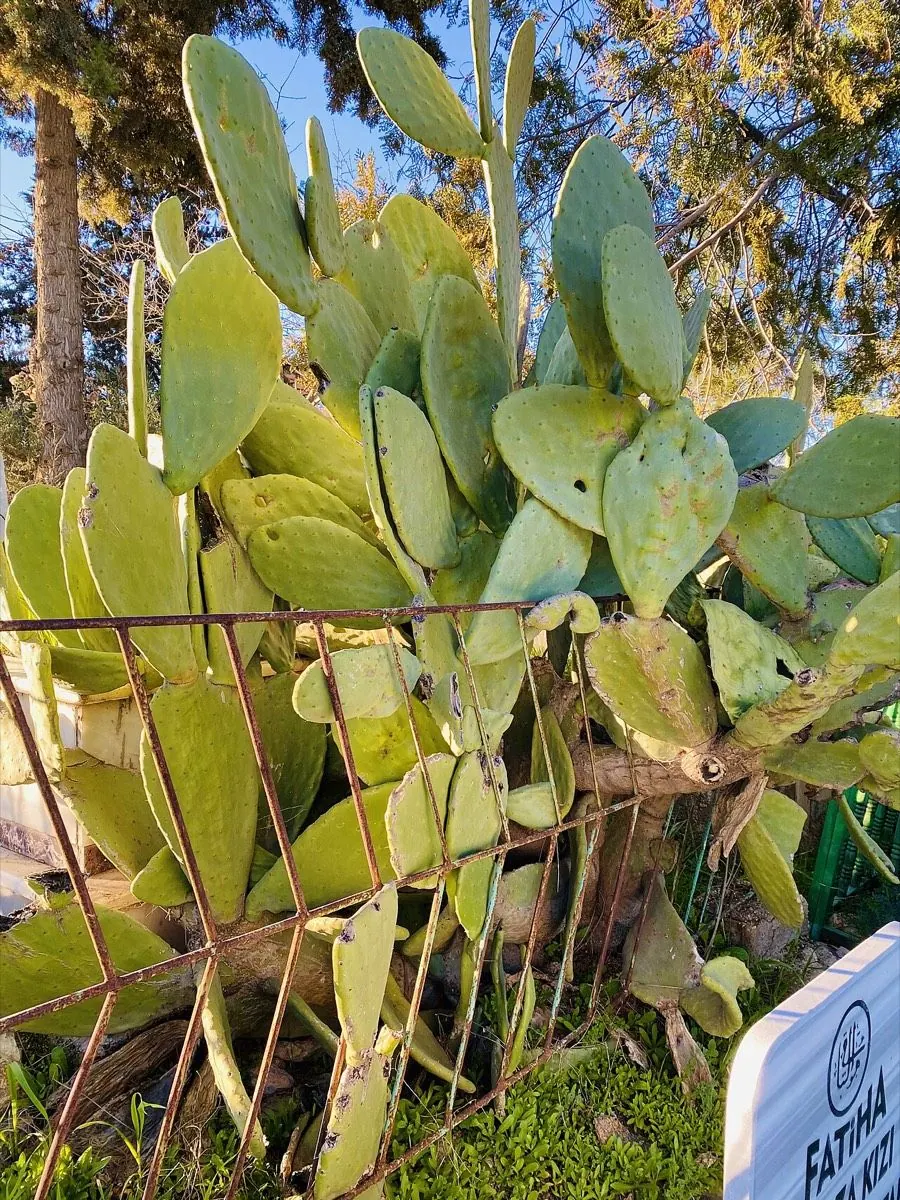
Photo: YG01, CC BY 4.0, Wikimedia Commons

Prickly Pear
Opuntia ficus-indica
EdibleExcellent fruit guarded by glochids: hair-fine barbed bristles that are almost invisible, embed in skin and lips, and are the real reason people regret this plant.
Confused with
Danger: No toxic lookalike exists for the fruit, but some relatives have far worse spines and poor fruit.
How to tell: Opuntia ficus-indica has large flat oval pads and big egg-shaped fruit sitting upright on the pad rim. Segmented cylindrical-stemmed cacti are not this plant. All Opuntia fruits are non-toxic, so the risk here is physical, not chemical.
Danger: The real hazard. Glochids detach at a touch, blow in a breeze, and lodge in skin, eyes, lips, tongue and throat. In the mouth and throat they cause burning, swelling and days of misery, and swallowing badly cleaned fruit has caused serious gut irritation. Embedded glochids can cause weeks of dermatitis and can become infected.
How to tell: Assume every pad and every fruit is covered in them, including fruit that looks smooth, and including fruit that has been sitting in a bucket with other fruit. Never pick one bare-handed, never wipe your face while harvesting, and never bite into an unpeeled fruit.
Leaves
No true leaves. The plant is made of flat oval or paddle-shaped green pads (cladodes) 20-50 cm long and 1-3 cm thick, growing one from the edge of another. Tiny conical true leaves appear briefly on new pads and drop.
Flowers
Large, showy, 5-9 cm across, bright yellow to orange or occasionally red, sitting on the rim of the pad in spring and early summer, with many petals and a mass of stamens.
Stem
The pads are the stem. Each pad carries regularly spaced small round cushions called areoles, and every areole holds a tuft of glochids: fine yellow-brown barbed bristles 2-5 mm. Some varieties also carry long white spines 1-5 cm; cultivated forms may look spineless but still have glochids, which is the trap.
Smell or taste
Almost no smell. The ripe fruit is confirmed safe once peeled and tastes sweet, floral and melon-like, somewhere between watermelon and fig, with hard seeds throughout.
Habitat
Dry stony slopes, old terraces, walls, roadsides and abandoned land across the Algarve, the Alentejo, the Portuguese islands and the whole Mediterranean. Introduced from the Americas and now aggressively invasive in many areas.
Edible parts
Ripe fruit, and the young pads (nopales) while they are still tender.
Preparation
Harvest: work in the early morning when there is no wind, wear thick leather gloves and long sleeves and eye protection, and twist each fruit off with tongs into a bucket. Never carry the bucket against your body. Traditional practice is to sweep or brush the fruit before handling. Removing glochids from the fruit, and all four methods are used: roll the fruit vigorously on rough ground, sand or grass with a stick; or brush each fruit hard with a stiff brush under running water; or hold it briefly over a flame so the bristles burn off, turning it so the skin does not cook; or put the fruit in a bucket of water, agitate hard, and pour the water away carefully, since the glochids float and will end up on your hands otherwise. Whichever you use, always finish by rinsing the fruit under cold running water for a good half minute. Peeling, the safe method: hold the fruit steady with a fork, never with your fingers. Cut off both ends, then slit the skin lengthwise down one side and peel the thick skin back like a jacket with a knife. The fleshy centre lifts out clean. Discard the skin somewhere nobody will walk barefoot. Eat the flesh chilled. The seeds are hard and are usually swallowed whole or spat out, not chewed. Eaten in large quantity the seeds can genuinely form a blockage, so eat a few fruit at a sitting, not twenty. For juice, blend the peeled flesh briefly, without breaking the seeds, and strain. Pads: cut young pads under 20 cm with a knife, scrape every areole off both faces with the back of a knife blade under running water, trim the rim entirely, then dice and boil 10 to 15 minutes, or grill whole 5 minutes a side. They are slimy like okra; boiling and rinsing reduces it. If you get glochids in your skin, do not rub. Pull the visible ones with tweezers under good light, then lift the rest with adhesive tape pressed and peeled, or by spreading a thin layer of white PVA glue over the area, letting it dry for 30 minutes and peeling it off. Glochids in the eye need medical help the same day.
Traditional use
Fruit and pads are food across Mexico, North Africa and the Mediterranean, and the pad has a traditional Mexican use as a cooling poultice on burns and as a food valued for people with sugar problems. That last point is folk practice, not a treatment: nobody should manage diabetes with cactus.
Harvest rule
Opuntia is an invasive species in Portugal and much of the Mediterranean, so harvesting it hard helps rather than harms, but do not propagate it: never drop a pad or a piece of pad on clean ground, because a single fragment roots and starts a colony, and moving or planting it is restricted under Portuguese invasive species legislation. Dispose of pads and skins in household waste, not on the ground or the compost heap. The plants still stand on somebody land, usually old terraces and field walls, so ask before picking, and check ICNF rules inside protected areas. Foraging law varies by country.
Figo-da-india, tabaibo, figueira-da-india (PT), chumbera, higo chumbo (ES), figue de barbarie (FR)