 Human Skills
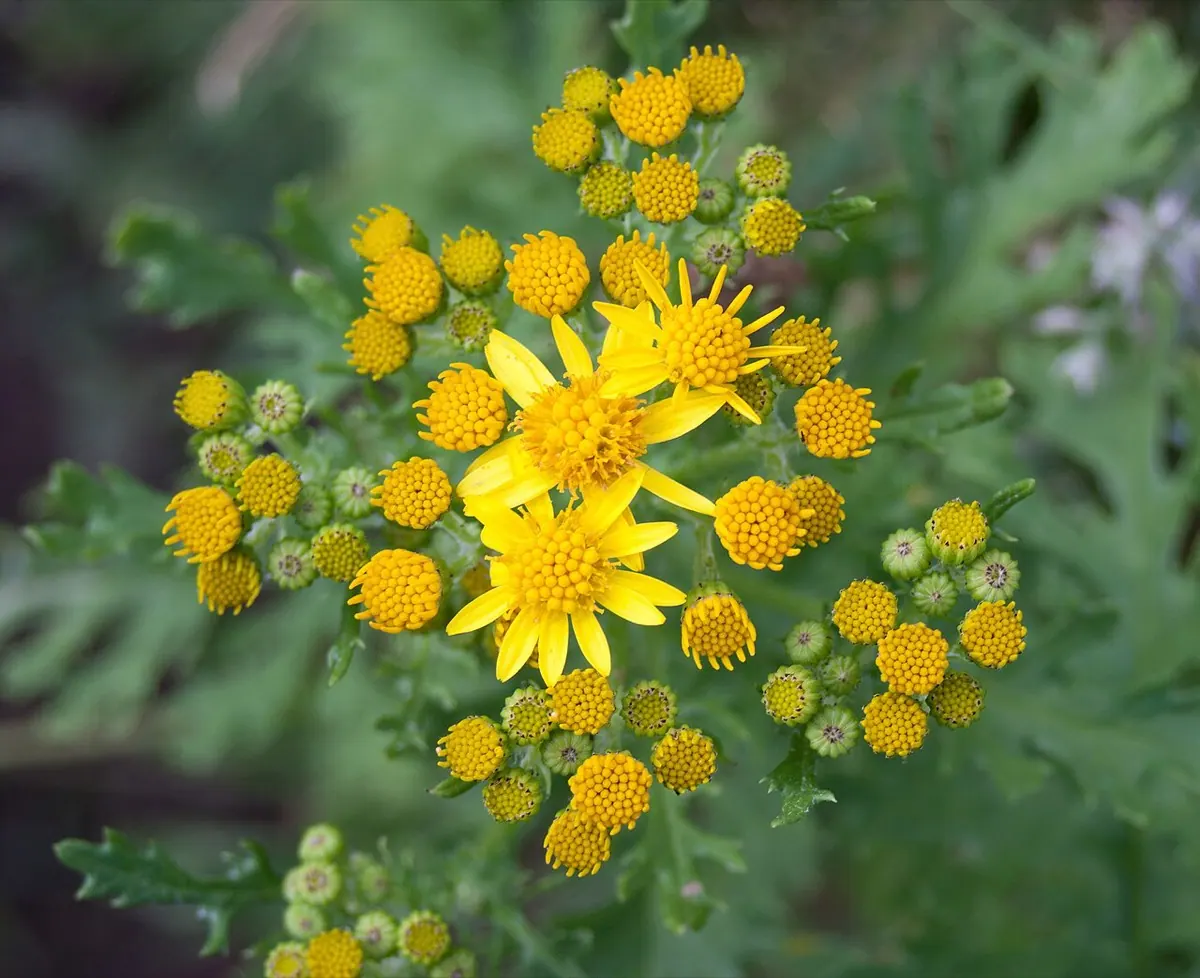
Photo: Julie Anne Workman, CC BY-SA 3.0, Wikimedia Commons

Ragwort
Jacobaea vulgaris, formerly Senecio jacobaea
PoisonousIt destroys the liver slowly and silently, and the damage adds up over months from small doses.
Confused with
Danger: Pyrrolizidine alkaloids damage liver cells cumulatively. There may be no symptoms at all for months, then jaundice, weight loss, abdominal swelling and liver failure. The damage does not reverse and small repeated doses are as dangerous as one large one.
How to tell: Count and look. St John's wort has small paired untoothed leaves that show tiny translucent pin-prick dots when held to the light, and five-petalled flowers with a bush of stamens. Ragwort has ragged deeply lobed leaves and proper daisy flowers with a ring of about 13 narrow rays around a disc. Daisy-shaped flower plus ragged lobed leaves means do not brew it.
Danger: Nearly all Senecio and Jacobaea species contain the same liver alkaloids, so telling them apart does not help you, and folk remedies using any of them are unsafe.
How to tell: There is no useful difference for safety. Treat the whole group as off limits for internal use, and never buy a herbal tea that lists Senecio.
Danger: First-year ragwort rosettes get pulled into a salad basket with wild rocket and dandelion. The liver damage builds silently.
How to tell: Rocket and dandelion rosettes have leaves with a pointed or sharply toothed end lobe and smell peppery or milky when torn. Ragwort leaves have a rounded blunt end lobe, a ragged outline and a bitter smell, and never bleed white sap. Blunt ragged lobes with no sap means put it down.
Leaves
Dark green, 5 to 20 cm, deeply cut into irregular blunt-toothed lobes with a larger blunt end lobe, giving a ragged look that gives the plant its name. Slightly cottony underneath when young. Rosette leaves stalked, stem leaves clasping and alternate.
Flowers
Dense flat-topped heads of bright yellow daisies, each 15 to 25 mm across, with about 13 narrow ray petals around a darker yellow centre. Many heads together on one plant, often 20 to 60.
Stem
Upright, tough, ridged, green often flushed purple-red at the base, branching only near the top, slightly cottony. Not hollow.
Smell or taste
Crushed foliage smells unpleasant and bitter. Never taste it. Animals avoid the taste when it is growing and eat it readily once it is cut and wilted, which is the whole problem.
Habitat
Overgrazed pasture, paddocks, roadsides, waste ground, dunes, railway banks and neglected fields. Very common across Europe and in northern and central Portugal.
Preparation
There is no preparation that makes it safe. Drying does not destroy the alkaloids, and dried ragwort in hay is more dangerous than living plants because animals will eat it. Boiling, tincturing and infusing all carry the alkaloids straight through. Never use it as a tea, tincture, poultice for broken skin or animal feed.
Traditional use
Used in old folk practice as a wound wash and a gargle. Pyrrolizidine alkaloids are now known to cause irreversible liver damage and to be carcinogenic, and they can pass through into honey and milk. Do not use it internally in any form, and do not accept it in any herbal mixture.
Harvest rule
Pull it, do not gather it. Gloves and long sleeves, pull the whole root before it seeds, and bag or burn the material well away from stock rather than leaving it in the field. Ragwort also feeds many specialist insects, including the cinnabar moth, so on land with no grazing animals and no hay cutting it is reasonable to leave it. In the UK and in several other countries ragwort is a legally listed injurious weed with duties on landowners to control it where it threatens grazing or hay, so check your national and local rules, and get the landowner's agreement before clearing.
Tasneirinha, erva-de-sao-tiago (PT); common ragwort, tansy ragwort (EN)