 Human Skills
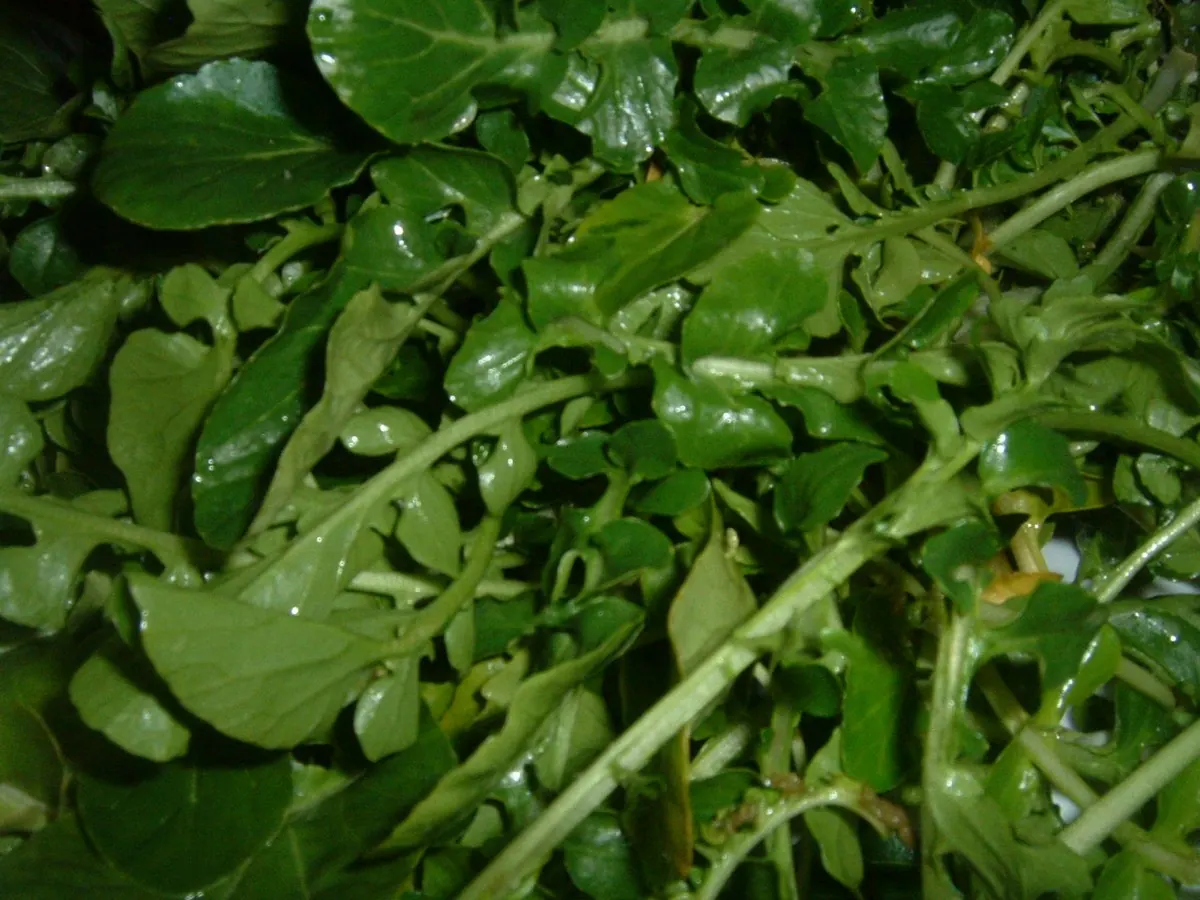
Photo: Masparasol, CC BY 3.0, Wikimedia Commons

Watercress
Nasturtium officinale
EdibleA superb peppery green that carries a real parasite risk from the water it grows in, which is why the safe rule is simple: cook it.
Confused with
Danger: Deadly. The most poisonous plant in Britain and widespread in Portugal. Violent convulsions within the hour and frequently death. It grows in and beside exactly the same streams and its young growth can sit in the same patch as watercress.
How to tell: Count the flower petals and look at the leaf shape. Water-dropwort carries white flowers in a flat compound umbel, like a cow parsley, never in a small four-petalled cross, and its leaves are divided into wedge-shaped toothed celery-like leaflets, not the rounded glossy leaflets with one bigger end leaflet that watercress has. Its stem is grooved and ridged, not smooth and round. If there is any umbellifer in the patch, harvest somewhere else entirely.
Danger: Fool's watercress itself is edible, but it is in the carrot family, it looks close to hemlock water-dropwort, and confusing the three is how people die. Treat it as a warning sign, not a bonus.
How to tell: It has flat pointed toothed leaflets and tiny white flowers in small umbels, not four-petalled crosses. If you cannot tell fool's watercress from water-dropwort at a glance, and most people cannot, do not pick anything with umbel flowers from a stream.
Danger: Suspected toxic and easily confused with the above. Not food.
How to tell: Umbel flowers again, and a ring-like joint on the leaf stalk. Same rule: four petals in a cross or leave it.
Leaves
Alternate, pinnate: each leaf divided into 3 to 11 rounded leaflets along a central stalk with one larger rounded leaflet at the tip. Dark glossy green, hairless, thick and slightly fleshy. Leaflets have wavy or shallowly toothed edges.
Flowers
Small white four-petalled crosses, 4-6 mm across, in short clusters at the shoot tips, followed by slim curved seed pods 1-2 cm long held out from the stem. Four petals in a cross is the cabbage-family signature.
Stem
Round, hollow, smooth, hairless, fleshy, pale green, trailing or floating with white roots dangling from the joints. Not ridged, not hairy.
Smell or taste
Little smell when crushed, slightly cabbagey. The taste is hot and peppery like mustard, and it is confirmed safe only once the plant is identified and cooked. Do not taste unknown water plants to identify them.
Habitat
Clean cold running water: spring heads, shallow streams, ditches with flow, watercourse edges. Common in the wetter north and centre of Portugal and in spring-fed valleys further south. Standing stagnant water is the wrong habitat and the wrong risk.
Edible parts
Leaves and tender stems, best before flowering.
Preparation
The identification is only half the problem. Wild watercress in water grazed by sheep or cattle can carry the liver fluke Fasciola hepatica, whose infective cysts stick to the leaves. Washing, vinegar and salt water do not reliably remove them. There is one safe answer: cook it. Bring the cress to a proper boil or a full simmer for at least 2 minutes and the cysts are destroyed. Practically, that means watercress soup, which is also the best thing to do with it: sweat an onion and a peeled potato in butter, add 1 litre of stock, simmer 15 minutes, add 200 g of washed watercress, simmer 5 minutes and blend. Wilting it into a pan of hot oil for 30 seconds is not enough. If you want raw peppery salad leaves, grow watercress yourself in clean piped water, or buy the cultivated kind, which is grown in controlled spring water for exactly this reason. Never gather from water downstream of pasture, a farmyard, a septic outflow or a village, and never from water that is still and stagnant, because the parasite risk comes with sewage and animal contamination as well.
Traditional use
Eaten across Europe as a strong spring green and traditionally regarded as a blood cleanser and a remedy for scurvy on long voyages, since it is genuinely rich in vitamin C. Anything beyond food and vitamin content is folklore.
Harvest rule
Cut the top growth with scissors and leave the rooted stems in place so the bed regrows. Do not trample the stream bed, which destroys spawning gravel and bank structure. Watercress beds are important freshwater habitat and many streams in Portugal are already under pressure from abstraction. Foraging law varies by country: watercourses and their banks are frequently regulated separately from the land, riverbank access in Portugal may be public but the adjoining land is not, and ICNF rules apply inside protected areas. Ask locally and never enter fenced land.
Agriao, agriao-de-agua (PT), berro (ES), cresson de fontaine (FR)