 Human Skills
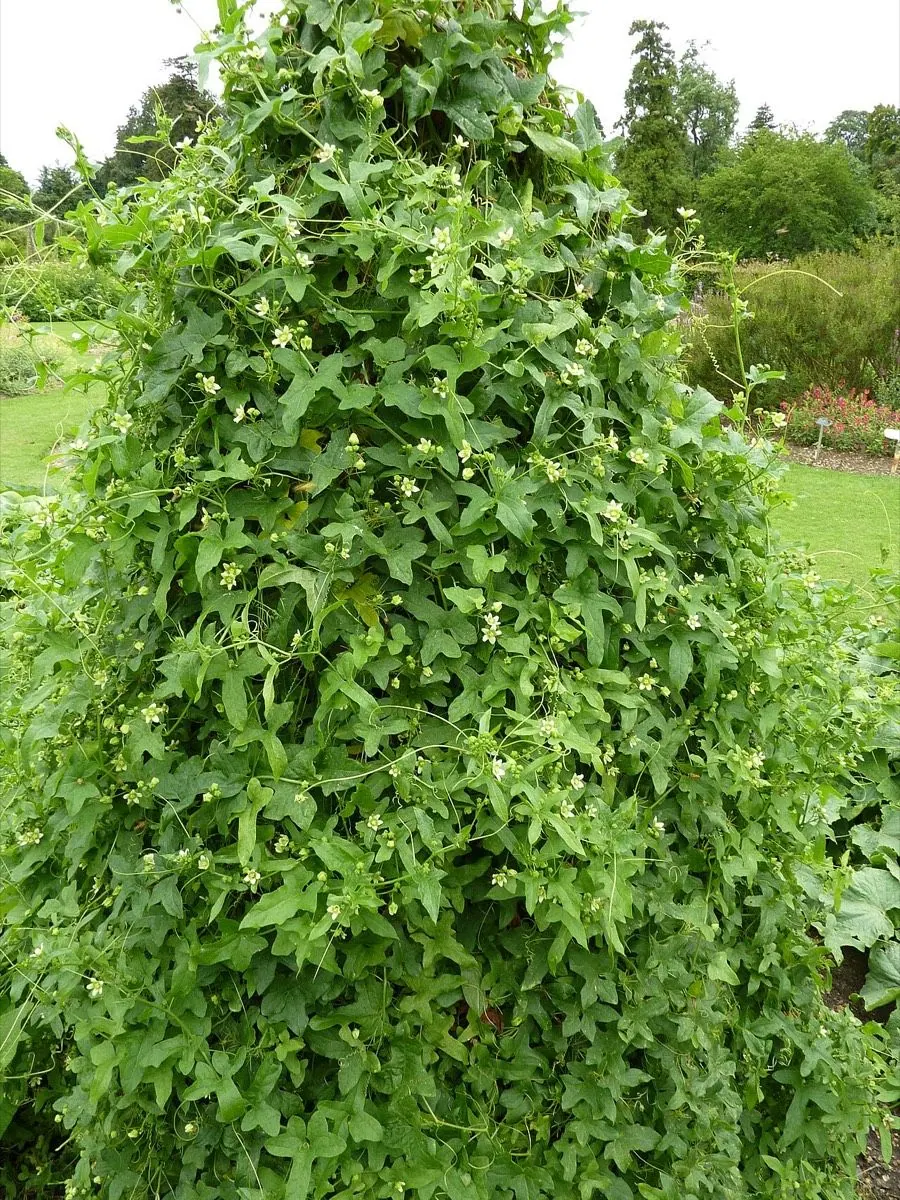
Photo: Magnus Manske, CC BY-SA 3.0, Wikimedia Commons

White Bryony
Bryonia dioica
PoisonousA wild vine with a huge parsnip-like root and red berries, and it purges the gut so violently that people have died of it.
Confused with
Danger: Cucurbitacins cause violent burning vomiting and diarrhoea, cramping, dehydration, kidney damage and collapse. As few as fifteen berries have killed a child, and the root has killed adults who dug it for food or a remedy.
How to tell: Follow the root up to the plant before you dig. A bryony root is attached to a rough bristly climbing vine with coiled tendrils and lobed ivy-like leaves. No root vegetable climbs. If the top of the plant has tendrils, the root is not food.
Danger: Black bryony berries and roots are also poisonous and grow in the same hedges, so a mistake either way is a poisoning. Its sap also blisters skin.
How to tell: Black bryony has glossy, heart-shaped, untoothed leaves and twines its whole stem around supports with no tendrils at all. White bryony has rough lobed leaves and climbs with coiled tendrils. Neither is food.
Danger: The red berries hang at child height in autumn hedges beside blackberries. The result is severe vomiting and dehydration.
How to tell: Bryony berries sit on a rough-leaved tendrilled vine, not on a woody bush, and hang in small bunches of a few round berries at the leaf joints. Any berry on a climbing vine in a hedge is not worth the risk.
Leaves
Rough, bristly, mid-green, 4 to 10 cm across, with five pointed lobes like a small ivy or vine leaf, alternate, each with a spirally coiled unbranched tendril springing from the side of the leaf base.
Flowers
Small greenish-white flowers 1 to 2 cm with five veined petals, male and female on separate plants, in small clusters at the leaf joints. Berries are round, smooth, 6 to 10 mm, ripening green to bright red, hanging in small bunches through the hedge in autumn.
Stem
Thin, angled, harshly bristly, climbing by tendrils. Below ground it makes an enormous fleshy white-yellow tuber, sometimes the size of a large parsnip or a man's thigh.
Smell or taste
Crushed foliage smells rank. The root is bitter and acrid. Never taste it, and do not test the root's bitterness in your mouth.
Habitat
Hedgerows, scrub, woodland edges, fences and waste ground on light soils. Common in northern and central Portugal and across western Europe.
Preparation
No preparation makes it safe. Boiling, roasting, drying and repeated soaking do not remove the cucurbitacins from root, leaf or berry. Do not use it as a vegetable, a purgative or an animal feed.
Traditional use
The root was used in folk medicine as a drastic purgative and sometimes sold as a substitute for mandrake root in charms. Those purgative doses were frequently fatal. There is no safe home use.
Harvest rule
Clear it from hedges around paddocks, poultry runs and paths children use. Gloves on, cut the vine and dig out the tuber, which regrows from any piece left behind, and bag the berries so seed is not spread. Get the landowner's permission before cutting hedge growth, and avoid clearing hedges during the bird nesting season, which is restricted in many countries.
Norca, briónia-branca, nabo-do-diabo (PT); white bryony (EN)