 Human Skills
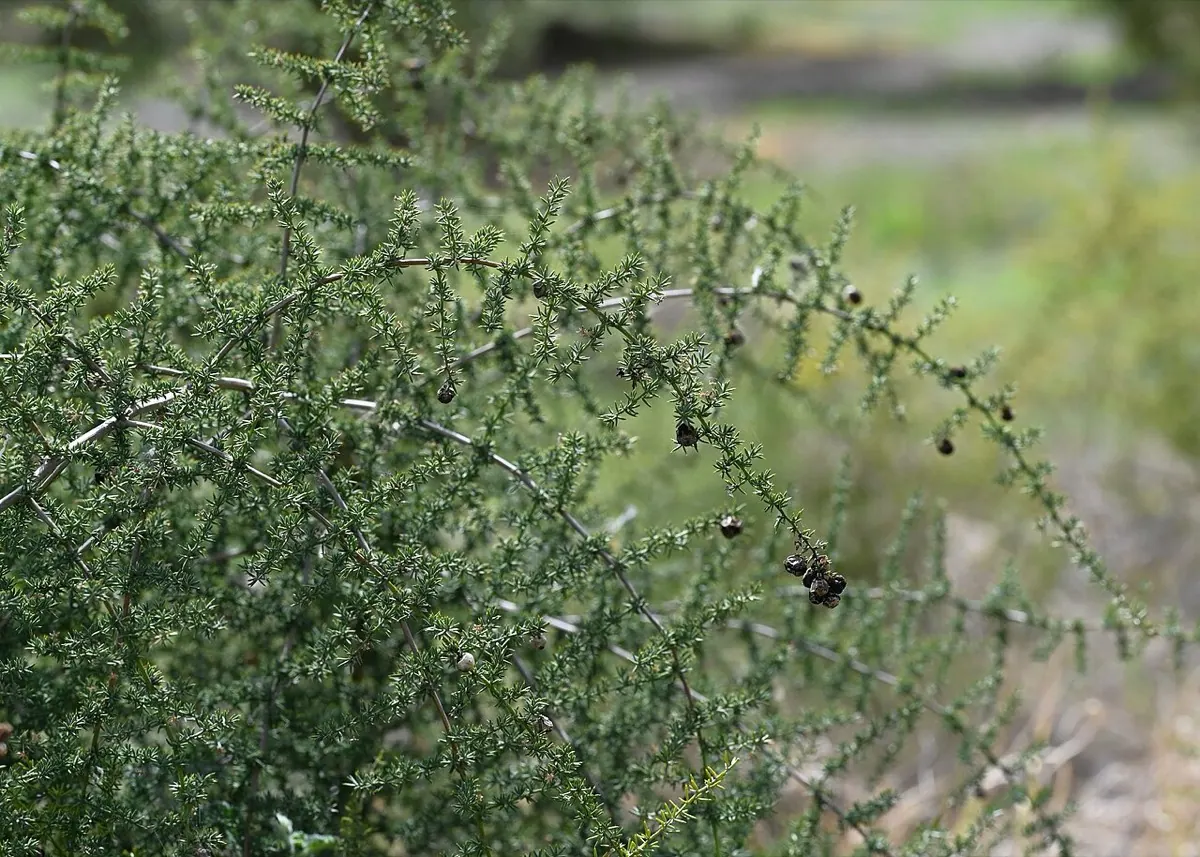
Photo: Krzysztof Ziarnek, Kenraiz, CC BY-SA 4.0, Wikimedia Commons

Wild Asparagus
Asparagus acutifolius
EdibleThin bitter spears pushed up in spring from a spiny evergreen scrambler, and the great foraging tradition of the Portuguese and Spanish countryside.
Confused with
Danger: Toxic. Causes intense burning of mouth and throat from oxalate needles, vomiting and violent stomach upset, and the sap blisters skin. Its spring shoots come up as thin twining stems in the same hedgerows and are the classic mistake.
How to tell: Black bryony shoots twine and spiral as they grow and carry broad glossy heart-shaped net-veined leaves, and there is no prickly parent plant. Wild asparagus spears are stiff and straight with tight scale bracts, and there is always a spiny asparagus bush in the same spot. Check what the shoot is attached to before you cut.
Danger: Toxic. Severe vomiting and diarrhoea; the root is dangerous. Grows in the same hedges.
How to tell: Bryony shoots are hairy and rough with curling tendrils and vine-like lobed leaves. Asparagus spears are smooth, hairless and never carry a tendril.
Danger: None. It is the same vegetable, thicker and milder.
How to tell: Soft, non-prickly cladodes and much thicker spears. Eat it happily.
Danger: The red or black berries of every asparagus are toxic and cause vomiting and stomach pain. They are not part of the harvest.
How to tell: Eat only the spring spears. Never eat any berry from an asparagus plant, cultivated or wild.
Leaves
There are no true leaves. What look like leaves are cladodes: stiff needle-like green shoots 4-10 mm long, sharply pointed and prickly to the touch, arranged in dense tufts of 10 to 30 around the stem. This is the plant that stabs you when you reach into a hedge.
Flowers
Small, 3-5 mm, greenish-yellow bells hanging singly or in pairs from the joints in late summer and autumn, easy to miss. Followed by round berries that ripen from green to shiny black.
Stem
Woody, wiry, much branched, tough and grey-green, often with small hooked spines. The edible spear is a single smooth green or purple-tinged shoot with tight scale-like bracts flattened against it, exactly like a thin cultivated asparagus.
Smell or taste
Little smell when crushed, faintly green. Confirmed safe once identified; the spear tastes like cultivated asparagus but much more strongly, with a real bitterness that is exactly why country cooks prize it.
Habitat
Dry scrub, olive and cork oak groves, hedgerows, dry stone walls, terraces, sunny rocky slopes and matos throughout Portugal, Spain and the Mediterranean. It likes the shelter of a thorn bush.
Edible parts
The young spring spears only, snapped where they break cleanly.
Preparation
Do not cut with a knife at the base, which risks damaging the crown and gives you a woody end. Bend the spear and let it snap: it breaks exactly where it stops being tender. Wild asparagus is much more bitter than the shop kind, so cook it briefly. A classic Alentejo and Spanish treatment: chop 300 g of spears into 3 cm lengths, fry in 3 tablespoons of olive oil with a sliced garlic clove for 4 to 5 minutes until just tender, then pour in 4 beaten eggs and scramble loosely. Salt at the end. Alternatively blanch 2 to 3 minutes in salted boiling water and dress with oil and vinegar, or drop into a rice or a soup in the last 5 minutes. It freezes acceptably after a 2 minute blanch, but its season is short and it is best eaten fresh.
Traditional use
A food tradition rather than a remedy in Portugal and Spain, where the spring espargos hunt is a social ritual. The related cultivated asparagus root has a mild diuretic reputation in old European herbals, but there is nothing worth repeating as folk medicine here.
Harvest rule
Take no more than two or three spears from any one plant and leave the rest to grow into the fern that feeds the crown for next year. A plant stripped every spring dies out, and the crowns take years to establish. Never dig a root. Foraging law varies by country and Iberian asparagus rules are specific: in parts of Spain collection is regulated by quantity, and in Portugal the land under olive, cork and holm oak is almost always private, so ask the owner. Inside ICNF national and natural parks and Rede Natura sites, check what collection is permitted before you start, and never damage cork or holm oaks or their bark while reaching into scrub.
Espargo-bravo, esparguinho (PT), esparrago triguero (ES), asperge sauvage (FR)