Human Skills
Fermentation Basics: Sauerkraut
Two percent salt and a little patience
5 minIntermediateUpdated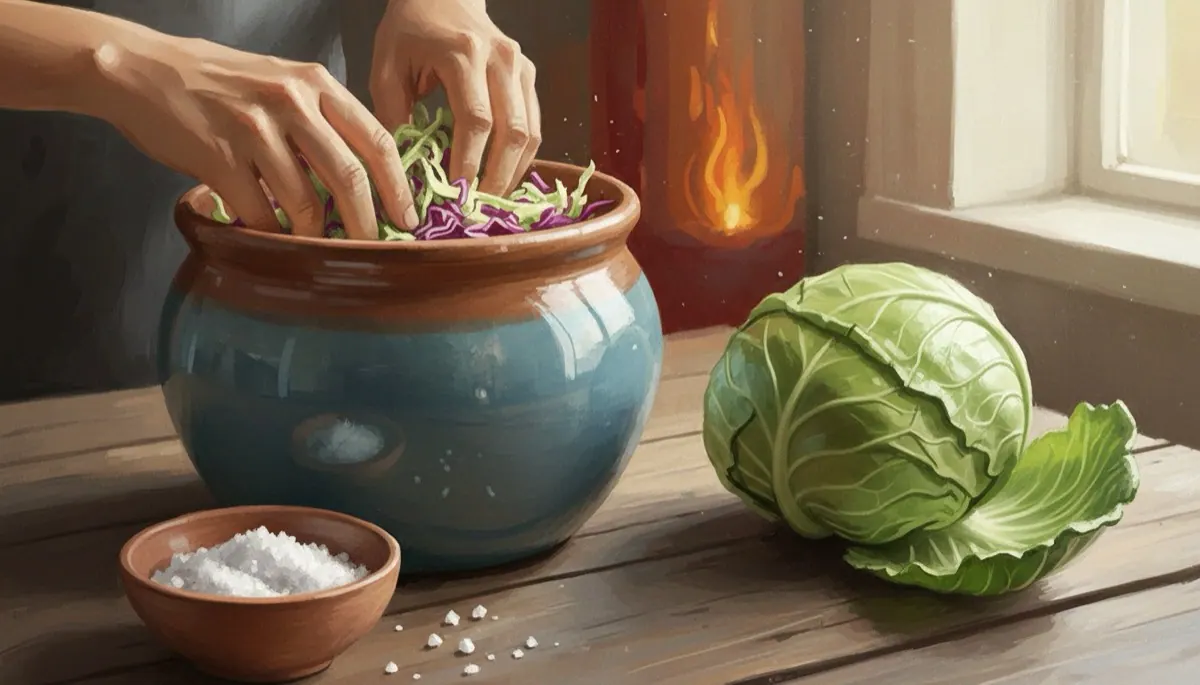
- Explain how lactic acid bacteria preserve vegetables
- Make sauerkraut with 2 percent salt by weight
- Keep a ferment submerged and know when it is ready
How fermentation preserves
Raw vegetables carry lactic acid bacteria on their surface. Give them salt and no oxygen and they win the race against everything else: they eat the vegetable’s sugars and produce lactic acid, which drops the pH below 4.6 within days and keeps spoilage organisms and botulinum out. The salt does two jobs. It pulls water from the cabbage to make its own brine, and it slows the wrong microbes long enough for the right ones to take over. The result is a sour, crunchy, vitamin-rich food that keeps for months in the fridge. Sauerkraut is the ideal first ferment because cabbage carries plenty of the right bacteria and needs nothing but salt.
Why 2 percent by weight
Weighing salt is what makes ferments reliable. Too little salt and soft, slimy or mouldy kraut follows; too much and the bacteria stall and the kraut stays salty and raw. The tested range is 1.5 to 2.5 percent of the vegetable weight, and 2 percent is the sweet spot for cabbage. Weigh the shredded cabbage after trimming, multiply by 0.02, and weigh that amount of salt. One kilo of cabbage takes 20 g of salt, about a level tablespoon of fine salt, but weigh it rather than guess. Use non-iodised salt with no anti-caking agents; sea salt or pickling salt is ideal. Iodine and additives can slow the bacteria and cloud the brine.
Making the kraut
Remove the outer leaves of a fresh cabbage and keep one clean leaf. Quarter, core and shred the rest finely. Weigh it, add 2 percent salt, and massage with clean hands for 5–10 minutes until it goes limp and a pool of brine collects. Pack into a clean glass jar a handful at a time, pressing hard so brine rises above the cabbage. Leave 3–5 cm of headspace. Lay the reserved leaf on top and weigh it down with a small jar of water or a glass fermentation weight so everything stays under the brine. Cover loosely, or with an airlock lid, so gas can escape. Set on a plate at 18–22 °C out of direct sun.
Watching it work
Within 24–48 hours bubbles appear and the brine turns cloudy: that is the bacteria at work. Check daily. Press the cabbage back under the brine if it rises, and skim off any white film of kahm yeast, which is harmless but tastes off. Taste from day 5 with a clean fork. Mild kraut is ready in 1–2 weeks at room temperature; a sharper, more complex flavour comes at 3–4 weeks. Warmer rooms ferment faster and softer; cooler rooms slower and crunchier. When you like the taste, screw the lid on and move it to the fridge, where it will keep for at least 6 months and go on slowly maturing.
Good signs and bad signs
Good: sour clean smell, cloudy brine, bubbles, cabbage turning pale gold, a white film of kahm yeast that skims off easily. Bad: fuzzy mould of any colour, especially blue, black, pink or green, which means the vegetables were exposed to air; a slimy or ropy brine; a rotten rather than sour smell; a mushy texture throughout. If you see mould or the smell is rotten, throw the whole batch away and start again with a cleaner jar and a heavier weight. Fermented vegetables are among the safest home-preserved foods because the acid is your protection, but that protection only exists under the brine.
Check yourself
1500 g times 0.02 is 30 g. Weigh it rather than guess.
The acid produced in the first days makes the environment hostile to botulinum and spoilage organisms.
Lactic acid bacteria work without air; mould needs air. The brine keeps oxygen away.
Fuzzy mould can send filaments below the surface. A white flat film of kahm yeast can be skimmed, but fuzzy mould means discard.
Try it for real: One jar of sauerkraut
- Shred and weigh one cabbage, then weigh out 2 percent salt
- Massage until brine pools, pack tight into a jar under a weight
- Check and press down daily; taste from day 5
- Move to the fridge when you like the flavour and write the date on the lid
🛒 Gear for this skill
As an Amazon Associate I earn from qualifying purchases. It costs you nothing extra and keeps this site free.
Next lesson: Pickling: Quick and Fermented →
Written and checked by the Human Skills team against the sources below. How we check our content
- National Center for Home Food Preservation (NCHFP)
- FAO Fermented Fruits and Vegetables: A Global Perspective