Human Skills
Pickling: Quick and Fermented
Vinegar pickles, brine pickles and reading spoilage
5 minAdvancedUpdated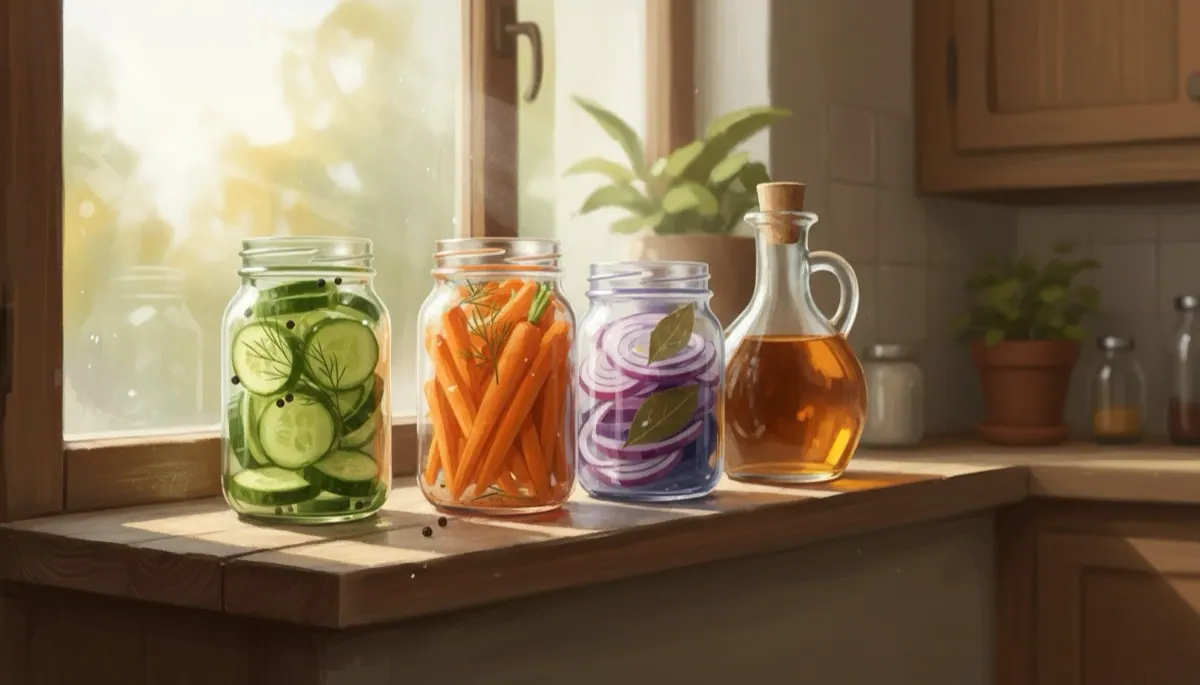
- Tell vinegar quick pickles from fermented pickles
- Make a safe refrigerator pickle with 5 percent vinegar
- Brine-ferment cucumbers and read the signs of spoilage
Two kinds of pickle
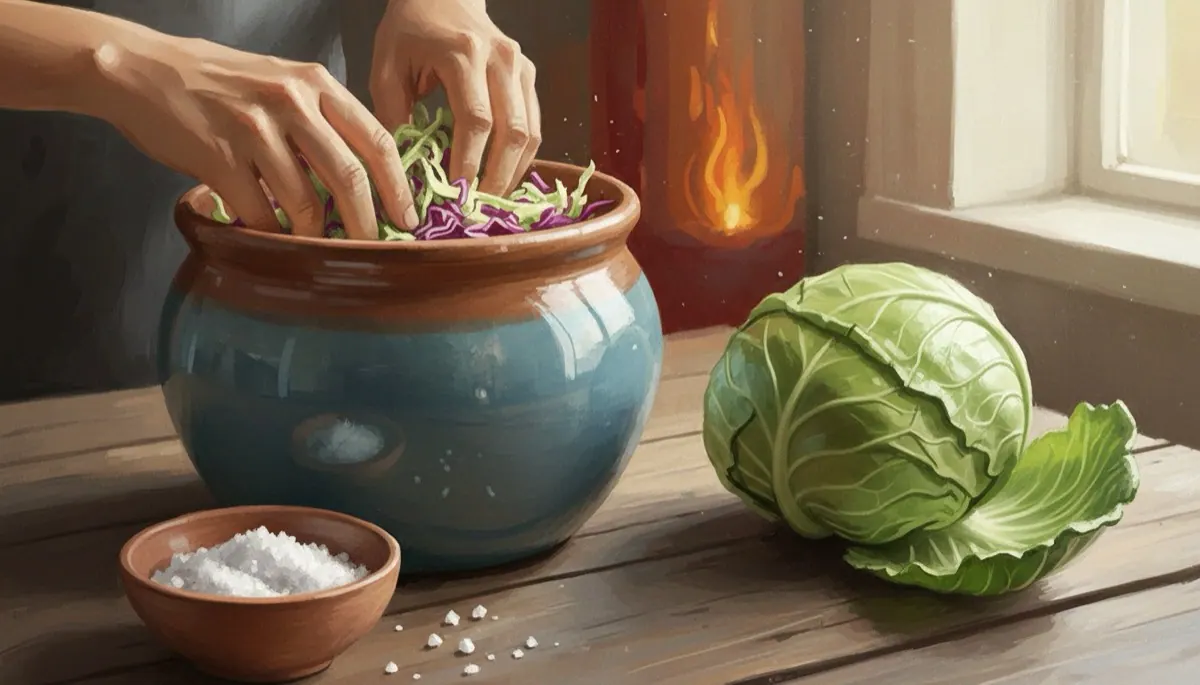
A quick pickle gets its sourness from vinegar you pour in. It is ready in hours, tastes sharp and clean, and is kept in the fridge. A fermented pickle gets its sourness from lactic acid bacteria, exactly like sauerkraut: vegetables in a salt brine for days or weeks until the bacteria make the acid themselves. It tastes deeper and slightly fizzy and contains live cultures. Both are safe when done right because both end up acidic, below pH 4.6. The confusion, and the danger, comes from mixing the methods: a weak vinegar or a weak brine is neither, and the jar is then a low-acid food sitting at room temperature.
Refrigerator quick pickles
Use vinegar labelled 5 percent acidity; most white, cider and wine vinegars are, but check, because some cheap vinegars are weaker. A reliable ratio is equal parts vinegar and water by volume, plus 1 tablespoon of salt and 1–2 tablespoons of sugar per 500 ml of liquid, brought to the boil. Pack sliced cucumber, onion, carrot, radish or peppers into a clean jar with garlic, dill or mustard seed, pour the hot liquid over to cover, cool, and refrigerate. Ready in 24 hours, good for 3–4 weeks in the fridge. These are refrigerator pickles: they have not been processed, so they are never shelf-stable and must stay cold.
Brine-fermented cucumbers
Choose small, firm, unwaxed cucumbers and trim 3 mm off the blossom end, which carries enzymes that make pickles soft. Make a 3.5 percent brine for cucumbers, which are wetter than cabbage: 35 g non-iodised salt in 1 litre of water, stirred until dissolved. Pack the cucumbers upright in a jar with garlic, dill and a few peppercorns, and a tannin source such as a grape, oak or blackcurrant leaf, or a pinch of black tea, to keep them crisp. Pour brine to cover by 3 cm, weigh down, cover loosely, and keep at 18–22 °C. Half-sours are ready in 3–5 days; full-sours in 2–3 weeks. Then refrigerate.
Making pickles shelf-stable
Both kinds of pickle can be canned for the shelf, but only with a tested recipe from the USDA or NCHFP, water-bath processed for the stated time, because those recipes guarantee the final acidity. Do not invent a canned pickle recipe, reduce the vinegar because it tastes too sharp, or add extra low-acid ingredients such as peppers or onions beyond what the recipe states. Fermented pickles are usually stored in the fridge rather than canned, which preserves the live cultures and the crunch. If in doubt, keep every pickle in the fridge and eat it within a month or two. Cold storage costs nothing and removes the risk.
Reading spoilage in any preserve
Learn these signs and apply them to every jar in this category. Discard, without tasting: fuzzy mould of any colour; a slimy, ropy or thick brine; a rotten, cheesy or sulphur smell rather than a clean sour one; mushy vegetables all the way through; bulging lids or spurting liquid on a canned jar; gas or fizzing in a jar that was not meant to ferment; pink or dark discolouration in brine. Harmless: a flat white film of kahm yeast on ferments, cloudy brine in a fermented pickle, and a cucumber that turns from bright to olive green. When you are unsure, the answer is the bin. No jar of pickles is worth a hospital visit.
Check yourself
Tested recipes assume 5 percent acidity vinegar, used at no weaker than one to one with water.
Cucumbers release a lot of water, so a stronger 3.5 percent brine keeps the ferment safe and crisp.
It has not been processed, so it is never shelf-stable and must stay cold.
Cloudiness and kahm yeast are normal in fermentation. Fuzzy mould, slime or rotten smells mean discard.
Try it for real: Two jars, two methods
- Make a refrigerator quick pickle with 5 percent vinegar at one to one with water
- Start a jar of brine-fermented cucumbers in 3.5 percent brine with a tannin leaf
- Taste the quick pickle at 24 hours and the ferment at day 4
- Write down which you prefer and why, and label both jars with dates
🛒 Gear for this skill
As an Amazon Associate I earn from qualifying purchases. It costs you nothing extra and keeps this site free.
Next lesson: Potatoes Five Ways Over a Fire →
Written and checked by the Human Skills team against the sources below. How we check our content
- National Center for Home Food Preservation (NCHFP)
- USDA Complete Guide to Home Canning
- FAO Fermented Fruits and Vegetables: A Global Perspective