 Human Skills
Safe Canning Principles
Water bath for acid, pressure for everything else
6 minAdvancedUpdated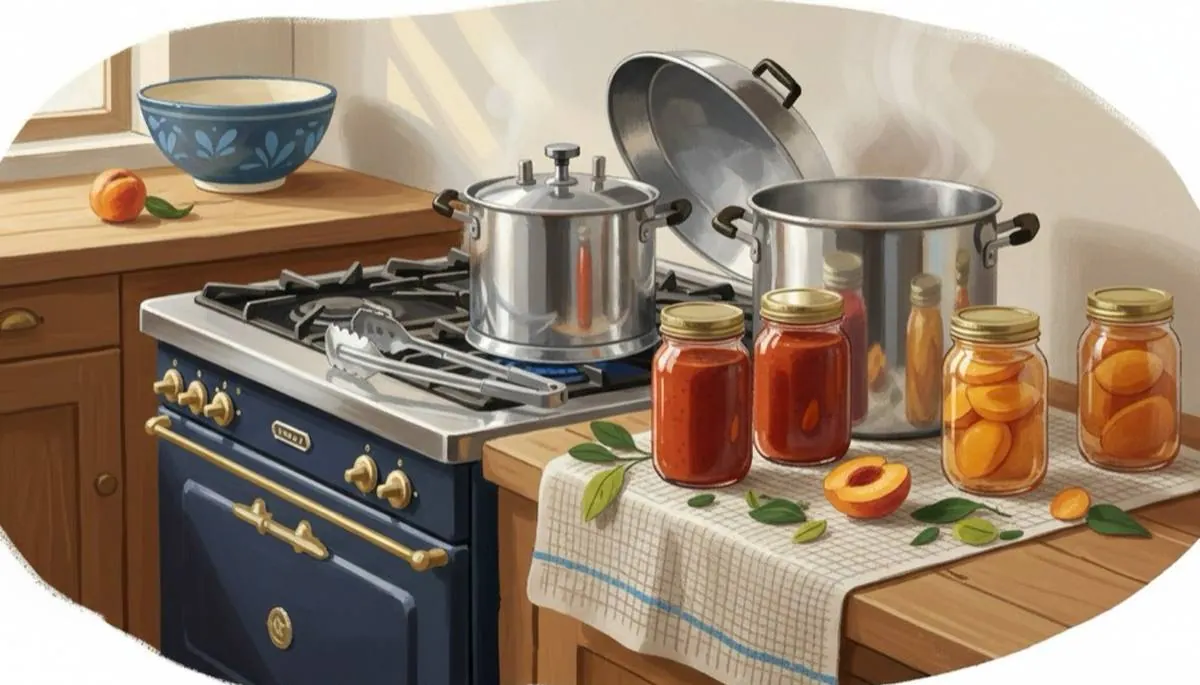
- Tell high-acid from low-acid foods
- Explain why low-acid foods must be pressure canned
- Recognise botulism risk signs and follow tested recipes only
The one rule that keeps canning safe
Home canning seals food in jars and heats it enough to kill spoilage organisms so it keeps at room temperature. The danger is Clostridium botulinum, a bacterium whose spores are everywhere in soil and on vegetables. In a sealed jar with no oxygen, moderate acidity and room temperature, the spores wake up and produce a toxin that can paralyse and kill, with no change in look, smell or taste. Two things stop it: acid, or heat well above boiling. That gives the rule that governs everything else in this lesson. High-acid foods can be water-bath canned. Low-acid foods must be pressure canned. There is no safe third way.
High-acid versus low-acid
The dividing line is pH 4.6. Below it, botulinum spores cannot grow, so boiling water at 100 °C is enough to kill everything else. High-acid foods include most fruit, jams and jellies, fruit juices, and properly made pickles and relishes where enough vinegar has been added. Tomatoes sit right on the line and vary by variety, so tested recipes require added acid, 1 tablespoon of bottled lemon juice or a quarter teaspoon of citric acid per 500 ml jar. Low-acid foods, above pH 4.6, include all plain vegetables, beans, corn, potatoes, meat, poultry, fish, stock, soups and mixed dishes with any of those. Adding a little vinegar to a low-acid food does not make it safe.
Water-bath canning: high-acid only
Fill clean jars with hot food, leaving the headspace the recipe states, usually 6 mm for jam and 1.2 cm for fruit. Wipe the rims, fit the lids fingertip tight, and lower the jars onto a rack in a deep pot of water so they are covered by at least 2.5 cm. Bring to a full rolling boil and start timing only then, for the minutes the tested recipe gives; add time for altitude above 300 m as the recipe table states. Turn off the heat, wait 5 minutes, lift the jars out straight and leave 12–24 hours without touching. Lids should be concave and not flex. Any jar that did not seal goes in the fridge to be eaten within days.
Pressure canning: low-acid foods
Botulinum spores survive hours of boiling. Killing them takes 116–121 °C, which only a pressure canner reaches, by holding steam at 10–15 psi depending on your altitude and canner type. A pressure cooker for dinner is not a pressure canner; canners are larger, hold jars on a rack, and have a gauge or weighted regulator tested for this job. Follow the USDA process exactly: vent steam for 10 minutes before pressurising, process at the stated pressure for the full stated time, which is often 75–90 minutes for meat or beans, and let the canner depressurise naturally. Adjust pressure for altitude. If in doubt at any step, freeze the food instead.
Tested recipes and when to throw it away
Only use recipes from the USDA Complete Guide to Home Canning, the National Center for Home Food Preservation, or manufacturers such as Ball who test them in a lab. A family recipe, a blog post or a video is not tested. Do not change the proportion of vegetables to acid, thicken with flour or starch, or add extra low-acid ingredients to a tested recipe. Before opening any home-canned jar, inspect it. Discard without tasting if the lid is bulging or loose, liquid spurts out on opening, the contents are cloudy or foamy when they should not be, there is mould, or it smells off. Boil suspect low-acid food for 30 minutes before disposal, or seal the unopened jar in plastic bags and put it in the bin. Keep it away from pets.
Check yourself
Only high-acid foods, pH below 4.6, are safe in boiling water. Everything else needs a pressure canner.
Only pressurised steam reaches the temperature that destroys botulism spores in low-acid food.
Tested recipes require bottled lemon juice or citric acid so every jar is reliably high-acid.
Spurting, bulging lids, cloudiness or off smells are spoilage signs; botulism toxin is undetectable by taste, so never test by tasting.
Try it for real: Can a high-acid food the tested way
- Choose a jam or fruit recipe from the USDA guide or NCHFP and read it fully
- Sterilise jars and prepare the fruit exactly as written
- Water-bath process for the full time, adjusted for your altitude
- Leave 24 hours, check every lid is concave, and refrigerate any that failed
- Label with contents and date
🛒 Gear for this skill
As an Amazon Associate I earn from qualifying purchases. It costs you nothing extra and keeps this site free.
Next lesson: Fermentation Basics: Sauerkraut →
Written and checked by the Human Skills team against the sources below. How we check our content
- USDA Complete Guide to Home Canning
- National Center for Home Food Preservation (NCHFP)
- WHO Botulism Fact Sheet
Related lessons
Drying and Dehydration
Sun, oven and dehydrator basics
Freezing, Salting and Smoking
Three classic ways to hold food for months
Preserving Meat Without a Fridge
Cooling, curing, drying, smoking and canning done safely
Keeping Fish Safe From Catch to Plate
Bleed, chill, salt, dry, smoke and freeze without the risks