Human Skills
Choosing and Reading Seeds
What the packet is trying to tell you
4 minBeginnerUpdated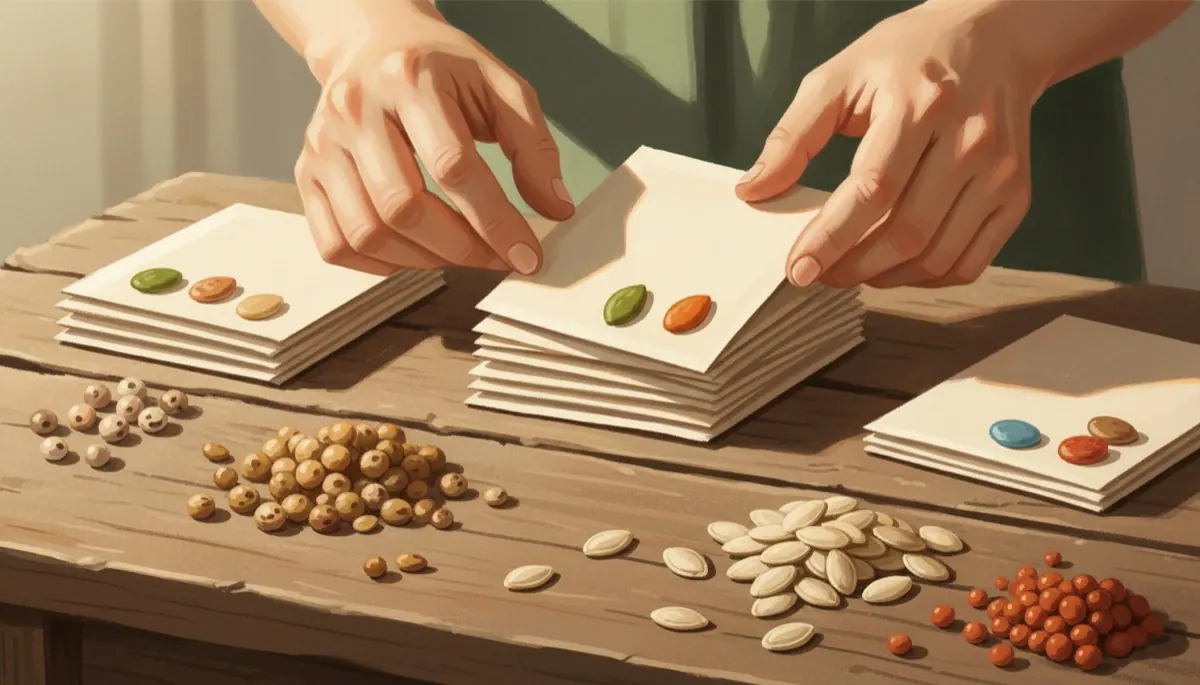
- Read a seed packet and know what each line means
- Choose between open-pollinated, heirloom and F1 seeds
- Store seeds so they stay alive for years
What is on the packet
A seed packet is a short instruction manual. Look for: sowing depth, usually 2 to 3 times the seed's width; spacing between plants and rows; days to germination; days to harvest from sowing or from transplanting; and the sow-by or packed-on date. The best packets show a sowing calendar bar with months for indoors, outdoors and harvest. Those months assume a temperate climate, so adjust them for yours. A germination rate, for example 85 percent, tells you how many seeds should sprout. If a packet has no date, do not buy it. Freshness is the biggest single factor in whether seeds come up.
Open-pollinated, heirloom, F1
Open-pollinated seeds come from plants that pollinated naturally. Save their seed and the next generation looks like the parent. Heirloom is an open-pollinated variety that has been passed down for at least 50 years, often with better flavour and local adaptation. F1 hybrid seed comes from crossing two chosen parents. F1 plants are vigorous, uniform and often disease resistant, but seed saved from them produces a random mix, so you must buy new seed each year. F1 is not genetically modified, which is a different process not sold to home gardeners. For beginners, F1 gives reliable results. For seed saving, choose open-pollinated.
How long seeds last
Seeds are alive and slowly running down. Stored cool and dry, onions, leeks and parsnips last about 1 year. Sweetcorn, peppers and beans last 2 to 3. Carrots, peas and beetroot 3 to 4. Tomatoes, cucumbers, squash, lettuce and brassicas keep 4 to 6 years. Old seed does not fail completely: it sprouts more slowly and in smaller numbers. Test an old packet by putting 10 seeds on damp kitchen paper in a sealed bag at room temperature for a week. If 7 come up, sow normally. If 4 come up, sow twice as thick. If 1 or 2 come up, compost the packet.
Storing seeds
The enemies of seed are warmth, moisture and light. Keep packets in a sealed jar or airtight box in the coolest, driest room of the house. A fridge works if the box is truly airtight, with a sachet of silica gel or a tablespoon of dry rice inside to absorb moisture. Never store seeds in a greenhouse or shed where temperatures swing. Label everything with the variety and year. A rule of thumb from seed banks: the temperature in degrees C plus the relative humidity in percent should add up to under 100. A 15 degree room at 50 percent humidity is fine.
Where to buy
Buy from specialist seed companies, local seed swaps and seed libraries rather than the supermarket rack, which often sits in a warm shop for a year. Small regional seed growers sell varieties already adapted to your climate, which matters far more than a famous name. In Portugal, look for national heritage varieties and Mediterranean-adapted lines. Start with 6 to 8 easy crops in year one: lettuce, radish, beans, courgette, tomato, chard, peas and herbs. A packet holds far more than one garden needs, so share with neighbours. Resist buying 40 packets. You will sow ten.
Check yourself
Small seeds need shallow sowing and large seeds deeper. Two to three times the seed width is the standard rule.
F1 hybrids are a first-generation cross, so their seed splits back into the mixed traits of the parents.
Onion, leek and parsnip seed loses viability after about a year. Tomato and squash keep 4 to 6 years.
A 40 percent rate is still usable if you compensate by sowing more seed per spot.
Try it for real: Audit and test your seed stash
- Gather every seed packet you own and sort by crop and year
- Run a 10-seed germination test on the oldest packet
- Put all packets in an airtight box with a moisture absorber
- Write a list of 6 to 8 crops you will actually sow this season
🛒 Gear for this skill
As an Amazon Associate I earn from qualifying purchases. It costs you nothing extra and keeps this site free.
Next lesson: Starting Seeds and Taking Cuttings →
Written and checked by the Human Skills team against the sources below. How we check our content
- RHS Seed Storage Guide
- Seed Savers Exchange
- FAO Seed Handbook