Human Skills
Starting Seeds and Taking Cuttings
Raise strong seedlings indoors and multiply plants for free
6 minIntermediateUpdated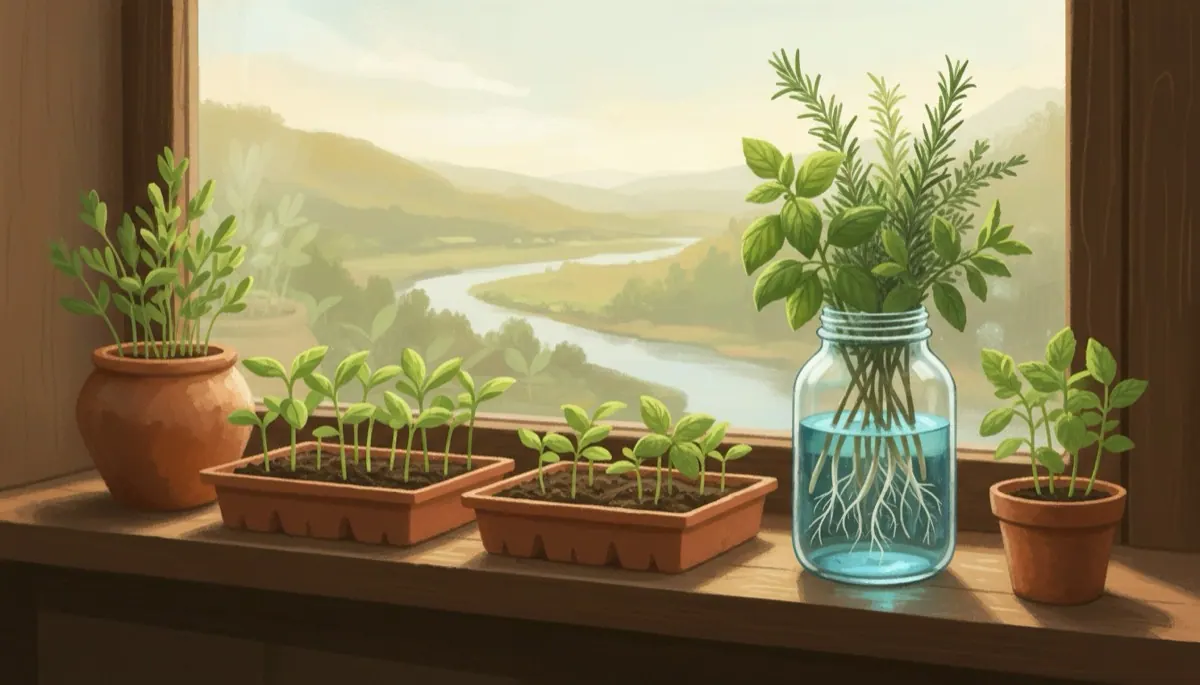
- Sow seeds in trays and get even germination
- Prevent leggy, weak seedlings with light and air
- Root a cutting from rosemary, mint or a tomato side shoot
Why start indoors
Starting seeds in trays gives you a 4 to 8 week head start, protects seedlings from slugs and birds, and lets you plant out at the ideal spacing with no gaps. Warm-season crops such as tomatoes, peppers, aubergines, cucumbers and basil almost always do better started indoors. Root crops such as carrots, parsnips and radishes hate transplanting and go straight in the ground. Beans, peas, squash and sweetcorn can go either way. Start seeds 6 weeks before your last frost for tomatoes, 8 to 10 weeks for peppers and aubergines, and only 3 to 4 weeks for squash and cucumbers, which grow fast.
Trays, mix and sowing
Use modular trays with cells 3 to 4 cm across, or small pots for large seeds. Fill with a fine, peat-free seed compost, not garden soil, which is lumpy and full of weed seeds. Press it down lightly and water before sowing. Sow 1 or 2 seeds per cell at a depth of 2 to 3 times the seed width. Tiny seeds like lettuce and basil are barely covered. Label every tray immediately. Cover with a clear lid or a plastic bag to hold humidity until the first shoots appear, then remove it. Bottom-water by standing trays in 2 cm of water for 10 minutes rather than pouring on top.
Warmth then light
Germination wants warmth. Most vegetables sprout best at 18 to 24 degrees C. Peppers and aubergines want 25 to 28. A heat mat, the top of a fridge or a warm cupboard works. Once shoots appear, they need light more than heat. A south-facing windowsill in spring is often not enough, and seedlings stretch toward the glass and flop. This is called being leggy. Move them to the brightest spot you have, turn trays daily, or use a cheap LED grow light 10 to 15 cm above the leaves for 14 hours a day. Cooler temperatures of 15 to 18 degrees at this stage make stockier plants.
Pricking out and hardening off
When seedlings have their first pair of true leaves, the ones that look like the adult plant, move them to a bigger pot if they are crowded. Hold them only by a leaf, never the stem, and lift with a pencil under the roots. Before planting out, harden them off: put them outside in a sheltered spot for 2 hours on day one, then 4, then 6, and leave them out overnight by day 7 if there is no frost. Skipping this step is the most common cause of seedlings collapsing after planting. Wind, direct sun and cold nights are all a shock to a plant raised indoors.
Propagating from cuttings
Many plants root from a cut stem. Herbs such as rosemary, thyme, sage, mint, oregano and lavender are the easiest. Cut a healthy shoot 8 to 10 cm long, just below a leaf joint. Strip the lower leaves so 3 to 4 cm of bare stem remains. Push it into a pot of gritty compost or stand it in a glass of water. Mint and basil root in water within 10 days. Rosemary and lavender take 4 to 8 weeks in compost. Keep them out of direct sun and humid under a bag. Tomato side shoots pinched out in early summer root in water in a week and give you late plants for free.
Check yourself
Root crops fork or stall if their taproot is disturbed, so they are sown where they will grow.
Stretching toward light is the classic sign seedlings need a brighter spot or a grow light.
A damaged leaf grows back. A crushed stem kills the plant.
Gradually increasing outdoor time over about a week lets seedlings adapt to sun, wind and cold.
Try it for real: Raise a tray and root a cutting
- Sow one modular tray of lettuce, basil or tomatoes in seed compost
- Keep it warm until shoots appear, then move it to the brightest spot you have
- Take three cuttings of mint or rosemary and set them in water or gritty compost
- Photograph both at day 1 and day 14
🛒 Gear for this skill
As an Amazon Associate I earn from qualifying purchases. It costs you nothing extra and keeps this site free.
Next lesson: Planting Out and Sunlight →
Written and checked by the Human Skills team against the sources below. How we check our content
- RHS Sowing Seeds Indoors
- RHS Softwood Cuttings
- University of Minnesota Extension, Starting Seeds Indoors