Human Skills
Mulch and Simple Irrigation
Cut watering in half with a bale of straw and a hose
5 minIntermediateUpdated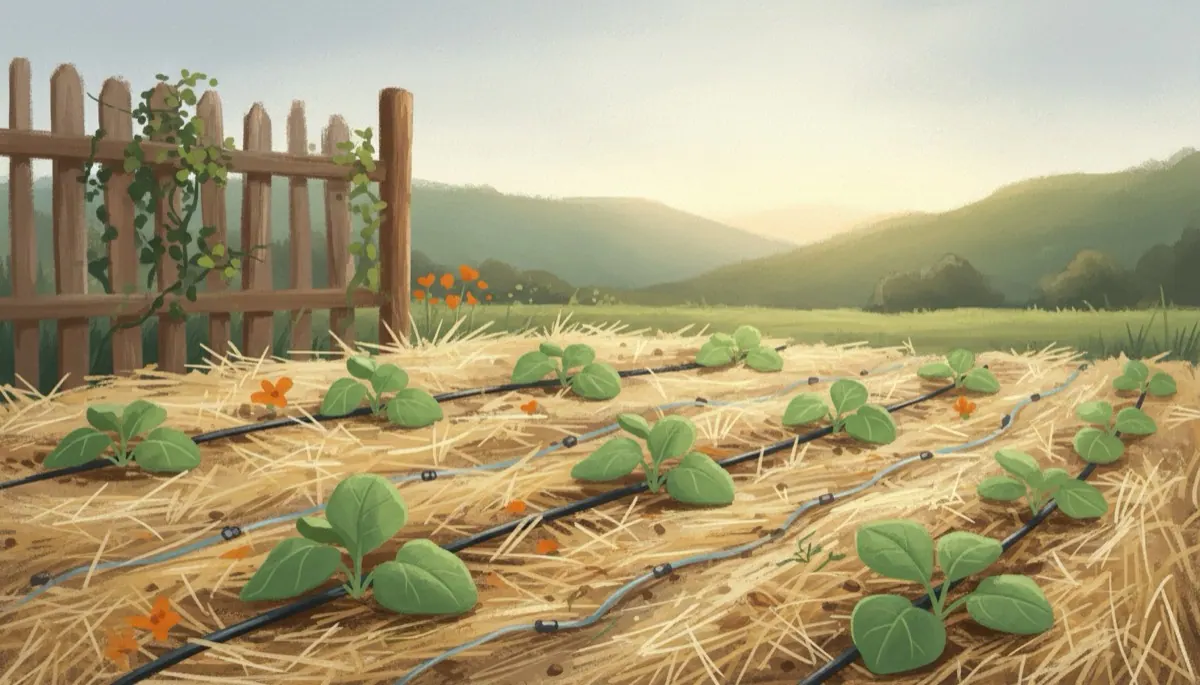
- Choose and apply the right mulch for each bed
- Set up a low-cost drip line from a tap or water butt
- Use a timer so the garden survives your holiday
What mulch does
Mulch is any layer covering bare soil. It blocks evaporation, so soil under 5 cm of straw stays moist 2 to 3 times longer than bare soil. It smothers weed seedlings, keeps soil cooler in summer and warmer in winter, stops rain compacting the surface, and, if organic, feeds the soil as worms pull it down. Bare soil is the exception in nature, not the rule. Organic mulches include straw, compost, grass clippings, shredded leaves, wood chip and cardboard. Inorganic options include gravel, which suits Mediterranean herbs, and woven fabric for paths. Black plastic warms soil but does nothing for soil life.
Matching mulch to crop
Straw is the best all-rounder for vegetable beds: cheap, light, easy to move, and it lets water through. Use 5 to 8 cm around tomatoes, squash, beans and brassicas. Compost, 3 to 5 cm, doubles as feed and suits every bed. Grass clippings work in thin 2 cm layers, added weekly; thicker layers turn slimy. Wood chip is for paths, fruit trees and perennial beds, not annual vegetables, because it robs nitrogen from the surface as it rots. Keep every mulch 3 to 5 cm away from plant stems to stop rot and give slugs no bridge. Apply mulch on moist soil after a rain or a deep water, never on dry soil.
Drip irrigation basics
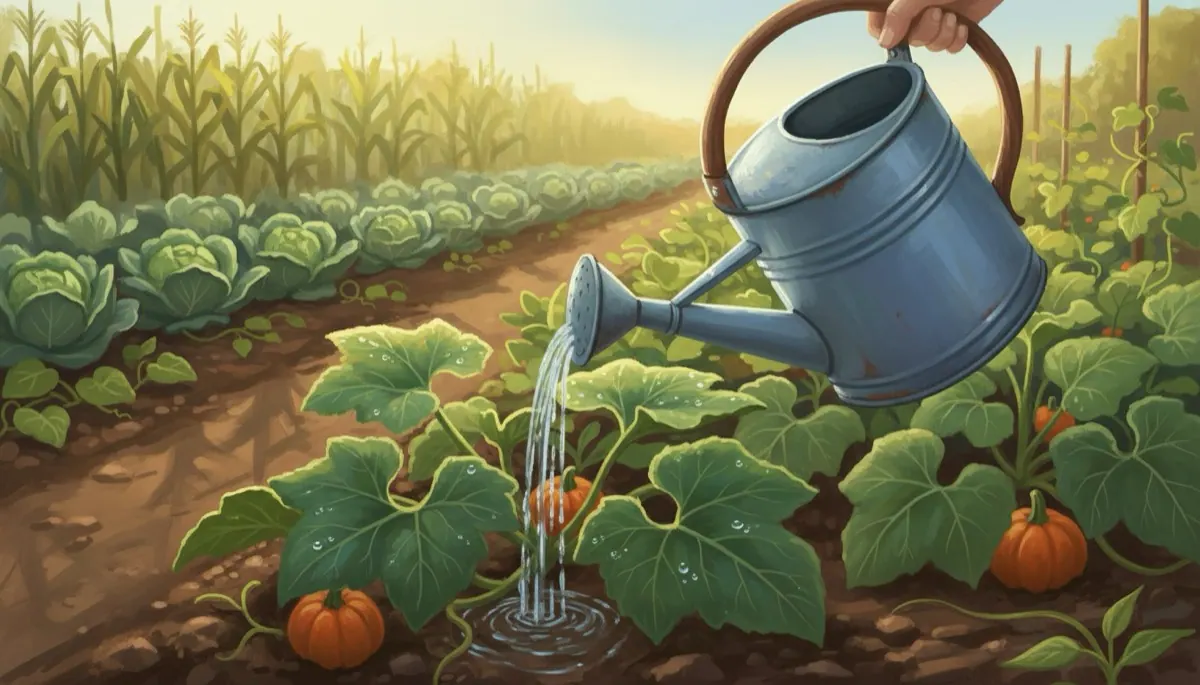
Drip lines put water at the root zone slowly, with almost no evaporation, using 30 to 50 percent less water than a hose. A starter kit costs about the same as a decent hose. You need a tap connector with a filter and a pressure reducer, a 13 mm supply pipe run along the bed edge, and either 4 mm dripper lines pegged to each plant or a porous soaker hose laid along the row. Drippers usually release 2 or 4 litres an hour. A tomato with a 4 litre dripper running 45 minutes gets 3 litres. Flush the lines at the start of each season and check for blocked drippers monthly.
Timers and gravity systems
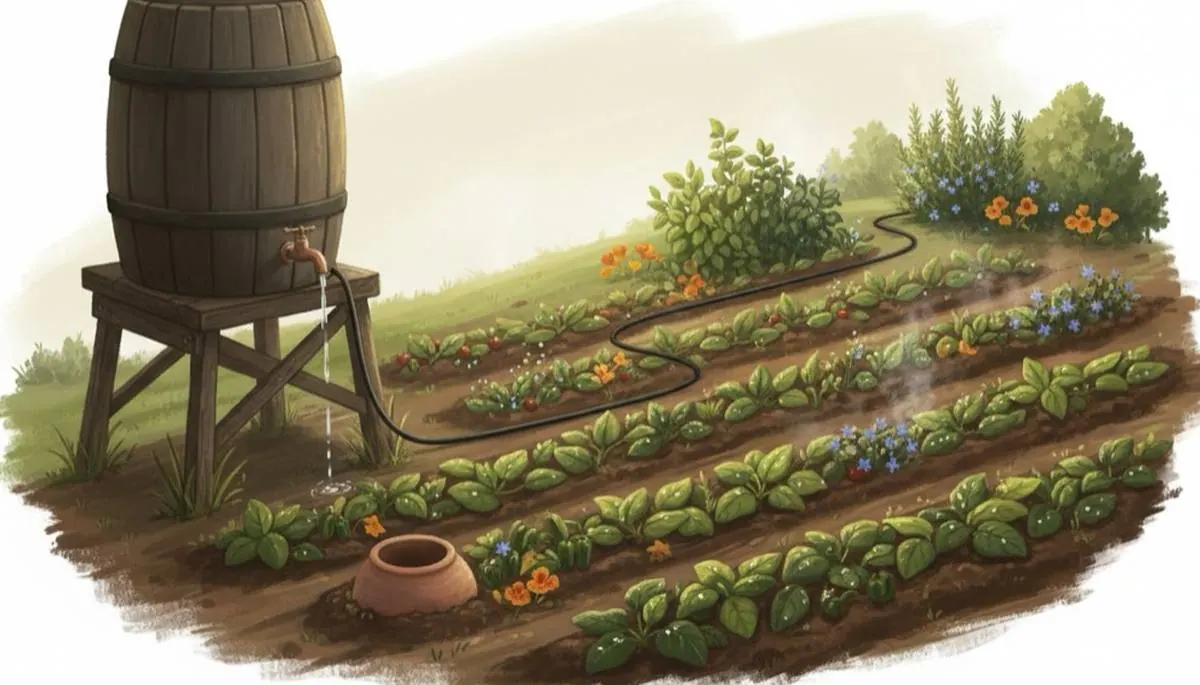
A battery tap timer turns a drip system into a garden that waters itself. Set it for early morning, 30 to 60 minutes, every 2 or 3 days, then adjust after checking the soil with your finger. If you have no mains tap, a water butt raised 1 m on blocks gives enough gravity pressure for a short soaker hose or low-pressure drip kit. Ollas, unglazed clay pots buried to the neck and filled with water, seep slowly into the soil and need refilling every 3 to 7 days; one olla serves a 60 cm circle. Before a holiday, test the whole system for a week and ask a neighbour to glance at it.
Checking it works
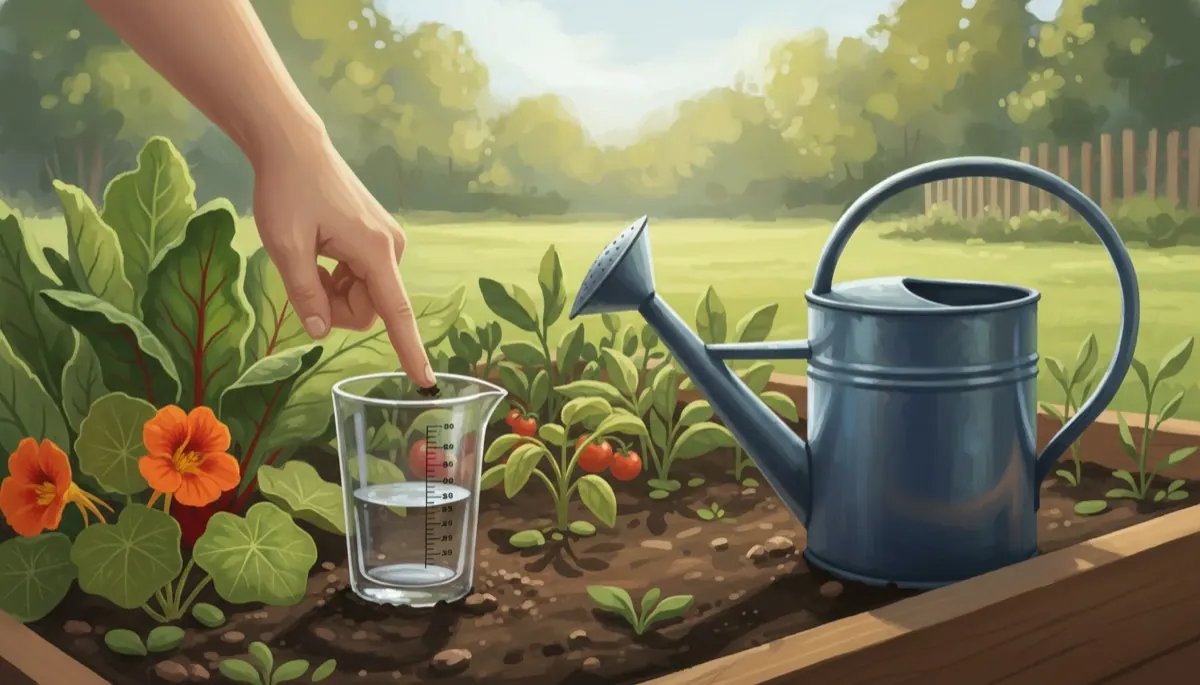
Irrigation fails silently. Once a week, dig a small hole 15 cm deep between two drippers a few hours after a run. The soil should be moist to the bottom of the hole and the wet zone should reach halfway to the next plant. If only the top is wet, run it longer. If water is pooling, run it shorter but more often. Look for drippers spraying instead of dripping, which means a split, and for dry plants at the far end of a long line, which means low pressure. Keep the whole run under 30 m per line. Drain and store timers indoors over winter.
Check yourself
Hay is dried grass cut with seed heads. Straw is the stalk left after grain harvest and is nearly seed free.
Wood chip pulls nitrogen from the surface as it decomposes, starving shallow-rooted annuals. It is great on paths and around trees.
A small gap prevents stem rot and removes the damp bridge slugs use to reach the plant.
Half an hour at 4 litres per hour is 2 litres. Knowing this lets you set timers by the actual water each plant gets.
Try it for real: Mulch and drip one bed
- Water the bed deeply, then lay a soaker hose or drip line along the row
- Cover the bed with 5 cm of straw or compost, keeping it off the stems
- Run the system for 30 minutes and dig a test hole to check the wet zone
- Set a timer or a phone reminder for the next run
🛒 Gear for this skill
As an Amazon Associate I earn from qualifying purchases. It costs you nothing extra and keeps this site free.
Next lesson: How Much Water a Crop Needs →
Written and checked by the Human Skills team against the sources below. How we check our content
- FAO Irrigation Water Management: Irrigation Methods
- RHS Mulches and Mulching
- University of Arizona Extension, Drip Irrigation for the Home Garden