 Human Skills
Watering the Right Way
Deep, early and less often than you think
4 minBeginnerUpdated
- Judge when a bed actually needs water
- Water deeply so roots grow down, not up
- Spot overwatering and underwatering by the leaves
How much and how often
Most vegetables need about 25 mm of water a week in mild weather and up to 50 mm in hot, windy weather. That is 25 litres per square metre. It is far better to give that in one or two deep soaks than a light sprinkle every day. Light watering wets only the top 2 cm, roots stay shallow, and the plant wilts the moment you miss a day. A deep soak reaches 20 to 30 cm and roots follow it down, where soil stays moist longer. Check with your finger: if the soil is dry 3 to 5 cm down, water. If it is damp, wait, whatever the surface looks like.
When to water
Water early in the morning. Leaves dry fast, less evaporates, and plants go into the heat of the day fully stocked. Evening watering is second best but leaves foliage wet overnight, which invites mildew and slugs. Never water in the middle of a hot day: up to half evaporates before it reaches the roots. Water the soil, not the plant. Aim the can or hose at the base and keep the leaves dry, especially on tomatoes, courgettes and cucumbers, which get fungal diseases from wet foliage. A watering can with the rose removed lets you place water exactly where it is needed.
Reading the plant
Wilting at 3 pm on a hot day is normal for squash and cucumbers; they recover by evening. Wilting at 8 am means the plant is thirsty. Drooping yellow lower leaves plus soggy soil means overwatering, which drowns roots by pushing out air. Overwatering kills more container plants than drought. Blossom end rot, a black patch on the bottom of tomatoes, comes from uneven watering, not a disease. Cracked tomatoes and split carrots come from a big drink after a dry spell. Consistency is the goal: moist, not wet, not dry. Mulch makes that easy.
Which crops need more
Not everything is equally thirsty. High need: lettuce, celery, cucumbers, courgettes, brassicas and anything in a pot. Medium: tomatoes, peppers, beans, beetroot and chard. Low once established: rosemary, thyme, garlic, onions, sweetcorn and most fruit trees. Timing matters too. Peas and beans need most water when flowering and podding. Potatoes when tubers form after flowering. Tomatoes evenly all season, then slightly less as fruit ripens to concentrate flavour. Onions and garlic want water withheld for the last 2 weeks so they cure in the ground. Seedlings and transplants always need daily attention until rooted.
Saving water
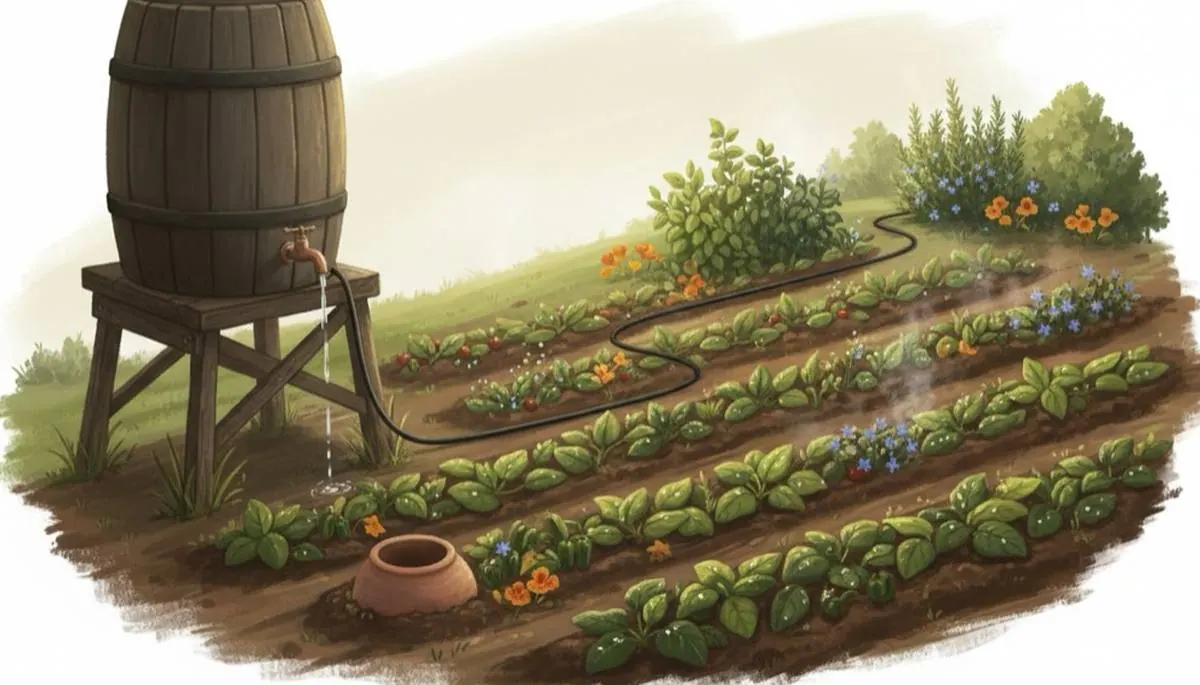
A water butt on a downpipe collects thousands of litres a year for free and rainwater is better than tap for most plants. Cover the butt to keep mosquitoes out. Group thirsty crops together so you water one area, not the whole plot. Grow drought-tolerant crops in the driest spot. Sink a plastic bottle with holes, neck down, beside each tomato or squash and fill it: water goes straight to the roots. Weed regularly because weeds drink too. And mulch. A 5 cm layer of straw or compost halves water loss from the surface. The next lesson covers mulch and drip irrigation in detail.
Check yourself
Deep watering sends roots downward into soil that stays moist, making plants far more resilient.
Morning watering loses least to evaporation and leaves foliage dry by night, reducing disease.
Blossom end rot is a calcium delivery problem caused by irregular water, and steady watering with mulch prevents it.
Waterlogged soil has no air and roots suffocate, which shows first as yellowing at the base.
Try it for real: Measure a real week of watering
- Place a straight-sided tin in your bed or among your pots
- Water deeply once, in the morning, and note how long it takes to reach 25 mm in the tin
- Each day for a week do the finger test 3 to 5 cm down before deciding to water
- Record how many days the bed stayed moist after the deep soak
🛒 Gear for this skill
As an Amazon Associate I earn from qualifying purchases. It costs you nothing extra and keeps this site free.
Next lesson: Mulch and Simple Irrigation →
Written and checked by the Human Skills team against the sources below. How we check our content
- RHS Watering Guide
- FAO Irrigation Water Management Training Manuals
- University of Georgia Extension, Vegetable Garden Watering
Related lessons
Mulch and Simple Irrigation
Cut watering in half with a bale of straw and a hose
How Much Water a Crop Needs
Litres per square metre, and how to check instead of guess
When to Water and Where
Early morning, at the root, never at midday
Watering Without Mains Pressure
Gravity drip, ollas, basins and wicking beds