 Human Skills
Protein and Fat on a Smallholding
Beans, eggs, birds, nuts and oil, with the hard parts stated plainly
6 minIntermediateUpdated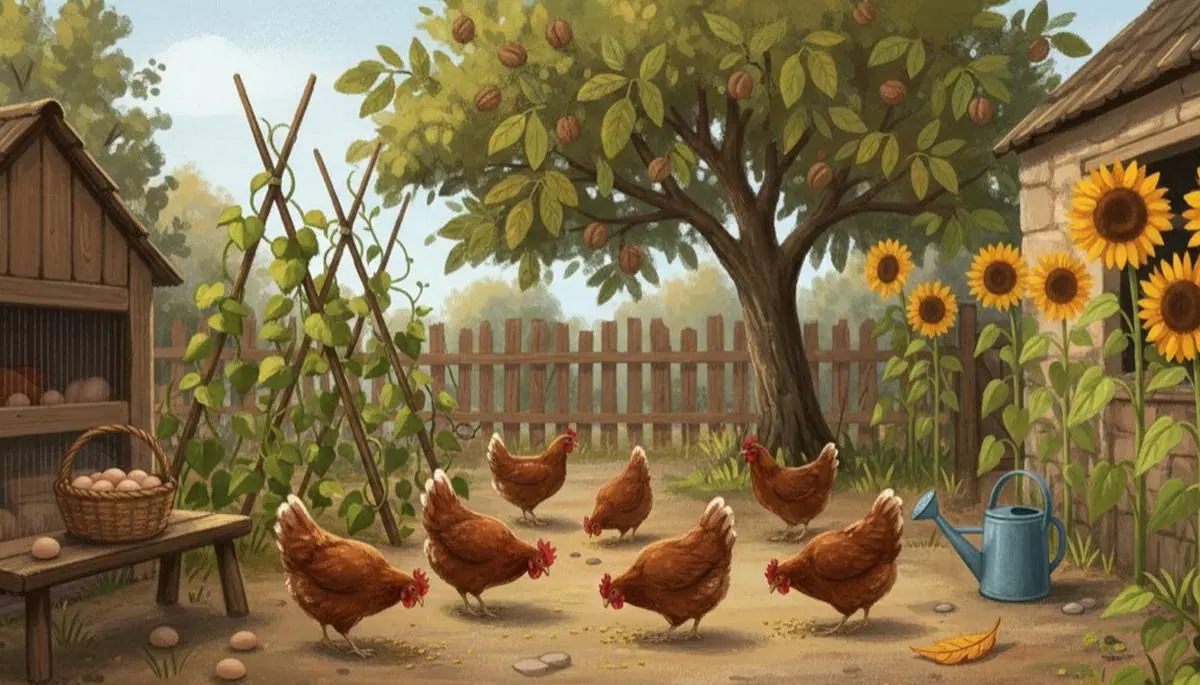
- Compare protein sources by land and labour
- Size a flock of hens against a household's egg use
- Say honestly which foods are not worth producing at home
Beans are the cheapest protein by money and the dearest by land
Dry beans are about 21 percent protein and 3400 calories a kilogram. A realistic home yield is 0.25 kg per square metre, so 100 square metres gives roughly 25 kg, which is about 5 kg of protein for a year.
An adult needs roughly 50 to 60 g of protein a day, about 20 kg a year. So beans alone would need around 400 square metres per adult. That is why almost nobody grows all their own protein.
Broad beans do better at about 0.35 kg per square metre and have the advantage of growing through winter when the ground is otherwise idle. Peas sit in between. All three fix nitrogen, so the bed they leave behind is better than the one they found.
Eggs are the best return of all
A good laying hen gives 200 to 280 eggs a year, and an egg is about 70 calories and 6 g of protein. Six hens, occupying perhaps 20 square metres of run, give a household roughly 1300 eggs a year: around 90000 calories and 8 kg of protein.
No plant crop comes close for that footprint. The catch is feed. A hen eats about 120 g of feed a day, so six hens get through roughly 260 kg a year, and unless you have grain and scraps to spare a good part of that is bought in.
Hens also turn kitchen waste, garden surplus and insects into food, and their manure is the best thing that will ever happen to your compost heap.
A few birds for meat
Meat birds are a bigger commitment than layers. Slow growing table birds take 12 to 16 weeks to reach 2 to 2.5 kg dressed, eating roughly 8 to 10 kg of feed each. Rabbits and ducks follow similar arithmetic.
Be clear with yourself before you start that you will have to kill and process the animals, or pay someone who will. Many people find they can keep layers happily and cannot do this part, and finding that out after buying 20 chicks is a bad way to learn it.
If you do go ahead, learn the humane method from an experienced person in your area, and check your national rules on home slaughter, which differ across Europe.
Nuts and olives: the long game
Nuts are the one plant crop that delivers fat in quantity. A mature walnut gives 25 to 50 kg of nuts, almonds 10 to 25 kg, and hazels 3 to 5 kg per bush from year four. Walnuts are 6540 calories a kilogram, which is more than twice any grain.
Olives are the Mediterranean answer to cooking fat. A mature tree gives 15 to 40 kg of fruit, and about 5 kg of olives make one litre of oil. You will not press it at home, you take it to a local mill, usually in November or December, often for a share of the oil.
The honest part: every one of these takes four to ten years from planting to a real harvest. Plant them in your first season, not your fifth.
What is genuinely hard at home
Be straight about the limits. Cooking oil at any useful volume needs either olive trees and a mill, or a seed press and a large area of oilseed. Dairy means a goat or a cow milked twice a day, every day, which ends holidays. Enough grain for bread needs the area and the threshing work covered in the grain lesson. Sugar is effectively impossible outside the tropics, although honey from two hives will cover a household.
A realistic smallholding in Portugal produces its own eggs, vegetables, fruit, olive oil, some beans and perhaps some meat, and buys flour, sugar, rice and most dairy. That is not a compromise. That is what self-sufficiency has always looked like in practice.
Check yourself
At 0.25 kg per square metre and 21 percent protein, covering about 20 kg of protein a year takes around 400 square metres.
A productive hen lays 200 to 280 eggs a year, which is why hens are the best protein return for their footprint.
Around 5 kg of olives yield a litre, which is why a household needs several mature trees for its cooking oil.
Historically and today, smallholdings produce eggs, vegetables, fruit and oil, and buy staples like flour and sugar.
Try it for real: Cost your protein and fat
- Count how many eggs your household eats in a week and divide by 4 to size a flock.
- Work out how much dry bean ground you would need for a quarter of your protein.
- Choose one nut or olive variety suited to your area and order it for winter planting.
- Write down the two protein or fat foods you will keep buying, and why.
- If you are considering meat birds, visit someone who keeps them before ordering any.
🛒 Gear for this skill
As an Amazon Associate I earn from qualifying purchases. It costs you nothing extra and keeps this site free.
Next lesson: Growing Grain by Hand →
Written and checked by the Human Skills team against the sources below. How we check our content
- FAO Small Scale Poultry Production
- FAO INFOODS Food Composition Tables
- Penn State Extension, Small Scale Poultry
Related lessons
Crop Rotation and Planning a Year of Food
Move plant families, fill every gap, eat all year
How Much Land Feeds One Person
The honest arithmetic behind a number everyone gets wrong
Why Salad Does Not Feed You
The staple four, and the hard problem of fat
Planning a Year of Eating
Work backwards from the kitchen, not forwards from the seed box