 Human Skills
Seed Independence
Open-pollinated varieties, isolation, population size and viability
6 minIntermediateUpdated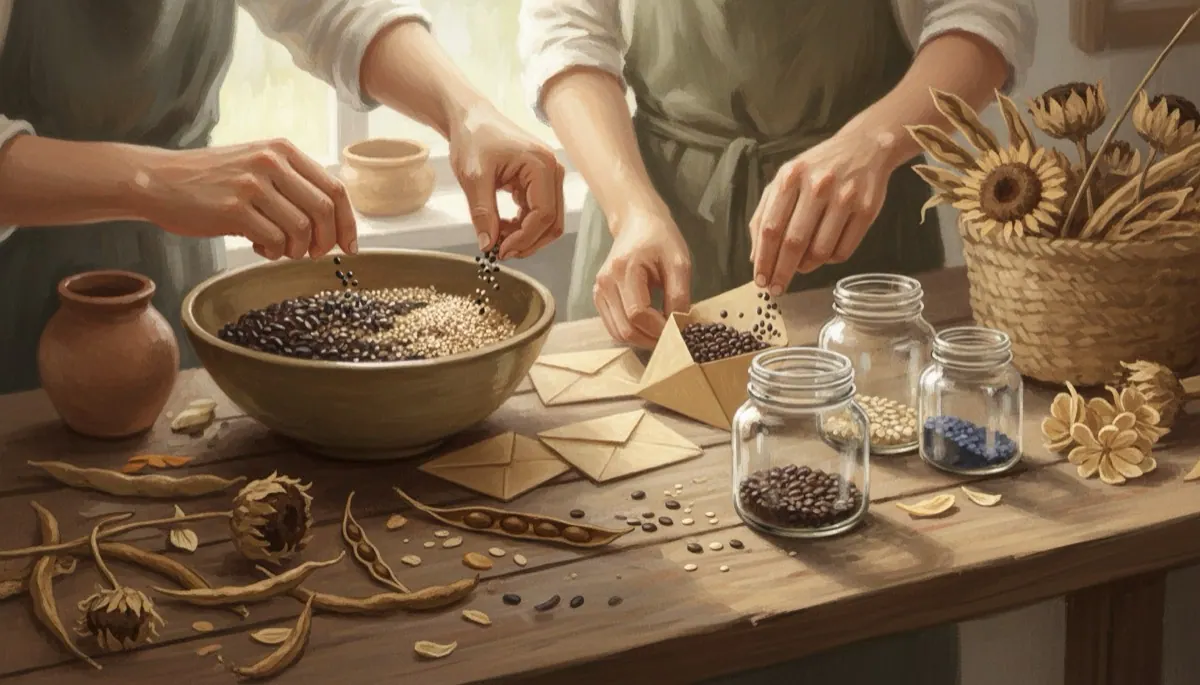
- Tell open-pollinated varieties from F1 hybrids and know why it matters
- Apply isolation distances and minimum population sizes by crop
- Test viability and store seed so it lasts for years
Open-pollinated or F1
An open-pollinated variety breeds true: save seed from it and next year's plants resemble the parents. An F1 hybrid is the first generation cross of two inbred parents, bred for uniformity and vigour, and its seed does not breed true. Sow saved F1 seed and you get a scattered mixture, some of it useless.
Nothing is wrong with buying F1 seed. Many are excellent. But a plot that depends entirely on F1 varieties has no seed security at all, because every seed must be bought again every year from a company that may drop the variety.
For the crops that actually feed you, potatoes, beans, maize, squash, tomatoes and grain, choose open-pollinated or heritage varieties from the start.
Isolation: keeping varieties apart
Crops that pollinate themselves need little separation. Tomatoes, lettuce, peas and French beans are largely self pollinating, and 5 to 10 metres between varieties, or a tall crop planted between them, is enough for home purposes.
Insect pollinated crops need much more. Squash and pumpkins need 400 to 800 metres between varieties of the same species, brassicas 800 metres or more, and carrots, onions and beetroot similar. Maize is wind pollinated and needs 300 metres or more, or a difference of a few weeks in flowering time.
Nobody has that room. The practical answers are to grow only one variety of each crop for seed each year, to hand pollinate squash and tape the flowers shut, or to bag and cage brassica and carrot flowers.
How many plants you must save from
Saving from a single plant works for beans and tomatoes because they self pollinate and tolerate it. For cross pollinating crops, saving from too few plants causes inbreeding depression: within a few generations plants get smaller, weaker and less productive, and the variety quietly dies in your hands.
Working minimums for a home grower are roughly: tomatoes, lettuce, peas and French beans, 5 to 10 plants. Squash and cucumbers, 6 to 12. Maize, 100 plants or more, which surprises people. Brassicas, carrots, onions and beetroot, 20 to 40 plants, and more is better.
If you cannot meet the number for a crop, buy fresh seed for it periodically or swap with other growers, which does the same job.
How long seed stays alive
Stored cool and dry, typical viable lives are: onion, leek and parsnip one year, sometimes two. Maize, peppers and carrots two to three. Peas, beans, tomatoes and brassicas three to five. Cucumber, squash, lettuce and beetroot five years or more.
Test before you sow rather than discovering a problem in a bed. Count out ten seeds, roll them in a damp paper towel, seal in a bag at room temperature and check after the normal germination time. Eight up means 80 percent and you sow normally. Four up means you sow at double density or buy fresh.
Do this every February with anything over two years old and you will never waste a bed on dead seed again.
Drying and storing seed
Seed must be properly dry before it goes away: it should shatter rather than bend under a fingernail. Dry it on a plate or paper in the shade at room temperature, never in an oven or in direct sun, which kills the embryo.
Then store cool, dry and dark. The rule of thumb is that the temperature in degrees Celsius plus the relative humidity in percent should be under 100. A sealed jar with a sachet of silica gel or dry rice, kept in a cupboard on a cold wall, meets that easily. A fridge is better still if the jar is genuinely airtight.
Label everything with crop, variety and year. A box of unlabelled envelopes is a box of nothing.
Check yourself
F1 seed does not breed true, so the next generation segregates into a mixture, some of it poor.
Insect pollinated squash needs 400 to 800 metres, or hand pollination with taped flowers, while tomatoes need almost none.
Maize suffers badly from inbreeding, so a hundred or more plants are needed to keep a variety healthy.
Onion, leek and parsnip seed is usually dead or weak after one to two years, while cucumber can last five or more.
Try it for real: Audit and secure your seed
- Sort your seed box into open-pollinated and F1 piles and note which staples are F1.
- Germination test every packet over two years old with ten seeds on damp paper.
- Choose one staple crop and grow only a single variety of it this year for seed.
- Dry and store that seed in a labelled airtight jar with rice or silica gel.
- Join or start a local seed swap to cover the crops you cannot isolate.
🛒 Gear for this skill
As an Amazon Associate I earn from qualifying purchases. It costs you nothing extra and keeps this site free.
Next lesson: From a Garden to a Holding →
Written and checked by the Human Skills team against the sources below. How we check our content
- Seed Savers Exchange, Seed Saving Guide
- Organic Seed Alliance, Seed Saving Guide
- RHS Collecting and Storing Seed
Related lessons
Crop Rotation and Planning a Year of Food
Move plant families, fill every gap, eat all year
How Much Land Feeds One Person
The honest arithmetic behind a number everyone gets wrong
Why Salad Does Not Feed You
The staple four, and the hard problem of fat
Planning a Year of Eating
Work backwards from the kitchen, not forwards from the seed box