Human Skills
Tool Maintenance
Cleaning, sharpening and keeping rust away
5 minIntermediateUpdated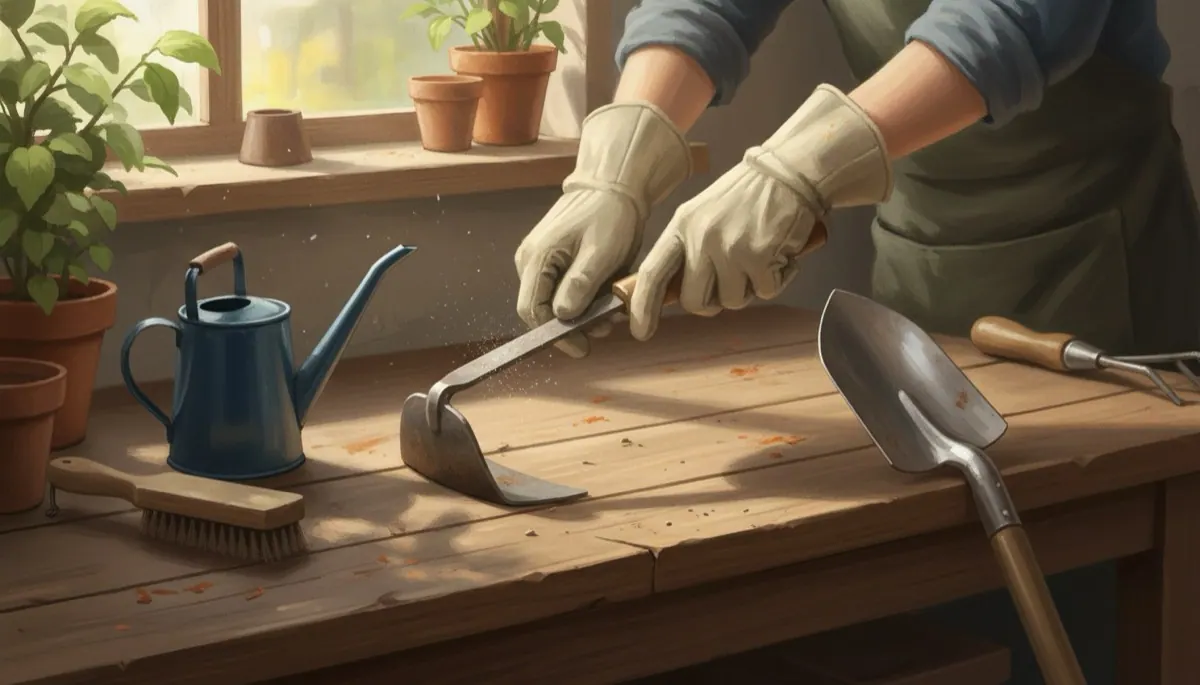
- Clean and oil tools after use so they last decades
- Sharpen a knife, secateurs and a spade edge
- Stop rust before it starts and remove it when it does
The two-minute clean
Most tools die from neglect, not use. After a job, scrape or brush off soil, sap and sawdust, wipe metal with a dry rag, and if the tool was wet, dry it properly. Sap and plant juice on secateurs corrode the blade and spread disease between plants: wipe with a cloth dipped in surgical spirit or a household disinfectant. Then a thin film of oil on all bare steel. Any light machine oil, camellia oil or even a spray of WD-40 will do for the short term, though WD-40 is a water displacer, not a long-term protectant. Oil wooden handles once a year with boiled linseed oil so they do not dry out and split.
Understanding an edge
Sharpening is simply grinding a new, thin edge where two flat surfaces meet. The angle matters: kitchen knives are ground around 15 to 20 degrees per side, pocket knives and secateurs 20 to 25, axes and spades 30 to 40 because they need strength over finesse. A blunt edge is not gone, it is rounded; you are removing a little metal to make it meet at a point again. Tools for sharpening, in order of usefulness for a beginner: a flat mill file for spades, hoes and axes; a medium and fine whetstone (about 1000 and 3000 grit) for knives; a small diamond paddle for secateurs in the pocket.
Sharpening a knife on a stone
Soak a water stone for 10 minutes, or oil an oil stone. Hold the blade at the chosen angle, roughly the thickness of two coins under the spine for a kitchen knife. Push the edge across the stone as if slicing a thin layer off it, from heel to tip, 10 strokes, then flip and do the other side. Feel for a burr, a tiny wire of metal along the opposite side of the edge; when it appears along the full length, switch to the fine stone and repeat with lighter pressure. Finish with a few alternating strokes and strop on a leather belt or cardboard. Test on paper: a sharp knife slices cleanly, a dull one tears.
Garden tools and secateurs
Spades, hoes and axes are sharpened with a file. Clamp the tool, hold the file at the existing bevel angle and push it away from you along the edge in long strokes; files cut on the push, so lift on the return. Sharpen only the bevelled side, then lightly flatten any burr on the back. A sharp spade cuts roots and turf with half the effort. For bypass secateurs, sharpen only the outer bevel of the cutting blade with a diamond paddle, a few strokes at the existing angle, and leave the flat inner face alone. Take them apart once a year, clean the pivot, oil it, and reset the tension so the blades just kiss.
Rust: prevention and cure
Rust needs iron, water and air. Remove the water: store tools dry, off concrete floors (which sweat moisture), in a shed with airflow, and oil bare steel. In a damp workshop, a tin of silica gel or a bucket of sand mixed with a cup of oil to plunge trowels and spades into works wonders. When rust does appear, light surface rust comes off with a wire brush or steel wool and oil. Heavier rust: soak in white vinegar overnight, scrub, rinse, dry immediately and oil. Deep pitting on a blade means the tool is weakened; it may still work but sharpen it more gently. Keep tools with a red-brown film away from your good ones.
Check yourself
Kitchen knives use a fine 15 to 20 degree bevel. Spades and axes use a much thicker 30 to 40 degree edge for strength.
The burr forms when you have ground all the way to the edge on one side. It tells you to switch sides or move to a finer stone.
Only the bevelled outer face of the cutting blade is ground. The flat inner face must stay flat to cut cleanly.
Vinegar dissolves rust; immediate drying and oiling stop it returning. Water and damp concrete are what cause rust.
Try it for real: Restore one tool
- Pick your rustiest or dullest tool
- Clean it, remove rust with steel wool or a vinegar soak, and dry it
- Sharpen it at the correct angle using the marker trick
- Oil the metal, treat the wooden handle, and store it off the floor
🛒 Gear for this skill
As an Amazon Associate I earn from qualifying purchases. It costs you nothing extra and keeps this site free.
Next lesson: Basic Home Repairs →
Written and checked by the Human Skills team against the sources below. How we check our content
- RHS Tool care advice
- HSE hand tool guidance
- Lie-Nielsen Toolworks sharpening guides