 Human Skills
First Aid When Help Is Far
Danger, response, airway, breathing, circulation
6 minBeginnerUpdated
- Check a casualty in a safe, fixed order: danger, catastrophic bleeding, response, airway, breathing, circulation
- Call your local emergency number and give the dispatcher exactly what they need
- Place a breathing casualty in the recovery position and decide whether to evacuate or wait
Danger first, then the casualty
The first rule of first aid is that you do not become the second casualty. Before you go near anyone, stop and look: falling rock, moving water, traffic, fire, a live wire, an angry animal, unstable ground. If the scene is not safe, make it safe or call for help from where you are. Then check for a response. Kneel by their shoulders, speak loudly, "Can you hear me? Open your eyes," and tap their shoulders firmly. If there is no response, shout for anyone nearby to come and help, because two people can do far more than one.
Airway, breathing, circulation
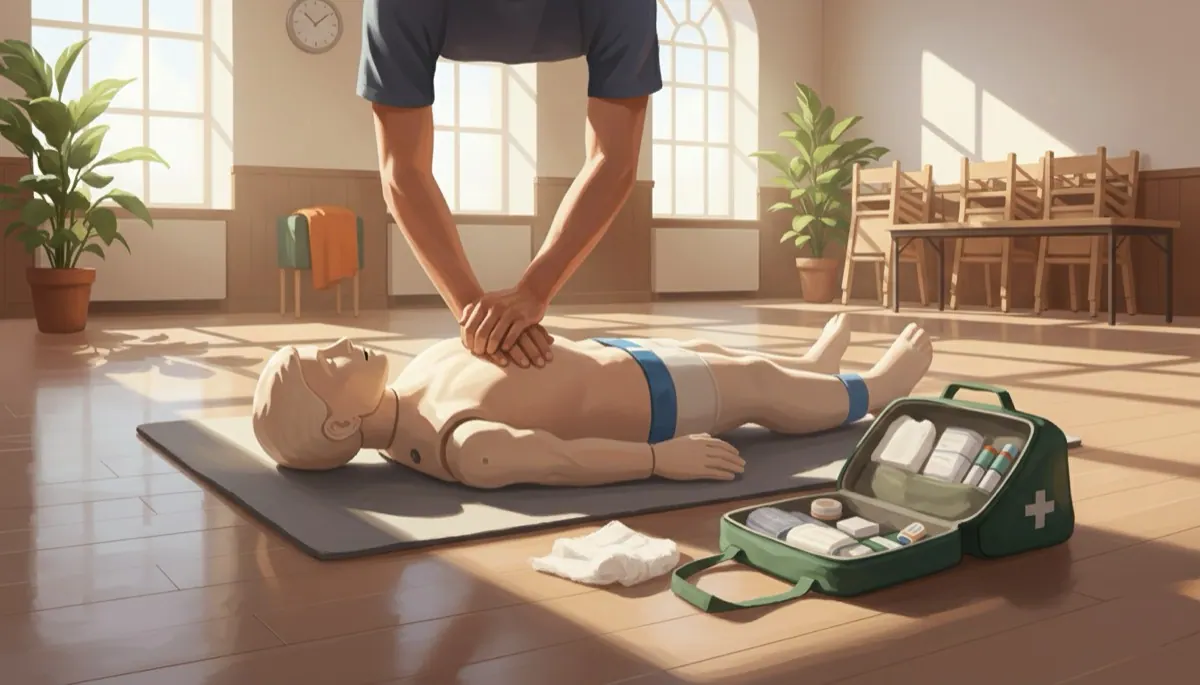
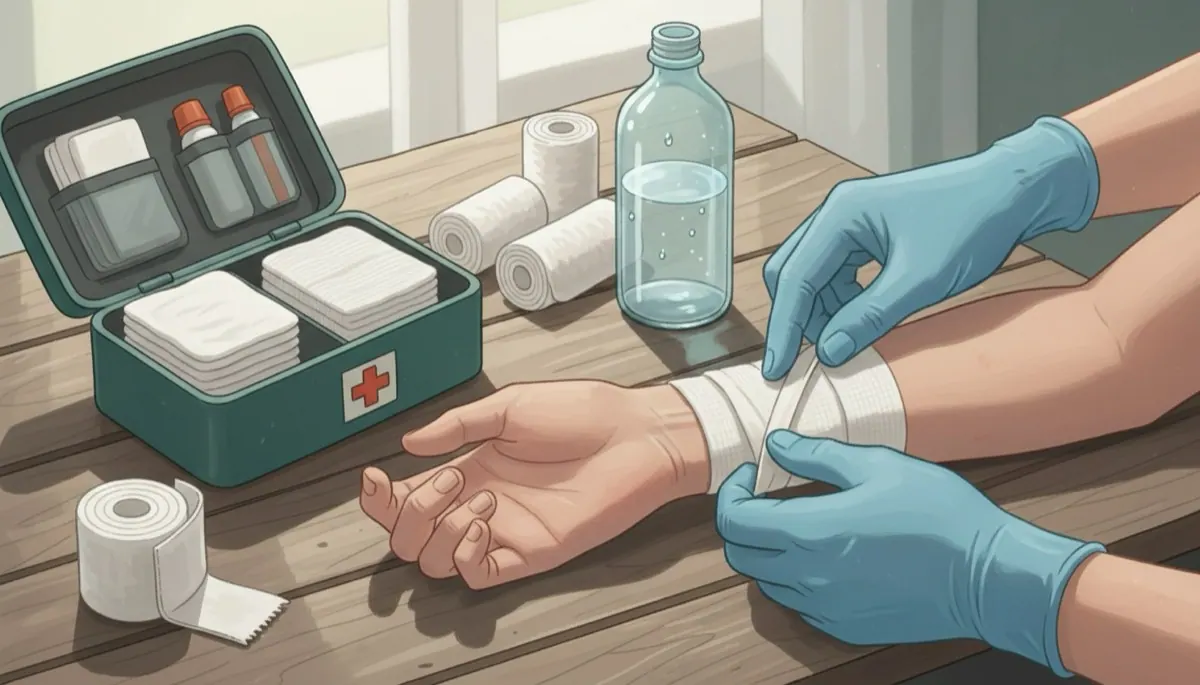
If you see catastrophic bleeding, blood spurting or pooling, control it first with firm pressure, before anything else. If they do not respond, open the airway: one hand on the forehead, two fingertips under the chin, and gently tilt the head back. Now look, listen and feel for normal breathing for no more than ten seconds. Occasional gasps are not normal breathing. If they are not breathing normally, call the emergency number and start CPR, covered in the next lesson. If they are breathing, look quickly from head to toe for severe bleeding and control it with firm pressure. Catastrophic bleeding can kill in minutes, so it is controlled first, then airway and breathing.
Calling for help and what to say
Call your local emergency number (112 works across Europe and on most mobile phones worldwide). If your own network has no signal, try anyway: in Europe, 112 can connect through any other network that reaches you. Tell the dispatcher, calmly and in this order: where you are, what happened, how many people are hurt, their condition (awake, breathing, bleeding) and your phone number. Location matters most. In the wild, give coordinates: your phone's map or compass app can show your latitude and longitude even offline, so read them out slowly, digit by digit. Stay on the line and follow their instructions. Do not hang up until they tell you to.
Recovery position, then evacuate or wait
An unresponsive person who is breathing normally goes into the recovery position so their tongue and any vomit cannot block the airway. Kneel beside them, place the near arm at a right angle, bring the far hand across to rest against their near cheek, bend the far knee up, then pull on that knee to roll them towards you onto their side. Tilt the head back so the airway stays open, and check breathing constantly. Then decide: if help is coming and your location is known, usually wait, keep them warm and stay together. Move only if staying is more dangerous. A real first-aid course will let you practise all of this properly.
Check yourself
Danger comes first. If you are injured too, nobody gets help.
Ten seconds is enough. Longer delays CPR if they are not breathing normally.
Help cannot reach you if they cannot find you. Read out your coordinates slowly.
On their back, the tongue or vomit can block the airway. On their side, fluids drain out.
Try it for real: Your emergency call drill
- Find where your phone shows your coordinates offline
- Write a short script: location, what happened, how many, their condition, your number
- Practise the recovery position on a willing friend or family member
- Look up a first-aid course near you and put a date in your calendar
🛒 Gear for this skill
As an Amazon Associate I earn from qualifying purchases. It costs you nothing extra and keeps this site free.
Next lesson: CPR and Choking →
Written and checked by the Human Skills team against the sources below. How we check our content
- European Resuscitation Council Guidelines
- British Red Cross first aid
- St John Ambulance