Human Skills
Casting a Spinning Reel
Smooth beats strong every time
5 minIntermediateUpdated
- Perform a basic overhead cast with a spinning reel
- Fix the two common faults: line slap and wind knots
- Check the space around you before every cast
Before you swing: the safety check
A hook travelling at 100 km/h does not care what it hits. Before every cast, look behind you, above you and to both sides. Nobody should be within two rod lengths behind you. Check for trees, bushes and power lines overhead; a rod or wet line touching a power line can kill. Look for people walking along the bank or beach who might step into your backswing. Wear sunglasses or glasses and a hat with a brim. On a crowded harbour wall, cast sideways low over the water instead of overhead. Say "casting" out loud if people are near. Do this check every single time until it is automatic.
The grip and the line finger
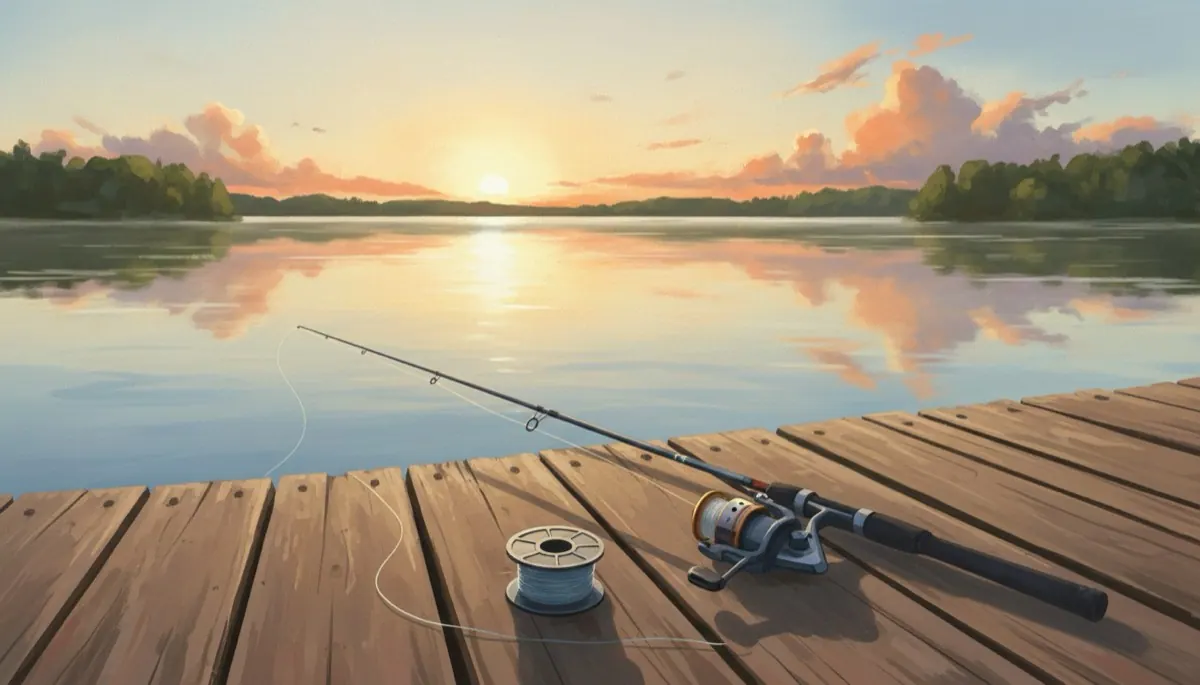
Hold the rod with the reel foot between your middle and ring fingers so the reel hangs below. Wind until the lure hangs 20 to 30 cm below the rod tip. Hook the line with the tip of your index finger, lifting it off the roller. Open the bail with your other hand. Now the line is held only by your finger. Practise this at home with no hook until the finger lift is automatic. Let the finger straighten to release the line; do not fling it. Beginners cast short because they let go late and the lure goes straight up, or cast into the ground because they let go early.
The overhead cast, step by step
Face the target with feet shoulder-width apart. Point the rod at the target, then raise it smoothly back over your shoulder to about the 1 o'clock position, letting the lure swing behind. Pause a half second so the rod loads. Drive the rod forward, stopping crisply at about 10 o'clock, and release the line finger when the rod tip is pointed roughly 45 degrees above the water. Follow through with the tip toward the target. The lure should fly in a gentle arc. Close the bail by hand, not by winding, to avoid line twist. Cast with your arm and wrist, not your whole body. Distance comes from timing, not effort.
Fixing the usual faults
Lure goes high and short: you released too late. Lure hits the water in front of you: released too early. Line loops jump off the spool and tangle (a wind knot): the spool is overfilled, or you wound in slack line; always tighten the line with your finger before winding after a cast. Lure spins in the air and lands in a heap: too much line hanging below the tip; shorten it to 20 cm. Rod feels dead: you are casting too fast; slow down and let the rod bend. Practise in a park with a 10 g casting weight (no hook) at a bucket 15 m away. Ten minutes of practice a day for a week beats a season of frustration.
Sidearm and pendulum casts
On a crowded wall, under trees or in wind, cast sidearm: same motion but the rod moves horizontally at waist height, low over the water. It is less accurate but keeps hooks away from heads. In tight spaces use the pendulum cast: let the lure hang 50 cm below the tip, swing it gently back and forth like a clock pendulum, and release on a forward swing. It only reaches 10 m but it is silent and precise for dropping a bait under a bridge or beside a rock. Learn the overhead first, add these two, and you can fish anywhere.
Check yourself
Late release sends the lure upward. Let the line finger straighten when the rod tip points about 45 degrees above the water.
A short drop keeps the cast controlled; a long one makes the lure spin and tangle.
Most casting injuries are to bystanders in the backswing. Look every time.
Winding to close puts a twist in the line and creates slack loops that become wind knots.
Try it for real: Bucket practice
- Tie a 10 g casting weight (no hook) to your line
- Set a bucket 15 m away in a park with clear space behind you
- Cast 30 times overhead, doing the safety check every cast
- Count hits and near misses; repeat sidearm for 20 casts
- Do this three days in a row
🛒 Gear for this skill
As an Amazon Associate I earn from qualifying purchases. It costs you nothing extra and keeps this site free.
Next lesson: Reading Rivers and Lakes →
Written and checked by the Human Skills team against the sources below. How we check our content
- Take Me Fishing (Recreational Boating and Fishing Foundation)
- Angling Trust beginner guides