Human Skills
Three Knots That Hold
Improved clinch, Palomar and arbor knot
6 minBeginnerUpdated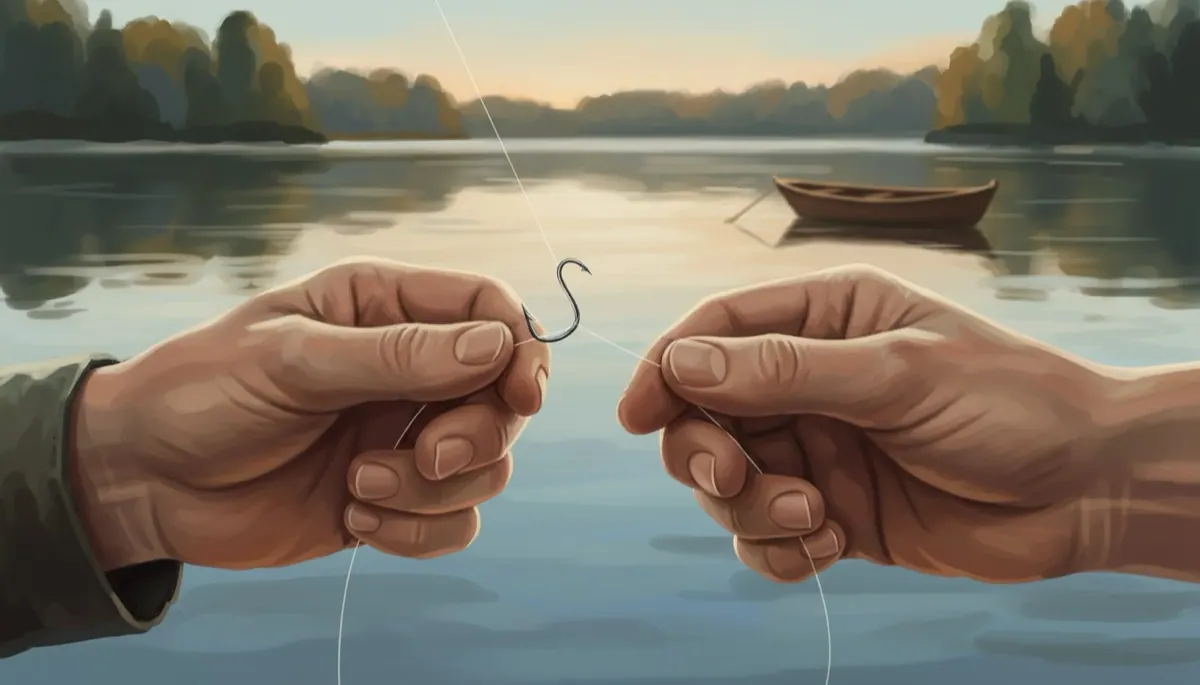
- Tie an improved clinch knot to a hook in under a minute
- Tie a Palomar knot for braid and heavy lures
- Tie an arbor knot to attach line to a reel
Why knots decide everything
Most lost fish are lost at the knot. Line is strong until you bend it sharply, and a badly tied knot cuts into itself under load. A good knot keeps 80 to 95 percent of the line's strength. Two rules make every knot better. First, wet it with saliva or water before pulling tight, so friction heat does not weaken the line. Second, pull slowly and steadily until the knot seats, then trim the tag end to 2 or 3 mm, never flush. Practise at home with thick string or 10 kg mono before you try thin line on a cold morning. Three knots cover almost everything a beginner does.
Improved clinch knot: hook to line
This is the everyday knot for mono up to about 9 kg. Step 1: pass 15 cm of line through the hook eye. Step 2: wrap the tag end around the standing line five times, going away from the hook. Step 3: pass the tag end back through the small loop that formed right next to the eye. Step 4: now pass it through the big loop you just created (that extra pass is the improvement). Step 5: wet the knot, hold the tag end and pull the standing line slowly so the wraps slide down and snug against the eye. Step 6: trim the tag to 3 mm. Use five wraps for 4 to 9 kg line, seven wraps for lighter line.
Palomar knot: the strong one
The Palomar is quicker, stronger and works with braid. Step 1: double 20 cm of line into a loop and push the loop through the hook eye. Step 2: tie a loose overhand knot with the doubled line, keeping the hook hanging in the middle; do not tighten. Step 3: pull the end of the loop down and pass the whole hook or lure through it. Step 4: wet, then pull the standing line and the tag end together until it seats against the eye. Step 5: trim the tag. The doubled line through the eye is what makes it strong. It is awkward with big lures because they must pass through the loop, so make the loop generous.
Arbor knot: line to reel
Used once each time you spool a reel. Step 1: pass the line around the reel spool (the arbor) and bring the tag end back alongside the main line. Step 2: tie an overhand knot with the tag end around the main line. Step 3: tie a second overhand knot in the tag end itself, about 2 cm from the first. Step 4: pull the main line so the first knot slides down and grips the spool; the second knot stops it pulling through. Step 5: trim. It is not a strong knot and does not need to be. If a fish ever reaches the arbor knot you have already lost, because there is no line left.
Practice drill
Sit with a hook, 1 m of line and a cup of water. Tie the improved clinch knot ten times, timing each one. Aim for under 45 seconds. Then tie the Palomar ten times. Pull each knot to failure by wrapping the line around a pencil and pulling; a good knot breaks the line somewhere else, a bad one slips at the eye. Tie both knots with your eyes closed once you can do them with eyes open, because on the water you will tie them in dim light with cold fingers. Finally, tie the arbor knot on an empty spool three times. Keep a 1 m practice line in your pocket for the week.
Check yourself
Dry line tightening against itself heats and scars. A wet knot slides smoothly and keeps its strength.
Braid is slippery and the clinch can pull out. The Palomar's doubled line grips it reliably.
The second pass through the large loop locks the tag so the knot cannot slip.
Flush trimming lets the knot slip as it settles under load. A few millimetres of tag gives a safety margin.
Try it for real: Knot week
- Tie the improved clinch 10 times, timing each; get under 45 seconds
- Tie the Palomar 10 times, then test 3 of them to breaking with a pencil
- Tie an arbor knot on an empty spool three times
- Tie both hook knots once with your eyes closed
🛒 Gear for this skill
As an Amazon Associate I earn from qualifying purchases. It costs you nothing extra and keeps this site free.
Next lesson: Natural Bait or Lures →
Written and checked by the Human Skills team against the sources below. How we check our content
- Animated Knots by Grog
- Angling Trust beginner guides