 Human Skills
Containers, Balconies and Herbs
Real food from a windowsill, terrace or tiny yard
5 minIntermediateUpdated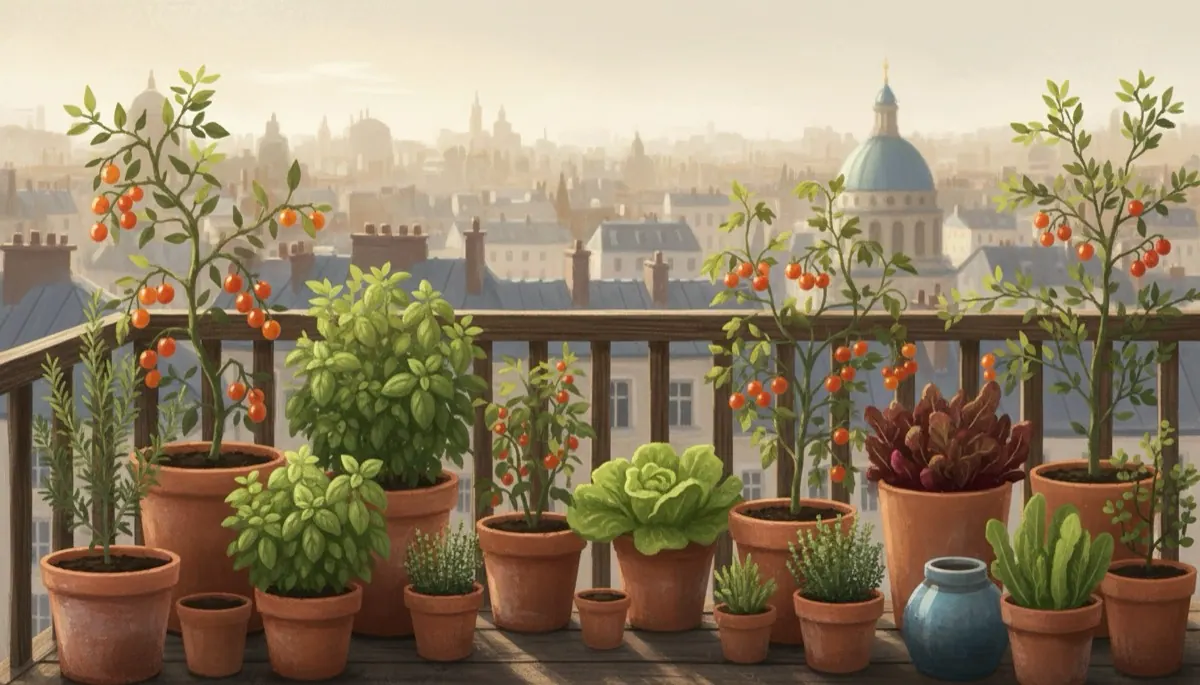
- Pick the right pot size and mix for each crop
- Grow a productive herb collection in one square metre
- Feed and water containers so they do not fail in August
Pot size is everything
The most common container mistake is a pot that is too small. Roots need volume for water and food. Herbs and salad leaves are happy in 3 to 5 litres. Chilli, bush beans and chard want 10 litres. A single tomato, pepper or aubergine needs 20 to 30 litres, and a courgette 40 litres. Every pot needs drainage holes: if there are none, drill 4 or 5. Terracotta breathes and dries fast; plastic and fabric grow bags hold water longer. Dark pots in full sun cook roots in summer, so choose pale colours or wrap them in shade. Group pots together to shade each other's sides.
The right mix
Garden soil compacts in a pot and drains badly. Use a peat-free multipurpose compost mixed with about one third garden compost or worm castings for food, plus a handful of perlite or grit per 10 litres for drainage. Add a slow-release organic fertiliser such as pelleted chicken manure at planting. Refresh containers each year: tip out the old mix onto a bed and fill fresh, or replace at least the top half. Fill pots to 2 to 3 cm below the rim so water does not run off. Water the mix until it drains from the base before you plant.
A one metre herb garden
Herbs are the highest value crop per square metre because a small bunch costs 2 euros in the shop. Split them by water needs. Mediterranean herbs like rosemary, thyme, sage, oregano and lavender want full sun, gritty free-draining mix and little water. Soft herbs like parsley, coriander, chives, mint and basil want richer mix, more water and light afternoon shade in hot climates. Always plant mint alone: it takes over any pot it shares. Harvest by pinching the tips regularly, which keeps plants bushy. Let coriander go to seed in summer and collect it for cooking and resowing in autumn.
Watering and feeding pots
Pots dry from all sides, so they need far more water than beds. In summer, a 20 litre tomato pot in full sun may need 2 to 3 litres a day. Check by pushing a finger 3 cm into the mix: water when it feels dry there, not before. Water slowly until it drains from the base. A saucer helps in heat but empty it in cool weather to avoid root rot. Nutrients wash out with every watering, so feed fruiting crops weekly from flowering with a liquid seaweed or tomato feed, and leafy crops every 2 weeks with a general feed. Yellow lower leaves usually mean hunger.
Small-space tricks
Go vertical: cucumbers, climbing beans, peas and small squash climb a trellis or netting and take almost no floor space. Hang strawberries and trailing tomatoes from railings. Stack a three-tier plant stand to triple a balcony. Choose compact varieties bred for pots, such as bush cucumbers, patio tomatoes and dwarf beans. Sow salad leaves in a window box every 3 weeks and cut them at 10 cm; they regrow 2 or 3 times. Microgreens on a windowsill are ready in 10 days. Check your balcony's weight limit: 20 litres of wet compost weighs about 20 kg.
Check yourself
Tomatoes are thirsty and hungry. Less than 20 litres means constant wilting and a small crop.
Soil that behaves well in the ground turns dense and airless in a container. Use a compost-based mix.
Mint spreads by runners and quickly chokes anything sharing its container.
Surface colour is misleading. A finger test 3 cm down shows what the roots are experiencing.
Try it for real: Plant a container herb corner
- Find or buy three pots of at least 3 litres with drainage holes
- Mix compost with a handful of grit and fill each pot
- Plant one Mediterranean herb, one soft herb and one pot of mint on its own
- Set a daily finger-test watering habit for two weeks
🛒 Gear for this skill
As an Amazon Associate I earn from qualifying purchases. It costs you nothing extra and keeps this site free.
Next lesson: Growing Fruit at Home →
Written and checked by the Human Skills team against the sources below. How we check our content
- RHS Growing Vegetables in Containers
- University of Illinois Extension, Container Gardening
- FAO Urban Agriculture