Human Skills
Growing Fruit at Home
Strawberries, berries and a first fruit tree
6 minIntermediateUpdated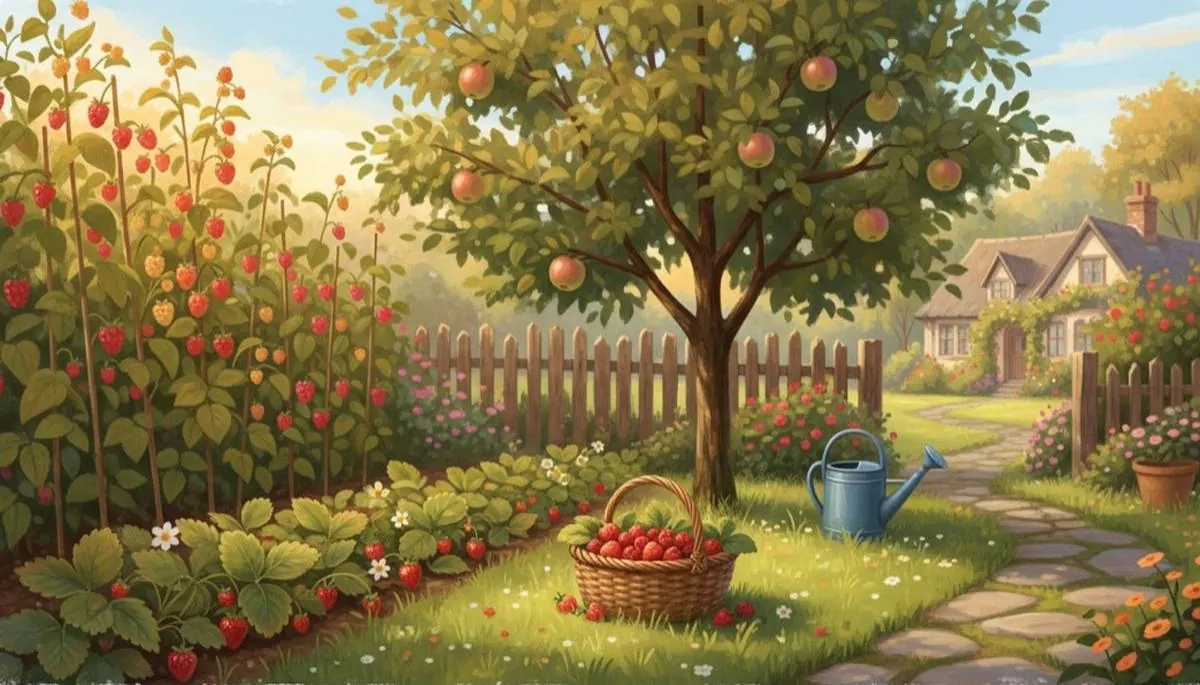
- Choose fruit that matches your space and climate
- Plant a bare-root tree or bush correctly
- Understand pollination, chill hours and basic pruning
Start with the easy wins
Strawberries fruit in their first year and grow in pots, hanging baskets or a bed edge. Plant in spring or early autumn 30 cm apart with the crown at soil level. They send out runners; peg the first two into small pots to make new plants and cut the rest off. Replace plants every 3 years as yields fall. Raspberries, blackberries and their hybrids are the next step: a row 1.5 m long gives kilos of fruit. Blueberries need acidic soil with a pH of 4.5 to 5.5, so grow them in a pot of ericaceous compost watered with rainwater. Figs, lemons and grapes love hot dry summers.
Choosing a tree
Fruit trees are sold grafted onto a rootstock that controls final size. For a small garden, ask for a dwarfing rootstock: an apple on M26 stays around 2.5 to 3 m tall. Bare-root trees, sold and planted from November to March while dormant, are cheaper and establish better than potted ones. Check pollination. Many apples, pears, plums and cherries need a second compatible variety nearby to set fruit, while peaches, apricots, figs, quince and most citrus are self-fertile. Check chill hours too: most apples need 800 to 1000 hours below 7 degrees C in winter, which mild coastal climates cannot provide. Choose low-chill varieties there.
Planting a tree
Dig a square hole as deep as the roots and 2 to 3 times as wide. Square holes stop roots circling. Loosen the sides with a fork. Do not add compost to the hole itself; the tree must learn to root into real soil. Set the tree so the graft union, the knobbly bump on the trunk, sits 5 to 10 cm above the soil. Hammer a short stake in before backfilling, on the windward side, and tie the trunk loosely with a figure-of-eight tie. Backfill, firm with your heel, and water with 10 to 20 litres. Mulch a 1 m circle with 8 cm of wood chip, keeping it off the trunk.
Basic pruning
Pruning scares beginners, so start with three rules. Remove the three Ds any time: dead, diseased and damaged wood. Remove branches that cross and rub. Open the centre so light and air reach every branch. Apples and pears are pruned in winter when dormant. Stone fruit such as plums, cherries, peaches and apricots are pruned in summer after harvest, because winter cuts let in silver leaf disease. Never remove more than a quarter of the tree in one year. Use sharp bypass secateurs, cut just above an outward-facing bud, and clean blades between trees.
Fruit for hot dry places
If your summers are hot and dry, some fruits are far easier than others. Figs, pomegranates, olives, grapes, almonds, citrus, loquats and persimmons all cope with drought once established and dislike wet feet. They need water in their first two summers, then only occasional deep soaks. Prickly pear cactus gives fruit with almost no care. Apples, pears and soft fruit struggle without irrigation and afternoon shade. Plant Mediterranean fruit in autumn so winter rain establishes the roots before the first dry summer. Mulch thickly and never fertilise heavily; lush growth burns and attracts aphids.
Check yourself
Blueberries are acid-loving. Most gardens are too alkaline, so a pot of ericaceous compost is the easy answer.
A buried graft union lets the top variety root and the dwarfing effect is lost, giving a huge tree.
Stone fruit pruned in winter is open to silver leaf and canker. Summer cuts heal fast.
Dormant planting lets the roots grow out naturally before the tree has to support leaves.
Try it for real: Plant your first fruit
- Choose one fruit that suits your space: strawberries in a pot, a berry bush, or a dwarf tree
- Check whether it needs a pollination partner and its chill requirement
- Plant it with the crown or graft union at the correct height
- Mulch and set a weekly deep-watering reminder for the first summer
🛒 Gear for this skill
As an Amazon Associate I earn from qualifying purchases. It costs you nothing extra and keeps this site free.
Next lesson: Watering the Right Way →
Written and checked by the Human Skills team against the sources below. How we check our content
- RHS Fruit Growing Guides
- University of California, Home Orchard
- FAO Fruit Tree Propagation