 Human Skills
Keeping Backyard Chickens
Space, feed, water, predators and the rules
5 minBeginnerUpdated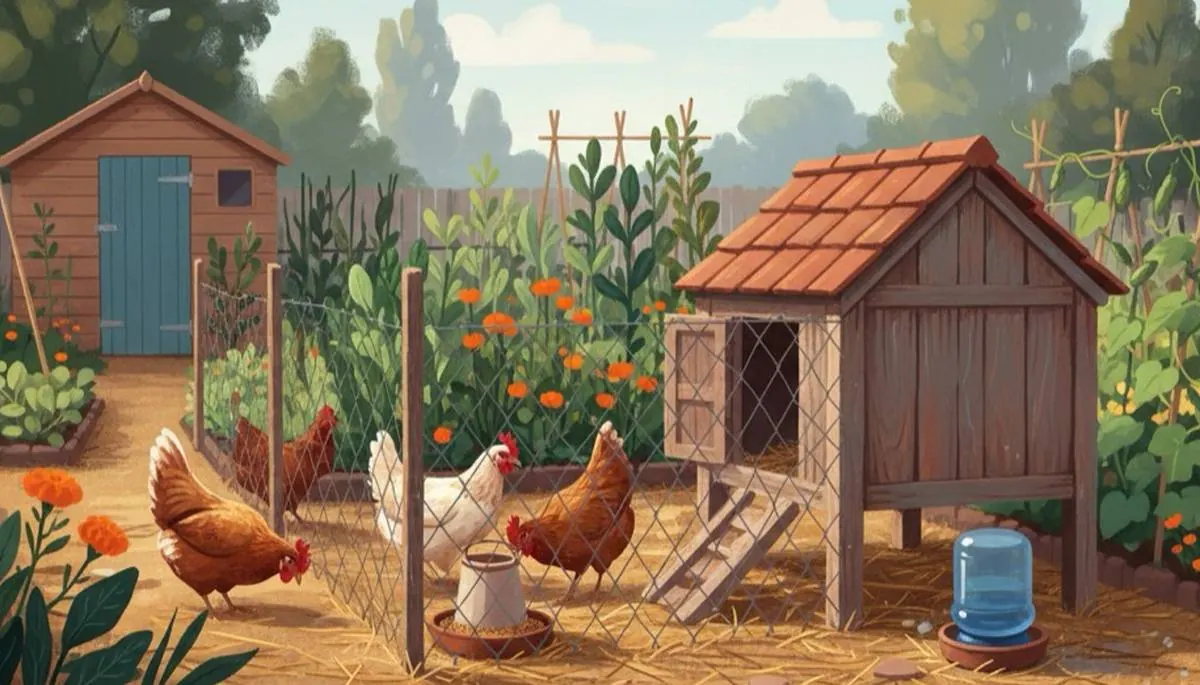
- Size a coop and run for a small flock
- Set up daily feed and water correctly
- Protect birds from predators and heat
Check the rules before the birds
Chickens are livestock, and most towns have rules about them. Common limits: a maximum number of hens (often 4 to 6), no roosters in built-up areas because of noise, and a minimum distance between the coop and a neighbour’s house. In Portugal, small flocks for home use are generally allowed, but the câmara municipal or junta de freguesia may have local rules, and larger flocks need registration with the DGAV animal health service. Ask before you build. A quick call saves you from removing a coop later. Also talk to your neighbours: a few free eggs go a long way.
How much space they need
Crowded hens peck each other and get sick. Plan on at least 0.4 m² of coop floor per bird and 1 m² of outdoor run per bird, and more is always better. The coop is the sleeping and laying box: it needs a roost bar about 40 cm off the floor (5 cm wide, so feet grip comfortably), one nest box per 3 to 4 hens, and ventilation high up so warm damp air escapes without a draught blowing on the roost. The run needs shade, dry ground and somewhere to dust-bathe. If your garden is small, a movable coop you shift every few days keeps grass alive and spreads the manure.
Feed and water every day
A laying hen eats roughly 120 g of layer pellets a day and drinks 250 to 500 ml of water, double that in hot weather. Layer feed (16 to 18 percent protein with added calcium) gives strong shells. Kitchen scraps are a treat, not a diet: vegetables, cooked rice, fruit are fine. Avoid raw potato peel, avocado, chocolate, mouldy food and anything salty. Keep a small dish of crushed oyster shell so hens top up calcium as they need it, and a dish of grit if they do not range on soil. Water must be clean and never run out. A hen without water for a few hours can stop laying for weeks.
Predators and the nightly lock-up
Almost everything likes chicken: foxes, stone martens, rats, dogs, hawks, and in rural Portugal genets and mongooses too. Foxes dig, martens squeeze through 5 cm gaps, hawks come from above. Use welded hardware mesh with holes no bigger than 12 mm, not chicken wire, which a fox tears open. Bury the mesh 30 cm down or lay a 40 cm skirt flat on the ground around the run. Cover the run with netting. Then the most important habit: shut the coop door every evening at dusk and open it at dawn. An automatic door on a timer or light sensor is the single best upgrade for a small flock.
Heat is the real enemy
Hens cope with cold far better than heat. Above about 30 °C they pant, hold their wings out and stop laying; above 35 °C they can die. In a Mediterranean summer, shade is not optional. Put the run under a tree, a shade sail or a north-facing wall, and give the coop cross-ventilation. Offer water in two places, in the shade, and drop in a frozen bottle on the hottest days. A shallow tray of damp sand or a wetted patch of ground lets them cool their feet. Feed early morning and evening, not in the midday heat. In winter, a dry, draught-free coop is all they need; do not heat it.
Check yourself
About 0.4 m² of coop floor plus 1 m² of run per bird keeps a flock calm and healthy. More space is always better.
Foxes tear through chicken wire. Small-hole welded hardware mesh, buried or skirted at the base, is what actually stops them.
Hens handle cold well but pant and stop laying above about 30 °C. Shade and cool water are essential in summer.
Avocado, raw potato peel, chocolate and mouldy food are toxic to chickens. Vegetables, cooked grains and fruit are fine treats.
Try it for real: Plan your flock on paper
- Find out your local rules on hens, roosters and coop distance
- Measure a spot with shade and draw a coop and run for 3 hens
- Price a coop, hardware mesh, feeder, drinker and a bag of layer feed
- Identify your local predators and note how you will block each one
🛒 Gear for this skill
As an Amazon Associate I earn from qualifying purchases. It costs you nothing extra and keeps this site free.
Next lesson: Eggs: Collecting, Cleaning and Storing →
Written and checked by the Human Skills team against the sources below. How we check our content
- FAO Small-scale poultry production
- RSPCA Chicken welfare guidance
- DGAV (Portugal animal health authority)
Related lessons

Eggs: Collecting, Cleaning and Storing
From nest box to kitchen without waste

Basic Animal Care Principles
The five freedoms, daily checks and when to call the vet
Designing a Coop That Works
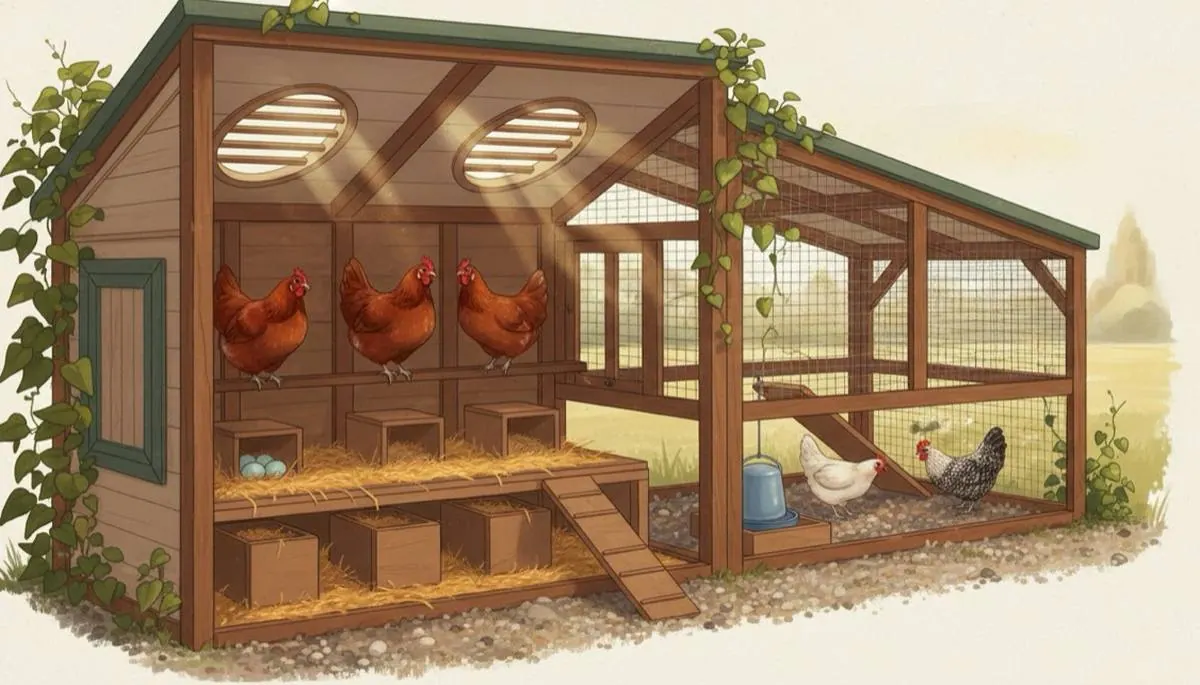
Ventilation, perches, nest boxes and a run that stays dry

Spotting a Sick Chicken
Daily checks, parasites and when to call a vet