Human Skills
Designing a Coop That Works
Ventilation, perches, nest boxes and a run that stays dry
5 minBeginnerUpdated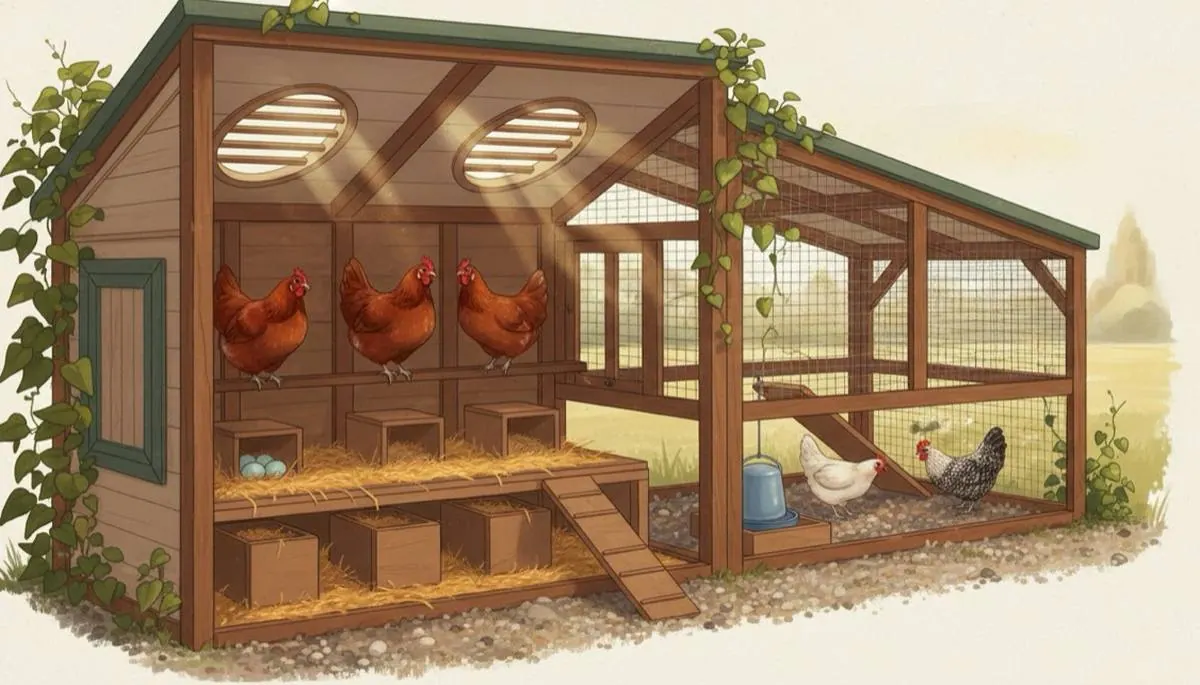
- Size perches, nest boxes and floor space for your flock
- Ventilate a coop without creating a draught
- Build a run that drains and resists digging predators
Ventilation is the whole game
Most coop problems are damp, not cold. A hen breathes out a surprising amount of water and her droppings add more, and moist ammonia-laden air is what causes frostbitten combs and rattling chests. You want air leaving high above the birds, through vents, gable openings or a covered ridge gap totalling roughly a fifth of the floor area, while the perch zone itself stays still. Stand at perch height on a windy night: you should feel no moving air on your face, and the coop should smell of wood shavings, not of ammonia. Never seal a coop for winter.
Perches, floor space and layout
Give each standard hen about 20 to 25 cm of perch and 0.3 to 0.4 square metres of coop floor. Perches work best as 5 by 5 cm timber laid flat with the edges rounded, so the bird's foot covers her toes at night and frostbite has nowhere to start. Set all perches at the same height, because if one is higher they will fight for it, and put them 30 cm from the wall and above the nest boxes. A droppings board under the perch catches most of the night's mess and takes thirty seconds to scrape each morning.
Nest boxes they will actually use
One box per three to four hens, roughly a 30 cm cube, lower than the perches and in the darkest corner. Add a lip at the front so deep bedding and eggs stay put, and keep it deeply filled with straw or shavings. Floor laying nearly always means the box is too bright, too high or too exposed, or that red mite has made it unpleasant. A fake egg teaches new layers where to go. Clean the bedding weekly, because dirty boxes are the reason eggs arrive filthy and washing eggs shortens their life.
A run that survives winter
Allow at least 1 square metre of run per hen, and more is always better. Roof at least a third of it, which keeps a dry area for dust bathing and stops the whole run turning to soup in a wet Portuguese January. Deep wood chip over free-draining ground beats bare earth, which compacts into mud, and it can be raked and topped up rather than replaced. Site the coop on the highest ground you have, fit gutters, and dig a shallow gravel trench uphill if water runs towards you. Add perches, a log and a dust bath so they have something to do.
Materials, mites and predators
Bury or skirt the mesh: 50 cm down, or an apron of mesh laid flat and pegged 50 cm outwards, stops foxes and dogs digging under. Use welded mesh of 12 to 19 mm, never chicken wire, which a fox tears and a weasel walks through. Fit two-step latches, because raccoons, martens and clever dogs open simple ones. Choose smooth surfaces and sealed joints wherever you can: every crack in rough timber is red mite habitat, which is why a second-hand wooden coop should be stripped, treated and dried before it ever comes onto your ground.
Check yourself
Moist air rises and must leave high up, while the roosting birds stay out of moving air. Draughts across a perch and a sealed winter coop both cause illness.
Roughly 20 to 25 cm per bird lets the whole flock roost without squabbling. Too little perch pushes birds onto the floor or into the nest boxes.
Chickens instinctively roost on the highest spot. If a nest box is higher than the perch they sleep in it, and you get filthy eggs.
Foxes tear thin hexagonal chicken wire and small predators pass through it. Welded mesh plus a buried or outward-laid apron stops both biting through and digging under.
Try it for real: Audit or sketch your coop
- Measure your coop floor and perch length and divide by your bird numbers
- Calculate vent area and compare it with about a fifth of the floor area
- Stand at perch height at night and check for moving air and ammonia smell
- Walk the run fence and find every point a predator could dig or push under
- Write a list of the three cheapest fixes and do the first one this week
🛒 Gear for this skill
As an Amazon Associate I earn from qualifying purchases. It costs you nothing extra and keeps this site free.
Next lesson: Spotting a Sick Chicken →
Written and checked by the Human Skills team against the sources below. How we check our content
- RSPCA Chicken Welfare
- FAO Small-scale Poultry Production
- The Poultry Site