 Human Skills
Water From Dew, Plants and Condensation
Dew rags, transpiration bags and honest yields
5 minIntermediateUpdated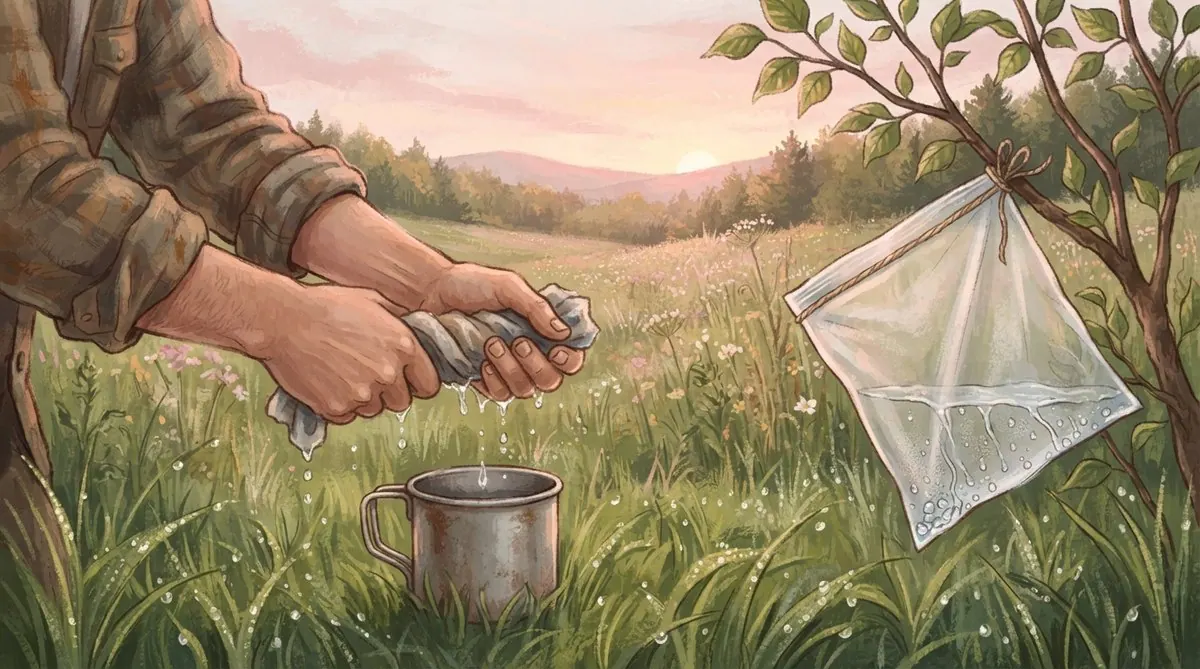
- Collect dew at dawn with a cloth
- Set up a transpiration bag on a safe leafy branch
- Judge which methods are worth the effort and which waste sweat
Small water, honestly measured
Dew, plants and condensation can give you water when there is nothing else, but the amounts are small. Survival shows make them look like a solution; they are a supplement. A good dawn of dew collecting might give a few hundred millilitres. A plastic bag on a leafy branch might give a glass or two in a sunny day. A dug solar still often gives less than a cupful and can cost you more sweat to dig than it returns. Knowing this helps you choose: rest in the shade, conserve what you have, and use these methods alongside finding a real source, not instead of it.
Dew rags at dawn
On clear, still nights, the ground cools and water condenses on grass and leaves. Collect it at first light, before the sun burns it off. Tie a clean, absorbent cloth such as a cotton T-shirt or bandana around your ankles and walk slowly through long grass, or wipe it across leaves, then wring it into a container. Repeat until the dew is gone. On a good morning in lush grass you may collect half a litre or so with steady work. Avoid grass beside roads, sprayed fields and areas used by livestock. Dew is usually clean, but treat it when you can, especially if animals graze there.
Transpiration bags
Plants pull water from the soil and breathe it out through their leaves. Slip a clear plastic bag over a leafy branch in full sun, tie it tightly around the stem, and let one corner hang low with a small stone in it. Water condenses inside and collects in that corner. After several hours, drain it without removing the bag. Realistic yields are around 100 to 300 millilitres per bag per sunny day, depending on the plant and heat. Use leafy, non-toxic trees you know, such as birch, willow or fruit trees. Never use plants with milky sap, oleander, yew, or anything you cannot identify, because toxins can come through.
The solar still: mostly a sweat trap
The classic solar still is a hole about 1 metre wide and 60 cm deep, with a container in the middle, covered by plastic weighted with a stone so condensation drips into the cup. In real tests it often gives well under half a litre a day, sometimes almost nothing in dry sand. Digging it in the heat can make you lose more water in sweat than it will ever return. Build one only if the ground is damp, you can dig in the cool of evening, and you will stay put for days. A useful variation is using it to distil water you cannot drink, such as seawater or urine, poured into the pit around the cup.
Never drink seawater or urine
Seawater has about three times the salt your kidneys can handle. To get rid of it, your body uses more water than you drank, so you dehydrate faster, and it can lead to kidney failure, seizures and death. Urine works the same way: it carries salt and waste your body has already rejected, and the more dehydrated you are, the more concentrated it becomes. Drinking it speeds up dehydration. Both can be made safe only by distilling them, for example in a solar still or by catching steam from boiling. Alcohol, blood and fish juices also cost water to process. Do not drink them as a water substitute.
Ration sweat, not water
The surest way to make water last is to lose less of it. Rest in shade during the hottest hours and move in the cool of morning and evening. Keep clothes on and your head covered, because skin exposed to sun and wind loses water fast. Breathe through your nose, talk less, and do not eat much if water is short, since digestion, especially of protein, uses water. Do not hold back from drinking water you have: people have died of dehydration with water still in their bottles. Drink small, regular amounts and keep looking for a real source while your body still works well.
Check yourself
Transpiration bags give small but real amounts. Plan on a glass or two per bag per sunny day.
Dew forms through clear nights and evaporates soon after sunrise, so dawn is the window.
Your kidneys use more water to remove the salt than the seawater provides, so you dehydrate faster.
Reducing sweat loss saves more water than any trick. Drink what you have in small, regular amounts.
Try it for real: Measure your morning dew
- On a clear, still night, prepare a clean cotton cloth and a container
- At first light, wipe or walk the cloth through clean grass
- Wring it out and repeat until the dew is gone
- Measure what you collected and note how long it took
🛒 Gear for this skill
As an Amazon Associate I earn from qualifying purchases. It costs you nothing extra and keeps this site free.
Next lesson: Safe Drinking Water During an Outage →
Written and checked by the Human Skills team against the sources below. How we check our content
- WHO Guidelines for Drinking-water Quality
- CDC Extreme Heat and Your Health
- US Army Survival Manual FM 21-76
Related lessons

Finding Water Outdoors
Where water hides and how to read the land for it
Making Water Safe to Drink
Boiling, chemicals and filters, with the right times and doses
Catching Rain in an Emergency
Tarps, gutters, first flush and which roofs to avoid
Storing and Treating Rainwater
Keep it clean, keep it dark, and always treat before drinking