 Human Skills
Storing and Treating Rainwater
Keep it clean, keep it dark, and always treat before drinking
5 minBeginnerUpdated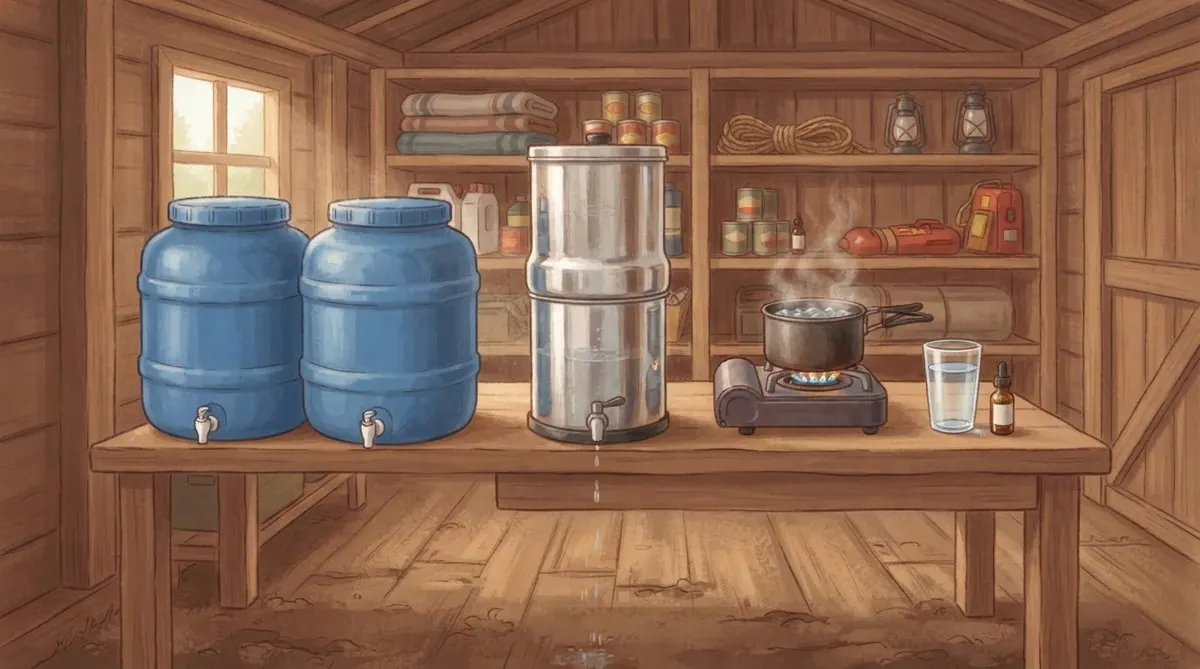
- Store rainwater so it stays clean and free of mosquitoes
- Treat rainwater by boiling, or by filtering then disinfecting
- Know the limits of treatment and the local rules
Why you always treat rainwater
Rain picks up germs from every surface it touches. Bird, rat and lizard droppings on roofs and in gutters carry Salmonella, Campylobacter and Cryptosporidium, and outbreaks from untreated roof water are well documented. Clear, sweet-tasting rainwater can still make you seriously ill, because germs are invisible. The rule is simple: never drink untreated rainwater from a roof, tarp or tank. Use it untreated only for flushing toilets, washing floors and watering ornamental plants. Anything that goes in your mouth, including water for brushing teeth, rinsing salad or making ice, should be treated first.
Storing it well
Store water in food-grade containers with tight lids, kept dark and cool. Light lets algae grow and heat speeds up bacteria, so opaque containers out of the sun work best. Screen every opening, overflow and inlet with fine mesh, because a mosquito can breed in a bottle cap of water and complete its life cycle in about a week. Draw water from a tap near the bottom rather than dipping cups or hands in. Clean tanks once a year and empty smaller containers regularly. Rotate stored water: use the oldest first and refill, and replace untreated stored water you plan to drink every few weeks.
Boiling: the safest method
Boiling kills bacteria, viruses and protozoa, including Cryptosporidium that bleach struggles with. If the water is cloudy, let it settle and pour it through a clean cloth first. Bring it to a full rolling boil and keep it there for 1 minute. Above 2,000 metres, boil for 3 minutes, because water boils at a lower temperature at altitude. Let it cool with the lid on and store it in a clean, covered container. This is the WHO and CDC guidance and it is the method to choose whenever you have fuel. Boiled water tastes flat; pour it between two clean containers to add air back.
Filter, then disinfect
Without fuel, combine two steps. First remove particles: let water settle, then pass it through a cloth, a ceramic filter or a hollow-fibre filter. Then disinfect. Use plain, unscented household bleach with 5 to 9 percent sodium hypochlorite, never scented, splashless or colour-safe types. Add 2 drops per litre of clear water, or 4 drops per litre if it is still cloudy, stir and wait 30 minutes. It should smell faintly of chlorine. If it does not, repeat the dose and wait another 15 minutes. Purification tablets work too; follow the packet exactly. Bleach is weak against Cryptosporidium, so boiling stays the better choice.
What treatment cannot fix
Boiling, bleach and most portable filters kill germs, but they do not remove chemicals. Rainwater from roofs with lead, asbestos, bitumen or treated wood stays unsafe whatever you do to it. In cities and near busy roads, factories or farms that spray crops, rain carries soot, heavy metals and pesticides that settle on roofs, and the first flush matters even more. Only an activated carbon filter reduces some of these, and it never makes a poisoned source safe. If water smells of fuel or chemicals, looks oily or has a colour that does not settle out, do not drink it. Rainwater is also low in minerals; that is fine, but it is not a health drink.
The rules where you live
Collecting rain from your own roof is legal in most of Europe and encouraged in many dry regions, but rules differ. Some places require permits for large tanks, limit how rainwater can be connected to the house, or ban connecting it to the mains pipes, because backflow could contaminate the public supply. Some countries treat rainwater for drinking as a private water supply that must meet testing standards. Before you build anything permanent, check with your local council or water authority. In an emergency, catching rain in buckets to survive is never the problem; plumbing it into your home without checking can be.
Check yourself
Above 2,000 metres, water boils at a lower temperature, so WHO and CDC advise 3 minutes instead of 1.
Cloudy water uses up chlorine, so the dose doubles to 4 drops per litre, then you wait 30 minutes.
Mosquitoes can breed in very little standing water in about a week. Lids and fine mesh stop them and keep dirt out.
Boiling kills germs but does not remove chemicals that leach from bitumen. Use that water for flushing only.
Try it for real: Make a litre safe
- Collect a litre of rainwater in a clean, food-grade container
- Settle and pour through a clean cloth if it is cloudy
- Boil for 1 minute, or add 2 drops of unscented bleach and wait 30 minutes
- Cover, label with the date and store it in a dark, cool place
🛒 Gear for this skill
As an Amazon Associate I earn from qualifying purchases. It costs you nothing extra and keeps this site free.
Next lesson: Water From Dew, Plants and Condensation →
Written and checked by the Human Skills team against the sources below. How we check our content
- WHO Guidelines for Drinking-water Quality
- CDC Making Water Safe in an Emergency
- EPA Emergency Disinfection of Drinking Water
Related lessons

Finding Water Outdoors
Where water hides and how to read the land for it
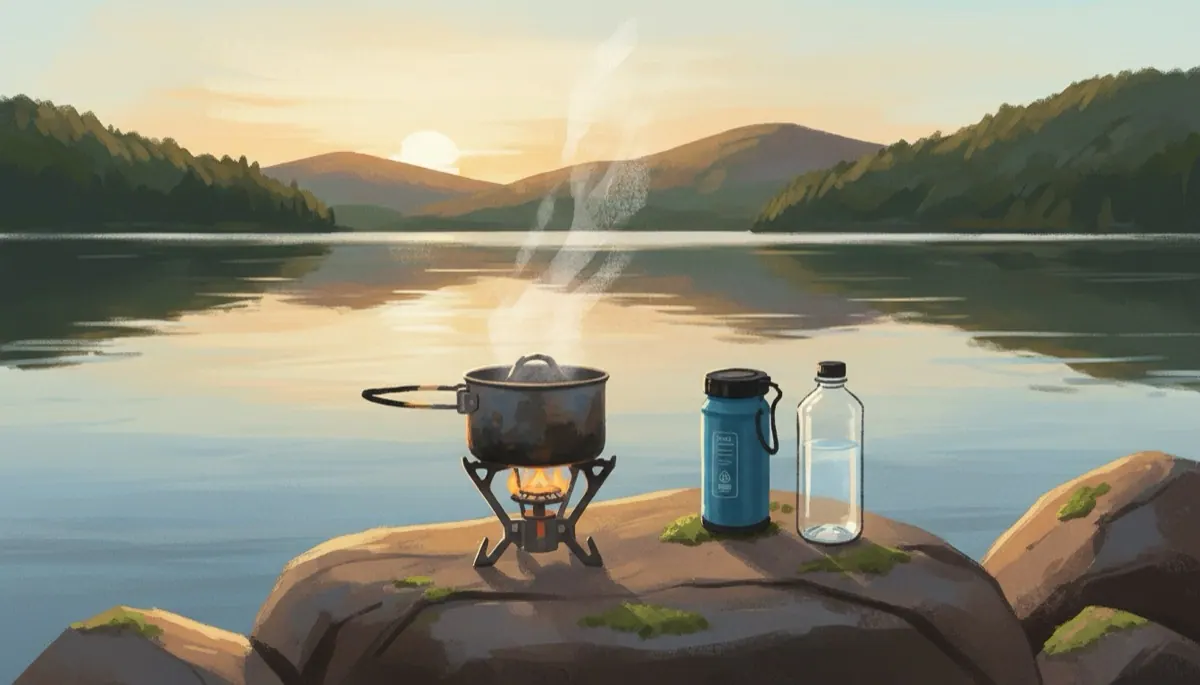
Making Water Safe to Drink
Boiling, chemicals and filters, with the right times and doses
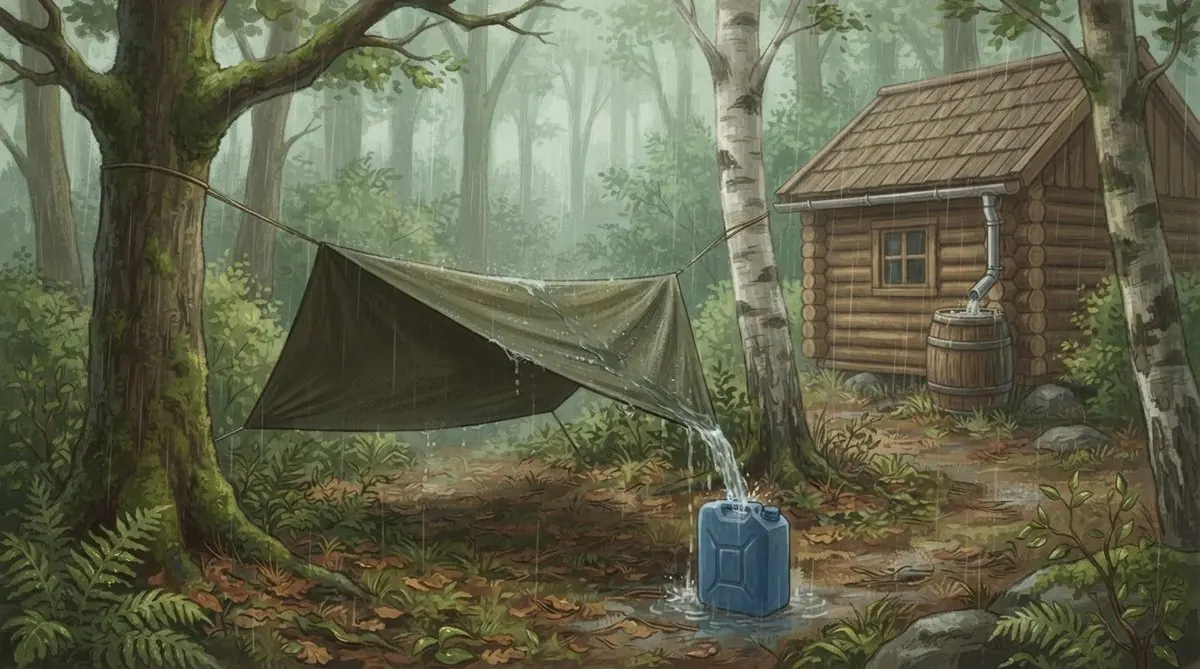
Catching Rain in an Emergency
Tarps, gutters, first flush and which roofs to avoid
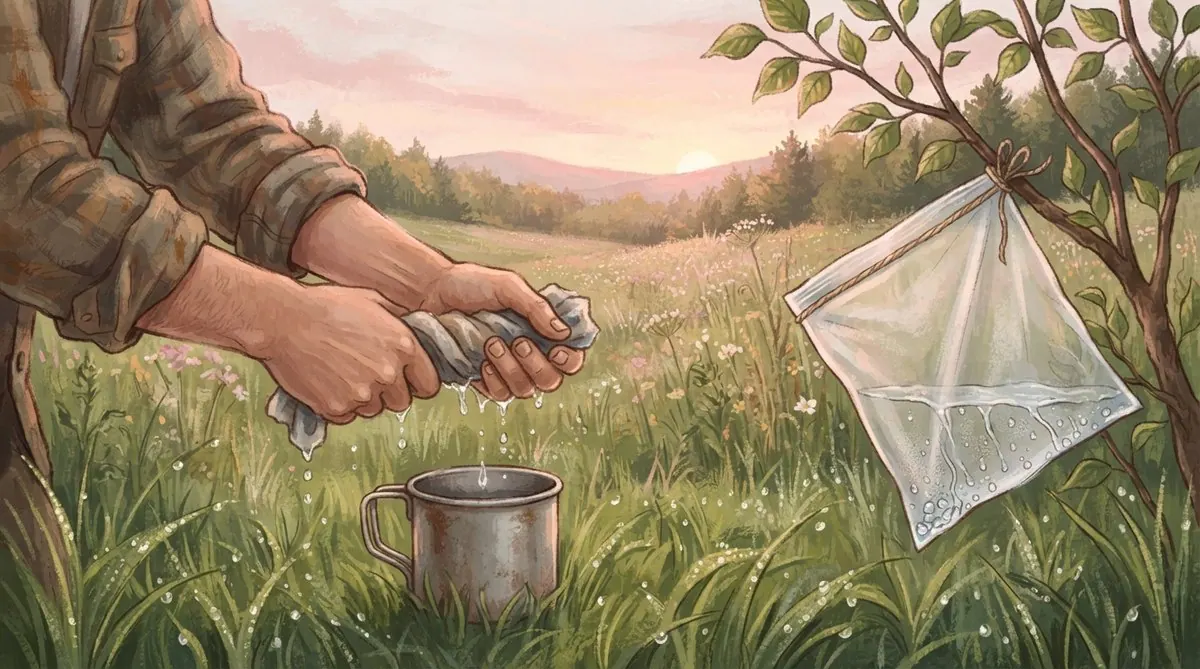
Water From Dew, Plants and Condensation
Dew rags, transpiration bags and honest yields