 Human Skills
Catching Rain in an Emergency
Tarps, gutters, first flush and which roofs to avoid
5 minBeginnerUpdated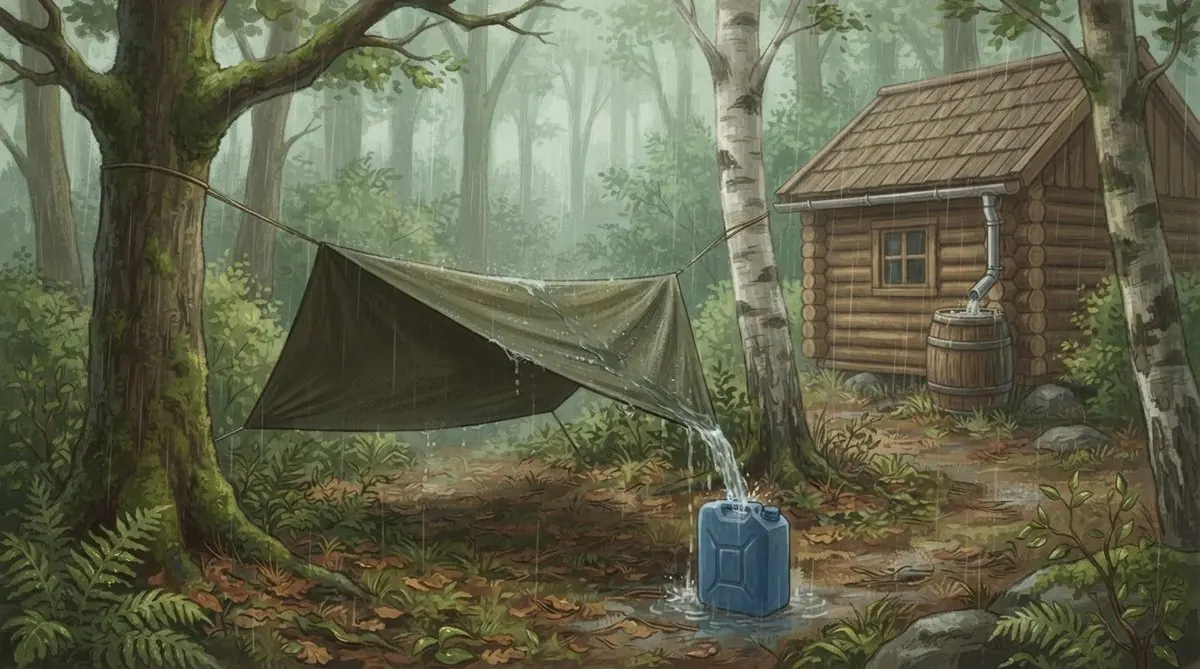
- Rig a tarp, poncho or gutter to funnel rain into a clean container
- Discard the first flush and choose safe collection surfaces
- Estimate how much water a roof or tarp can give you
Rain is the cleanest water you will find
When the taps stop, rain is usually the best source around you. It falls as almost pure water and only picks up dirt from the air and from whatever surface it lands on. That is the key idea of this lesson: the surface and the container decide how safe your rainwater is. A clean tarp into a clean bucket gives far better water than a dirty roof into an old drum. Even so, rain that has touched a roof, tarp or gutter can carry bird and animal droppings, dust and germs, so you still treat it before drinking, as the next lesson explains.
Tarp and poncho funnels
Tie a tarp, poncho or large plastic sheet between trees or posts at four corners, with one corner set lower than the rest. Place a small stone in the middle of the sheet just above that low corner so water runs to one point, then set your container under it. A sheet of 2 by 3 metres is 6 square metres, which is a lot of catching surface. Rinse the sheet in the first minutes of rain and let that water run to waste. Food-grade or new plastic is best. Avoid old tarps that held fuel, chemicals or paint, and never use a sheet treated with fire retardant or insecticide.
Gutters, downpipes and clean containers
A house roof catches far more than any tarp. Pull the downpipe away from the drain or cut it at a convenient height, and lead it into a container. Use food-grade containers only: water bottles, food buckets, clean jerrycans marked for water. Never use containers that held fuel, pesticides, solvents or cleaning products, because those chemicals cannot be washed out and no boiling or bleach will remove them. Wash containers with soapy water, rinse, then swirl with a weak bleach solution of about 1 teaspoon per litre and rinse again. Keep lids on between showers.
The first flush goes to waste
The first rain after a dry spell washes everything off the roof: dust, leaves, pollen, bird droppings, dead insects. That first water is the dirtiest you will collect, so let it run to waste. A simple rule is to discard roughly the first 0.5 to 1 litre for every square metre of roof, or simply wait 5 to 10 minutes of steady rain before you start filling. A first-flush diverter does this automatically: a vertical pipe fills with the dirty water first, then the clean water flows past it into the tank. After a long dry spell, discard more.
Roofs you should not collect from
Some surfaces poison the water and no treatment fixes that. Do not drink from roofs with lead flashing, lead paint or old lead gutters. Avoid asbestos cement sheets, which are common on old sheds and garages, and avoid bitumen, tar or felt roofs, which leach oily chemicals. Treated timber, copper-treated wood shingles and painted roofs of unknown paint are also out. Roofs under overhanging trees or used by pigeons and gulls collect heavy droppings. Good surfaces are glazed tiles, slate, food-safe painted metal and clean plastic or glass. If you are unsure what the roof is made of, use the water for washing and flushing, not drinking.
How much water you can expect
The maths is simple: 1 millimetre of rain on 1 square metre gives 1 litre. Measure the footprint of the roof, not its sloped surface, so a house 8 by 10 metres catches 80 litres for every millimetre of rain. A 10 mm shower then gives about 800 litres in theory; expect around 80 percent in practice because of splash, evaporation and the first flush. Your 6 square metre tarp in the same shower gives about 50 litres. A person needs at least 3 litres a day to drink and around 15 litres for basic cooking and washing, so even a small catch matters.
Check yourself
1 mm of rain on 1 m² is exactly 1 litre. Multiply by the roof footprint for the total.
The first water off a roof is the dirtiest. Letting it run to waste keeps most of the contamination out of your container.
Glazed tiles do not leach chemicals. Asbestos, bitumen and lead can contaminate water in ways no treatment removes.
Fuel and chemicals soak into the container and cannot be washed out. Boiling and bleach do not remove them either.
Try it for real: Rig a rain catch
- Find a clean tarp, poncho or sheet and a food-grade container
- Tie it with one corner lower and a stone above that corner
- Let the first minutes of rain rinse it and run to waste
- Collect, cover the container and work out litres from your catching area
🛒 Gear for this skill
As an Amazon Associate I earn from qualifying purchases. It costs you nothing extra and keeps this site free.
Next lesson: Storing and Treating Rainwater →
Written and checked by the Human Skills team against the sources below. How we check our content
- WHO Guidelines for Drinking-water Quality
- CDC Making Water Safe in an Emergency
- EPA Emergency Disinfection of Drinking Water
Related lessons

Finding Water Outdoors
Where water hides and how to read the land for it

Making Water Safe to Drink
Boiling, chemicals and filters, with the right times and doses
Storing and Treating Rainwater
Keep it clean, keep it dark, and always treat before drinking
Water From Dew, Plants and Condensation
Dew rags, transpiration bags and honest yields