 Human Skills
Fire Lays: Teepee, Log Cabin, Lean-to, Star
Choose the right fire structure for lighting, cooking, wind or a long burn
6 minBeginnerUpdated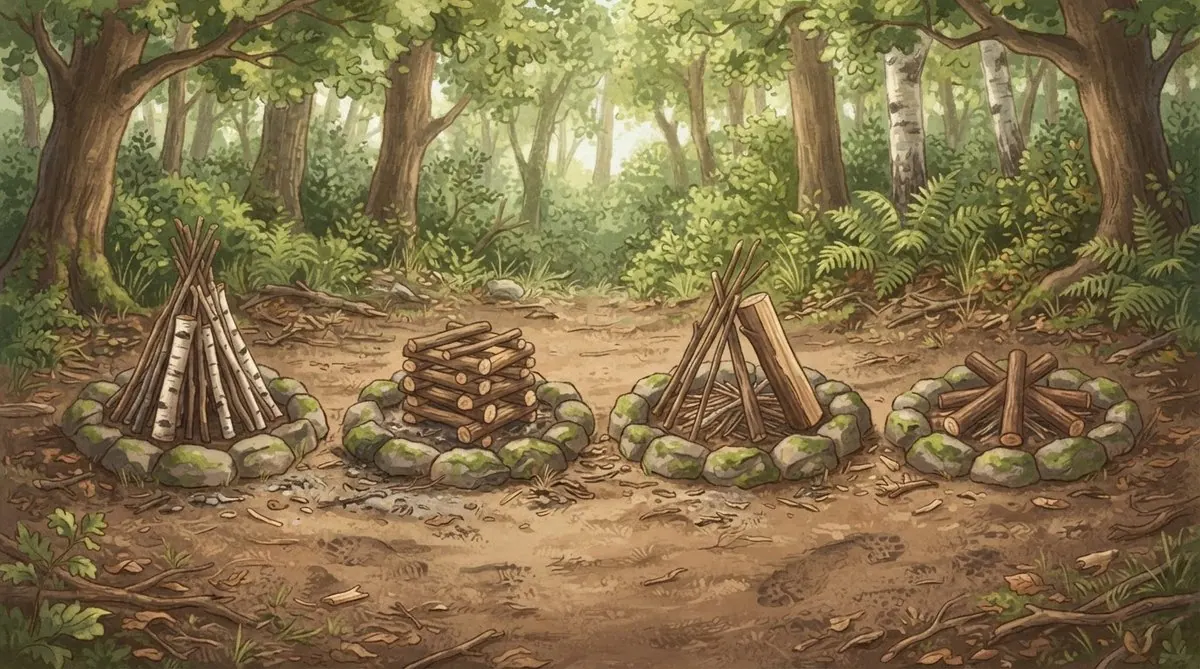
- Build a teepee, log cabin, lean-to and star fire
- Choose a lay for the job and the weather
- Explain why airflow matters more than size
Why the shape matters
A fire lay is simply how you arrange tinder, kindling and fuel before lighting. The shape controls airflow and how heat climbs from small pieces to larger ones. Flames rise, so fuel placed above and close to the flame catches first. Air has to reach the base, so a lay packed too tightly smothers itself. Every lay starts the same way: a cleared spot with a 1 metre circle of bare soil, 3 metres from tents and branches, water within reach, and all three sizes of wood gathered before you strike anything. Only then do you choose a shape.
Teepee: quick to light
The teepee is the best lay for getting a fire going fast. Place your tinder bundle in the centre, then lean pencil-thin kindling around it in a cone, leaving a doorway on the side the wind is coming from so you can reach in and light it. Add a second layer of thicker kindling outside the first. Flames climb the sticks like a chimney and the fire grows quickly. The downside is that it burns fast and collapses, so it needs regular feeding. Most people light a teepee first and then change the fire into another shape once it has a bed of coals.
Log cabin: cooking and steady heat
For a log cabin, build a small teepee in the middle, then stack pairs of sticks around it in alternating layers, like a tiny wooden box. Each layer sits at right angles to the one below. The gaps let air in, and the structure burns down evenly into a flat, hot bed of coals, which is exactly what you want for cooking. It also stays stable, so a pot can sit on the coals later. Keep the cabin small, about the size of a shoebox, and use dry wood no thicker than your wrist. Bigger is not better; a small cabin is easier to control.
Lean-to: lighting in wind
When the wind is strong, push a green or thick dead stick into the ground at an angle, or lay a larger log on the ground, on the side the wind comes from. Place your tinder underneath and lean kindling against the stick or log so the fire sits in its shelter. The windbreak protects the first flame while still letting air in from the sides. Keep in mind that wind also carries sparks a long way, so in strong or gusty wind the real answer is often not to light a fire at all, especially in dry country.
Star fire: a slow, long burn
A star fire is good for a long, low burn using little wood. Light a small fire, then lay four to six longer logs on the ground with their ends meeting in the middle like spokes of a wheel. As the ends burn, push the logs inwards to feed the fire. You control the size simply by how far you push them in. It saves wood and is easy to tend through an evening, but it needs space, and every log must stay inside your cleared circle. Pull the logs apart to shrink the fire quickly before you put it out.
A word on the Dakota pit
You may see the Dakota fire hole online: two connected pits dug in the ground, one for the fire and one to feed air. It hides flame and burns efficiently, but it carries a hidden danger. Fire underground can spread into tree roots and peat, smoulder unseen for days and break out later as a wildfire. It is not for dry forest soils, peat, or anywhere with roots near the surface. Most of the time, a simple fire on bare mineral soil or in an established fire ring is the safer choice. Always check local rules before any fire.
Check yourself
The teepee works like a chimney, pulling flame up through the kindling fast.
The stacked layers collapse evenly into flat, hot coals, which cook far better than flames.
Underground fire can smoulder in roots and peat for days and break out later as a wildfire.
Pushing the log ends inwards feeds the fire; pulling them apart shrinks it.
Try it for real: Build four lays without lighting them
- Gather tinder, kindling and wrist-thick fuel
- Build a teepee, then a log cabin, a lean-to and a star in a fire pit or on a patio
- Photograph each one and note which you would use for cooking, wind and a long evening
- Light one only where and when fires are legal, with water beside you
🛒 Gear for this skill
As an Amazon Associate I earn from qualifying purchases. It costs you nothing extra and keeps this site free.
Next lesson: Fire Without a Lighter →
Written and checked by the Human Skills team against the sources below. How we check our content
- Leave No Trace Center for Outdoor Ethics
- ICNF Portugal fire regulations
- US Forest Service campfire safety guidance
- Scout Association and Scouts BSA handbooks
Related lessons
Fire Basics: Tinder, Kindling and Fuel
Build a small, controlled fire that lights first time
Fire Safety and Putting a Fire Out
Control, extinguish and never leave a hot spot behind
Natural Tinder: What Catches a Spark
Find, test and carry the fine fuel that turns a spark into flame
Fire Without a Lighter
Use a ferro rod, flint and steel, a battery or the sun to make fire