Human Skills
Composting Without the Smell
Turn kitchen and garden waste into free soil food
5 minIntermediateUpdated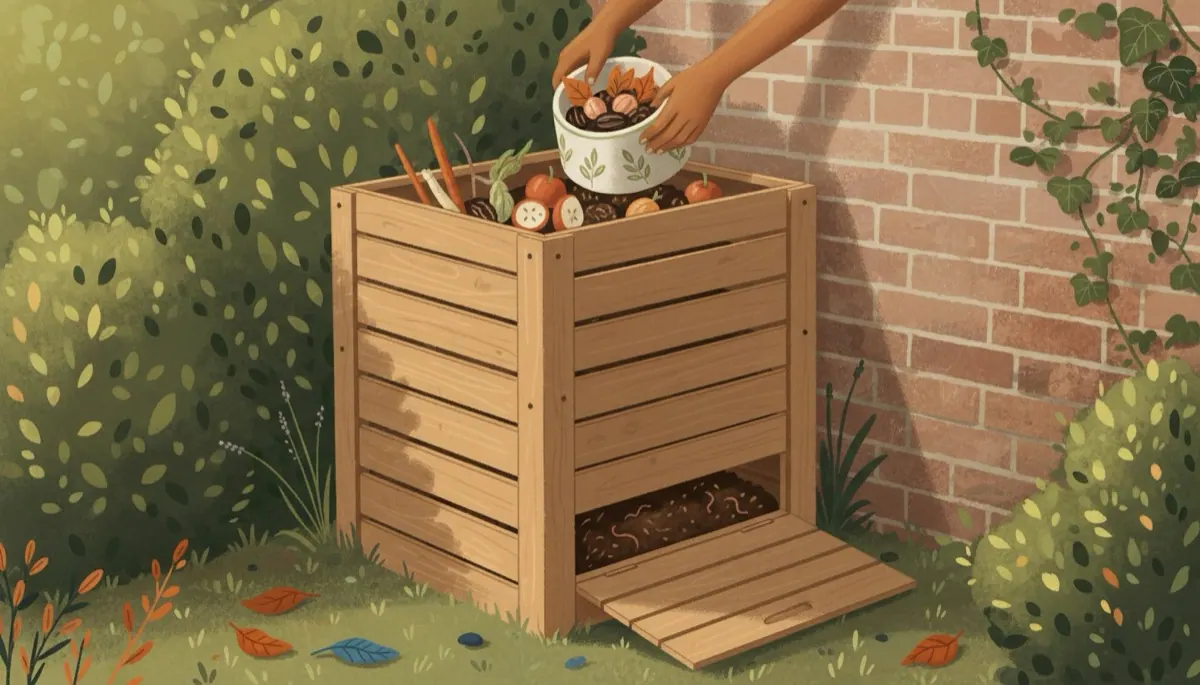
- Balance greens and browns in a working heap
- Fix a compost pile that is slimy, dry or slow
- Know what never goes in a home compost
Greens and browns
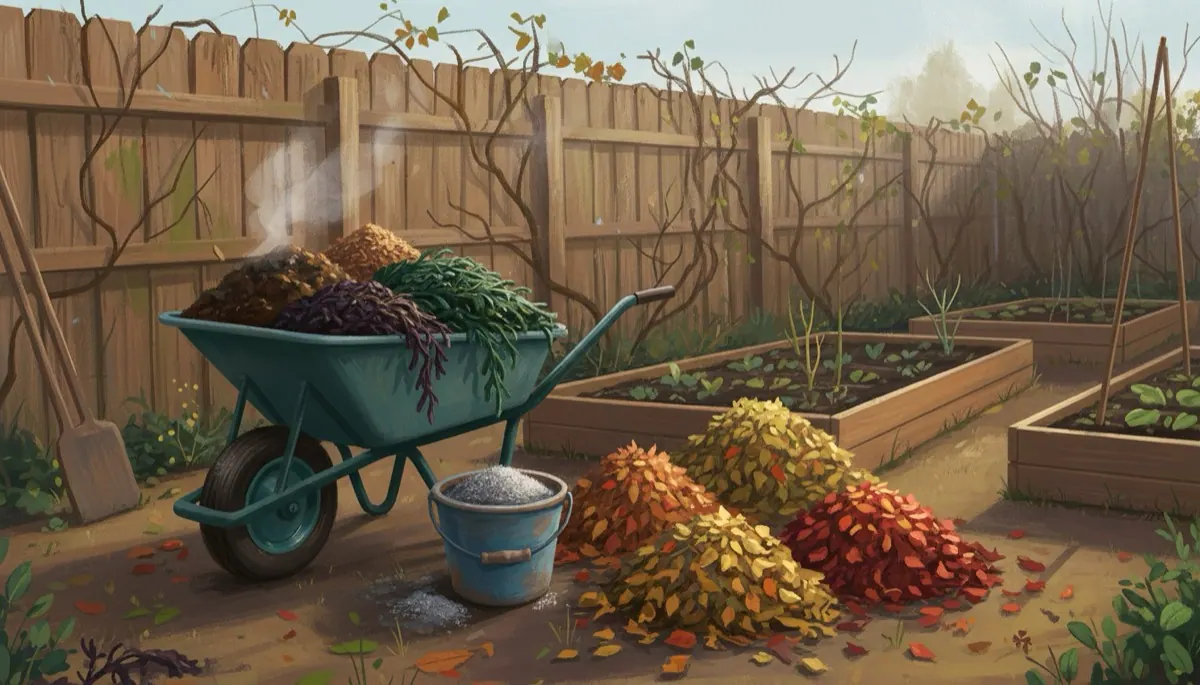
Compost needs two types of material. Greens are wet and rich in nitrogen: vegetable peelings, coffee grounds, grass clippings, fresh weeds and manure. Browns are dry and rich in carbon: dead leaves, straw, shredded cardboard, paper, wood chip and sawdust. A working heap uses roughly 1 part green to 2 parts brown by volume. Too many greens and it turns slimy and smells of ammonia. Too many browns and it sits there for a year doing nothing. Keep a bag of dry browns beside the bin so every bucket of kitchen waste gets covered with a layer of them.
The bin
A heap at least 1 m by 1 m by 1 m holds enough heat to work fast. Smaller bins still compost, just slower and cooler. Pallets screwed into a box, a plastic dalek bin from the council, or a ring of wire mesh all work. Put it on bare soil so worms can climb in, in a spot that is convenient to reach with a bucket. Shade is better than full sun in hot climates because sun dries the heap out. A lid or cover keeps rain from waterlogging it and keeps the heat in. Two bins side by side is ideal: one filling, one finishing.
Moisture, air and turning
Compost should feel like a wrung-out sponge. Squeeze a handful: a drop or two of water should appear, not a stream. If it is dry, water it with a hose and add greens. If it is soggy, add browns and turn it. Turning with a fork every 2 to 4 weeks mixes air in and speeds everything up. A well-built heap reaches 55 to 65 degrees C inside within days, hot enough to kill most weed seeds and disease. You can feel the warmth with your hand or use a long compost thermometer. If you never turn it, it still works, just over 12 months instead of 3.
What to keep out
Meat, fish, dairy and cooked food attract rats and smell as they rot. Keep them out of an open home heap. Dog and cat waste carries parasites. Diseased plants, especially anything with blight or club root, go in the council bin, not yours. Weeds that have gone to seed and perennial roots such as bindweed only go in if the heap gets properly hot. Glossy magazine paper, coal ash and treated timber contain things you do not want in your food. Citrus peel and onion skins are fine in normal amounts. Eggshells are fine but break down slowly, so crush them.
Knowing when it is ready
Finished compost is dark brown, crumbly and smells like a forest floor. You should not be able to recognise what went in, apart from the odd twig or eggshell. That takes 3 to 6 months in a hot, turned heap or 9 to 12 months in a cold one. Sieve it through a 1 cm mesh if you want fine compost for seed trays and throw the coarse bits back in the next heap. Spread it 5 cm deep on beds, mix it into container soil at 1 part in 3, or use it as mulch around fruit trees. Unfinished compost still steals nitrogen from plants, so wait.
Check yourself
Excess nitrogen-rich green material rots wet and anaerobic. Add dry browns and turn it.
Roughly twice as much dry carbon material as wet nitrogen material keeps the heap airy and odour free.
Meat attracts rats and smells badly as it rots. The other three are excellent compost ingredients.
Finished compost is dark, crumbly and smells like woodland soil, with the original materials no longer recognisable.
Try it for real: Start a compost bin this week
- Set up a bin or heap on bare soil in a convenient shaded spot
- Collect a bag of browns such as dry leaves, cardboard or straw
- Add a week of kitchen greens, covering each layer with browns
- Do the sponge squeeze test and adjust water or browns
🛒 Gear for this skill
As an Amazon Associate I earn from qualifying purchases. It costs you nothing extra and keeps this site free.
Next lesson: Soil pH You Can Actually Measure →
Written and checked by the Human Skills team against the sources below. How we check our content
- RHS Composting Guide
- US EPA Composting at Home
- FAO On-farm Composting Methods