Human Skills
Soil pH You Can Actually Measure
Testing it cheaply and shifting it slowly
5 minBeginnerUpdated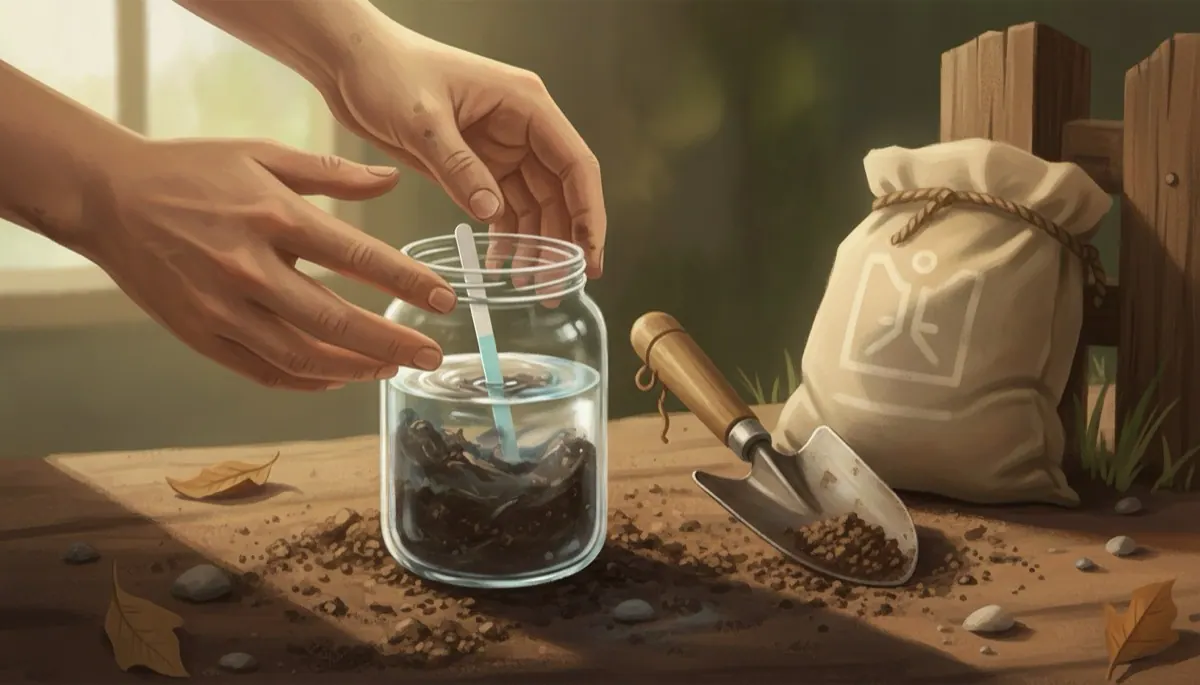
- Explain why pH locks nutrients up or frees them
- Test your soil with a kit and know what a fizz test cannot tell you
- Move pH in the right direction without overshooting
What pH does to a root
pH is a measure of how acid or alkaline the soil water is, from 0 to 14, with 7 neutral. Each step is ten times the change, so pH 5 is ten times more acid than pH 6. Roots do not eat pH, they eat nutrients, and pH decides which nutrients are dissolved enough to take up. Below 5.5, phosphorus locks into iron and aluminium compounds and aluminium itself turns toxic. Above 7.5, iron, manganese, zinc and boron become hard to reach, which is why leaves go yellow between green veins on chalky ground. The soil can be full of feed and the plant still starves. Most vegetables sit happily between 6.0 and 7.0.
Testing it cheaply
A chemical test kit with barium sulphate powder and an indicator solution costs about 10 to 20 euros and reads to roughly 0.2 of a pH point, which is close enough. Take a sample from 10 to 15 cm down, not the surface, dry it, crumble out stones and roots, and compare the colour in daylight. Sample five spots across the plot and test each one separately rather than mixing them, because a plot can swing a full point from one end to the other. A digital probe pushed into wet soil is faster but often reads 0.5 out. Retest every two to three years, and always in the same season.
The vinegar and bicarbonate test
Put two spoons of soil in a cup and pour on vinegar. If it fizzes, you have free lime and the soil is alkaline, above about 7.5. Put another two spoons in a cup, wet it to a slurry, and add bicarbonate of soda. If that fizzes, the soil is acid, below about 5.5. This test is genuinely useful for one thing: spotting a strongly limey soil before you waste money on lime. What it cannot do is give you a number. No fizz in either cup means anywhere from 5.5 to 7.5, which covers nearly every garden and tells you nothing about whether your blueberries will sulk. Use it as a first look, not a result.
What each crop group wants
Potatoes and sweet potatoes: 5.0 to 6.0, and scab gets worse above 6.5, so never lime a potato bed. Blueberries, cranberries and rhododendrons: 4.5 to 5.5. Tomatoes, peppers, aubergines, squash, cucumbers, beans and peas: 6.0 to 6.8. Carrots, beetroot, onions, garlic and leeks: 6.2 to 6.8. Brassicas, meaning cabbage, kale, broccoli and sprouts: 6.5 to 7.5, and clubroot disease is much less severe at the top of that range. Lettuce and spinach: 6.0 to 7.0, with spinach unhappy below 6.0. Most Mediterranean herbs, lavender, rosemary and thyme, are content up to 7.5 and resent acid wet ground far more than alkaline dry ground.
Moving it slowly
To raise pH, use ground limestone. On a loam, roughly 250 to 350 g per square metre raises pH by about half a point. Sand needs less, near 150 g, and clay needs more, near 500 g. Never apply more than 500 g per square metre in one year and spread it in autumn so winter rain works it in. Dolomitic lime also supplies magnesium, useful on sandy ground. To lower pH, elemental sulphur at about 100 g per square metre drops a loam roughly half a point, but it needs warm moist soil and bacteria, so allow six to twelve months. Composted bark, pine needles and plenty of organic matter nudge pH toward neutral from either direction and improve everything else at the same time.
Check yourself
Strongly acid soil binds phosphorus into iron and aluminium compounds and frees toxic aluminium, so plants starve in soil that looks fed.
Vinegar reacting with free carbonate means a limey, alkaline soil, usually above 7.5. It gives no precise number.
Potatoes prefer 5.0 to 6.0 and common scab gets noticeably worse above pH 6.5.
About 250 to 350 g per square metre on loam, less on sand and more on clay, applied in autumn and never above 500 g in a year.
Try it for real: Map the pH of your plot
- Buy one chemical test kit and collect samples from five spots at 10 to 15 cm deep
- Dry each sample, remove stones and roots, and test them separately with rainwater
- Sketch the plot and write the reading on each corner and the middle
- Match your crop plan to the readings before you consider buying lime or sulphur
- Note the date so you can retest the same spots in two years
🛒 Gear for this skill
As an Amazon Associate I earn from qualifying purchases. It costs you nothing extra and keeps this site free.
Next lesson: Fertility Without Buying Anything →
Written and checked by the Human Skills team against the sources below. How we check our content
- RHS Soil pH Guidance
- Cornell Cooperative Extension Soil Health
- FAO Soils Portal